Last updated: August 8, 2026
If you are searching for the best neighborhoods in Marietta, GA, you have come to the right place. Over the past 13 years, we have helped more than 360 families find their perfect home in every corner of this city, and we can tell you this with confidence: Marietta is not one neighborhood. It is a collection of distinct communities, each with its own personality, housing stock, price point, and lifestyle.
Some buyers come to us wanting the historic charm and walkability of Downtown Marietta and the Square. Others need the top-rated school clusters that East Cobb is famous for. Still others are looking for the best value and newest construction in West Cobb. And then there are the buyers who fall in love with a 1920s Craftsman in one of Marietta's historic districts and are willing to put in the work to own a piece of the city's rich history.
The good news is that whatever you are looking for, Marietta has a neighborhood that fits. The challenge is knowing which one is right for you. That is exactly what this guide is designed to help you figure out.
We are going to walk through every major Marietta neighborhood area: Downtown and the Square, East Cobb, West Cobb, Northwest Marietta, the historic districts, and the new construction communities that are reshaping parts of the city. We will talk price ranges, school zones, commute times, and the intangibles that only come from years of showing homes in these streets. If you are still getting your bearings, start with our Marietta neighborhood guide for a broader overview, or check our honest pros and cons of living in Marietta for the full picture.
1. Why Marietta's Neighborhoods Stand Out
Before we dive into the specific neighborhoods, it is worth understanding what makes Marietta different from other suburbs in NW Metro Atlanta. Because the answer to "where should I live in Marietta?" depends heavily on what you value most.
Marietta has the rare combination of historic downtown character and modern suburban convenience. The city's roots go back to the 1830s, when it was founded as the seat of Cobb County, and that history is visible everywhere: in the antebellum homes on Whitlock Avenue, in the Victorian cottages of the Northwest Marietta Historic District, in the brick storefronts that line the Square. But Marietta is also a dynamic, growing city. New construction communities are springing up in West Cobb. The downtown area has seen a renaissance of restaurants, breweries, and retail. Kennesaw Mountain National Battlefield Park draws millions of visitors a year right to the city's doorstep.
The school system is another major factor. Marietta is served by two separate districts: the independent Marietta City Schools in the central core and the Cobb County School District everywhere else. East Cobb is home to some of the highest-rated schools in Georgia, including Walton, Lassiter, and Pope high schools. West Cobb's Hillgrove and Harrison clusters are excellent in their own right. For a deep dive, read our Marietta schools guide that compares the city and county districts in detail.
Commute access is another reason people choose Marietta. The city sits at the intersection of I-75 and I-575, with direct access to the Northwest Corridor express lanes that make the drive to and from downtown Atlanta faster than most people expect. For families who need access to multiple job centers, including the Cumberland/Galleria area, Truist Park, the Battery, and downtown Atlanta, Marietta's location is hard to beat.
And then there is the simple quality of life. Marietta has an active downtown with year-round events, a growing food and drink scene, parks and greenways, and a strong sense of community that comes from being a city with real history and real character. It is the kind of place where neighbors know each other, where you can walk to dinner on a Friday night, and where families put down roots for decades.
For a closer look at the broader county, visit our Cobb County neighborhood guide.
2. Downtown Marietta / The Square
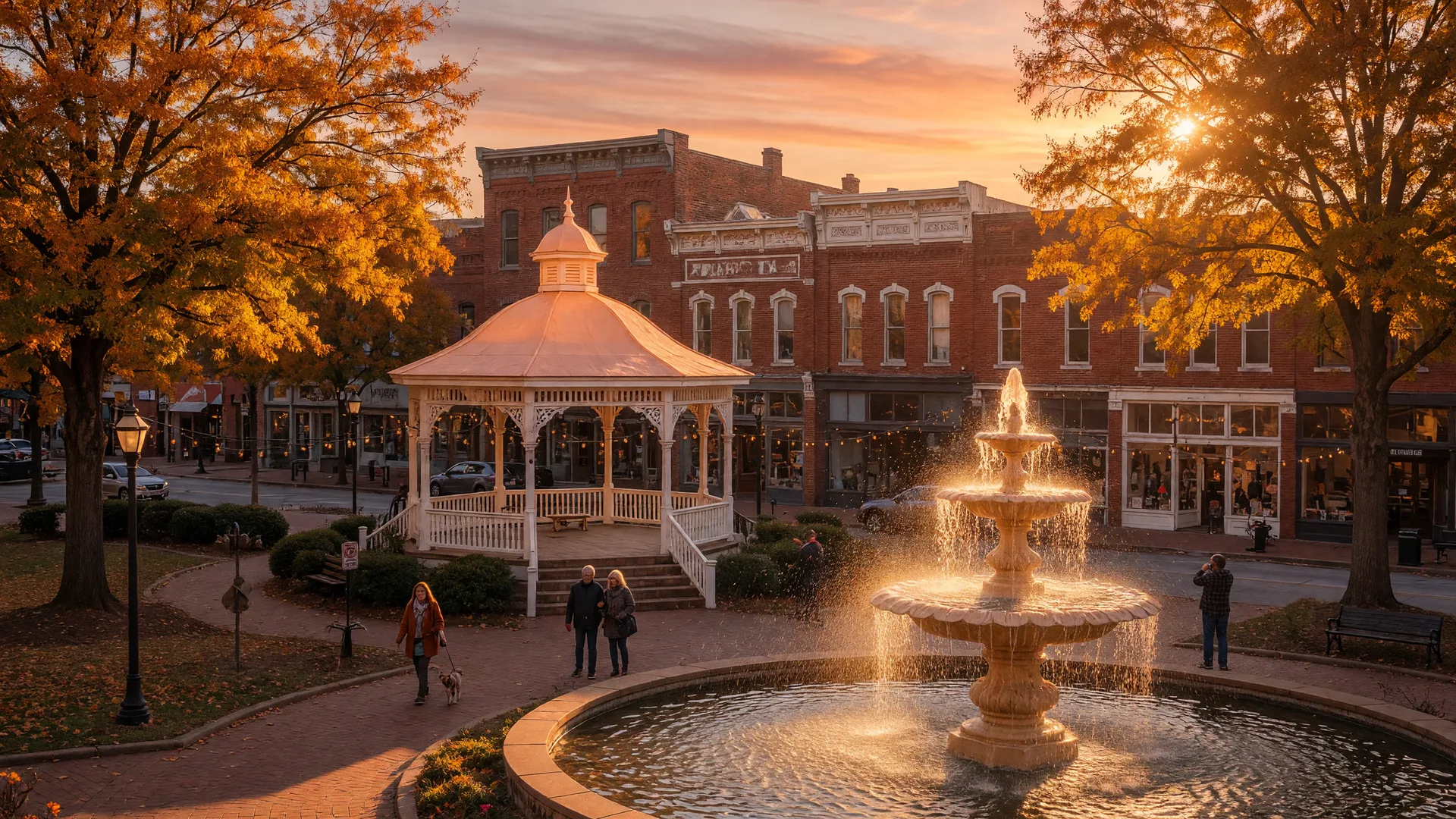
If you want walkability, historic character, and a true downtown lifestyle, Downtown Marietta and the area surrounding the Square is where you want to be. This is the heart of the city, anchored by Glover Park with its iconic fountain and gazebo, and ringed by independently owned shops, restaurants, coffee houses, and entertainment venues like the historic Strand Theatre.
The housing stock here is predominantly older, with homes built between 1880 and 1940. You will find beautifully preserved Victorian, Greek Revival, Craftsman, and Colonial Revival homes on tree-lined streets that feel like stepping back in time. Many of these homes have been lovingly restored and updated, while others offer the opportunity for a buyer with vision to put their own stamp on a piece of Marietta history.
Price range: Homes in the downtown area and within walking distance of the Square range from about $400,000 for a smaller bungalow or cottage that needs updates, up to $1.5 million or more for a fully restored historic home on a prime street. The premium you pay for this location is real, but so is the lifestyle it buys you.
Who it is best for: Empty nesters looking to downsize into a walkable community. Professionals who want to walk to dinner, coffee, and events. History and architecture enthusiasts who appreciate original details like heart-pine floors, crown molding, and wrap-around porches. Buyers who value character and location over square footage and a big lot.
What to expect: Inventory is tight, and homes in the historic districts near the Square sell quickly when priced right. Many of the homes are on smaller lots, and street parking can be competitive in the most popular blocks. Some properties may have restrictive covenants if they fall within a designated historic district, which can limit exterior changes. And because these homes are older, maintenance is an ongoing consideration: roofs, HVAC systems, electrical, plumbing, and foundations all need attention. A thorough home inspection is non-negotiable.
The trade-off is that you are buying into one of the most vibrant, walkable communities in all of NW Metro Atlanta. On a Saturday morning during farmers market season, you can walk from your front door to fresh produce, live music, and neighbors catching up over coffee without getting in your car. That is a lifestyle few suburbs can offer.
For a full breakdown of what it costs to enjoy this lifestyle, our cost of living in Marietta guide covers property taxes, insurance, HOA fees, and maintenance costs across all neighborhoods.
3. East Cobb
East Cobb is the most sought-after residential area in all of Cobb County, and for many buyers, it is the gold standard of Marietta living. We are talking about the area generally bounded by I-75 to the west, the Chattahoochee River to the east, Roswell Road to the south, and Post Oak Tritt Road / Noonday Creek to the north. These are the ZIP codes 30062, 30066, 30067, and 30068, and they include some of the highest-rated schools in Georgia.
The housing stock in East Cobb is primarily from the 1970s through the 1990s, with some newer infill construction on larger lots. You will find a mix of traditional brick colonials, ranch homes, split-levels, and Craftsman-style houses on generous lots with mature trees. Many neighborhoods have swim and tennis clubs, homeowners associations that maintain common areas, and a strong sense of community.
Price range: East Cobb is the most expensive part of the Marietta market. Entry-level fixer-uppers in the Lassiter or Pope clusters start around $450,000 to $500,000. Move-in ready homes in desirable subdivisions typically run from $550,000 to $800,000. Homes in the Walton cluster, especially on larger lots, can easily exceed $1 million. You pay a premium for East Cobb's schools and established neighborhoods, but that premium tends to hold and grow over time.
Key subdivisions and streets: In the Walton cluster, look at neighborhoods like Indian Hills Country Club area, Sope Creek area, and the subdivisions around Mabry Road and Sewell Mill Road. In the Lassiter cluster, focus on the Paper Mill Road and Johnson Ferry Road corridors, with neighborhoods like Heritage Oaks, Somerset, and the areas around Mabry Middle School. In the Pope cluster, look at the Piedmont Road corridor and the neighborhoods around Hightower Trail.
Who East Cobb is best for: Families with school-aged children who prioritize top-rated schools above nearly everything else. Buyers who want established neighborhoods with mature trees, community amenities, and strong resale value. Professionals who commute to the Cumberland/Galleria area, Truist Park, or Buckhead (the reverse commute on I-75 is manageable). Anyone willing to pay a premium for location, schools, and community.
What to expect: Competition is real in East Cobb. Well-priced homes in the best school clusters often receive multiple offers in the first week. You need to be pre-approved, know your must-haves, and be ready to move quickly. Many of the homes are 30 to 50 years old, so expect to factor in updates: kitchens, bathrooms, flooring, windows, and mechanical systems may need attention. But the bones are usually solid, and the lots are some of the best in the county.
4. West Cobb
West Cobb, covering the western portion of Cobb County around ZIP code 30064 and stretching toward the Paulding County line, offers a more suburban feel with newer construction, larger floor plans, and generally more home for your dollar. This is where buyers who want space, modern finishes, and excellent schools without the East Cobb price premium tend to land.
The housing stock in West Cobb is newer, with many subdivisions built in the 1990s through the present day. You will find open floor plans, master-on-main options, larger kitchens, two-story great rooms, and more modern finishes. The lots are typically smaller than East Cobb's generous acreage, but the homes themselves are often larger and more updated.
Price range: West Cobb offers strong value for buyers. Entry-level homes in the high $300,000s to low $400,000s are available in neighborhoods like Highland Pointe, Macland Crossing, and the areas around Lost Mountain. Move-in ready homes in the Hillgrove and Harrison clusters typically range from $450,000 to $650,000. Upper-end new construction and homes on larger lots can reach $800,000 or more.
Key neighborhoods: Hillgrove High School serves many of the most popular West Cobb subdivisions including Highland Pointe, Glenwood Estates, and the developments along Macland Road and Dallas Highway. The Harrison High School cluster includes areas around Lost Mountain Park, Due West Road, and the edge of Marietta near Powder Springs. The Kennesaw Mountain High School cluster covers the northern part of West Cobb near Barrett Parkway and the Kennesaw line.
Who West Cobb is best for: Growing families who need more space for their budget. Buyers who want newer construction, modern floor plans, and fewer renovation projects. Families who want excellent schools (Hillgrove and Harrison are both ranked in Georgia's top 25) at a more accessible price point. Anyone who prefers a suburban feel with easy access to shopping along Barrett Parkway, Kennesaw Mountain National Battlefield Park, and major commuter routes.
Where the value is: The sweet spot in West Cobb right now is the $450,000 to $550,000 range in the Hillgrove and Harrison clusters. In this price range, you can find 3,000 to 3,500 square feet, four bedrooms, updated kitchens, and a two-car garage on a nice lot in a family-friendly subdivision with a pool and clubhouse. That same home in East Cobb would cost $100,000 to $200,000 more, often with a smaller lot and more dated finishes.
Want Expert Help Finding Your Perfect Home?
Team Haigh has helped 360+ families find their ideal home in NW Metro Atlanta. We can help you too.
5. Northwest Marietta
Northwest Marietta is a transitional area that sits between the historic downtown core and the newer development of West Cobb. Think of it as the area roughly bounded by North Marietta Parkway to the south, I-75 to the east, Barrett Parkway to the north, and the Cobb Parkway corridor to the west. This part of Marietta is more diverse in its housing stock than any other area of the city, and it offers some of the most interesting opportunities for buyers who know what to look for.
Price range: Northwest Marietta is generally more affordable than East Cobb and comparable to West Cobb in many areas. You can find homes in the $300,000 to $450,000 range, with a mix of older ranches from the 1960s and 1970s, and newer infill construction. Some neighborhoods in this area offer strong value for buyers willing to take on a renovation project.
Up-and-coming areas to watch: The area around Whitlock Avenue and the edge of the Marietta City Schools district has seen steady appreciation as buyers discover the convenience of being close to downtown without paying historic district prices. The neighborhoods near the intersection of Canton Road and Piedmont Road offer access to both East Cobb and downtown amenities. The area around Fairground Street and the North Marietta Parkway corridor has new townhome developments and infill construction that are attracting buyers priced out of East Cobb.
Who Northwest Marietta is best for: First-time home buyers looking for an affordable entry point into the Marietta market. Investors looking for properties with renovation upside. Buyers who want to be close to downtown and the Square but cannot afford the historic district premiums. Anyone who values location over having the newest or largest home.
This area is worth watching closely. As Marietta continues to grow and downtown becomes even more desirable, the neighborhoods that ring the central core are appreciating faster than many of the more established suburbs further out. If you are willing to look beyond the surface and see the potential, Northwest Marietta has some of the best opportunities in the entire county.
6. Historic Marietta Neighborhoods
Marietta is home to five National Register historic districts, each with its own architectural character and community personality. If you love original woodwork, wrap-around porches, and the feeling of living in a home with a century of history, these neighborhoods are where you should be looking.
The Marietta Historic District (also known as the Northwest Marietta Historic District) is the largest and most prominent, centered on Kennesaw Avenue, Cherokee Street, and Church Street, just northwest of the Square. Here you will find grand Victorian and Queen Anne homes on large lots, many built between 1880 and 1920. These are some of the most architecturally significant homes in Cobb County, with intricate gingerbread trim, stained glass windows, and sweeping front porches.
The Whitlock Avenue Historic District runs along Whitlock Avenue from the Square westward and features a mix of antebellum, Victorian, and early 20th-century homes. This area includes some of Marietta's most prestigious addresses, with properties that have been in the same families for generations. Homes here command premium prices and rarely come on the market.
The Washington Avenue Historic District and the Roosevelt Circle Historic District offer more modest historic homes, including Craftsman bungalows and minimal traditional houses from the early 1900s. These neighborhoods are more accessible in price while still offering the character and walkability that draws buyers to the historic districts.
Price range: Historic district homes range widely depending on condition, size, and location. A smaller bungalow needing updates might start around $400,000. A fully restored Victorian on Kennesaw Avenue can easily exceed $1.5 million. The premium is real, but so is the character, the location, and the long-term appreciation.
What to expect: Older homes need maintenance. This is not a warning to scare you off. It is a reality you should go into with open eyes. These homes were built before modern building codes, before central air conditioning was standard, and before modern energy efficiency was a consideration. You will likely deal with aging roofs, original wiring, galvanized plumbing, and foundations that have settled over a century. But for many buyers, the trade-off is worth it. There is nothing quite like sitting on the front porch of a 1910 Craftsman on a spring evening, watching neighbors stroll by, knowing you are part of a community that has been here for generations.
If you are considering the historic districts, we recommend budgeting 1 percent to 2 percent of the home's value annually for maintenance and being prepared for the occasional surprise. We also recommend working with an inspector who specializes in historic homes and understands the unique considerations of older construction.
7. New Construction Communities
If you want a turnkey home with modern floor plans, energy-efficient features, and builder warranties, Marietta's new construction communities are worth a close look. Most of the new development is concentrated in West Cobb and along the northern edge of the city, where land is still available for master-planned subdivisions.
Where new builds are happening: The fastest-growing new construction areas in the Marietta market include the Barrett Parkway corridor heading west from I-75, the Dallas Highway / Macland Road area in West Cobb, and the area around Kennesaw Mountain near the Cobb Parkway intersection. Several new townhome communities are also going up near the downtown periphery, offering a lower-maintenance option for buyers who want walkability with a newer home.
Price ranges: New construction in West Cobb typically ranges from the mid $400,000s for a standard 3-bedroom plan to $700,000 or more for larger homes on premium lots. Townhomes and patio homes in the downtown periphery range from the $350,000s to the $500,000s. Builders like DR Horton, Pulte, Lennar, and local custom builders all have active projects in the area.
What to consider: New construction has undeniable appeal, but it also comes with trade-offs. Most new subdivisions have homeowners associations with monthly fees and architectural guidelines. The lots tend to be smaller, with less mature landscaping and fewer trees than the established neighborhoods of East Cobb. And not all builders are equal. We recommend researching the builder's reputation, visiting model homes critically, and always getting a new construction inspection before closing, even on a brand-new home. We have seen cutting corners on quality in every price range.
That said, for buyers who value modern finishes, energy efficiency, and not having to think about a roof replacement for 25 years, new construction is an excellent option that deserves serious consideration.
8. How to Choose
By now you might be thinking: "Every neighborhood sounds great in its own way. How do I actually decide?" That is the right question, and here is the framework we use with every buyer we work with.
Start with schools. If you have school-aged children or plan to, school zones should be your first filter. They drive home values, resale potential, and your child's education. Decide which school cluster fits your priorities, then narrow your search to that area. If you are not sure which schools to target, our Marietta schools guide walks through the best options in both districts.
Consider your commute. Marietta is well-positioned for commuters, but where you need to go matters. East Cobb is closer to the Cumberland/Galleria area and Buckhead. West Cobb and Northwest Marietta offer better access to I-75 and I-575 for commutes to downtown Atlanta, Acworth, Kennesaw, and points north. The historic districts give you walking access to downtown but add a few minutes to most driving commutes due to local streets.
Be realistic about your budget. Your budget determines which neighborhoods are realistic, but it also shapes which lifestyle you can afford. If you have $500,000 to spend, you could get a smaller fixer-upper in an East Cobb school cluster, a nicely updated home in West Cobb, or a historic bungalow near the Square. Each of those options gives you a completely different lifestyle at the same price point. Think about which one fits how you actually want to live.
Think about future resale. Even if you plan to stay for a decade, life happens. The best neighborhoods for resale in Marietta are the ones with strong school clusters, established community amenities, and a limited supply of homes. East Cobb and the historic districts near the Square have the strongest long-term appreciation track records. West Cobb has been appreciating faster in recent years as buyers seek value.
Match the lifestyle to your stage of life. If you are upsizing with young children, West Cobb's newer homes and family-friendly subdivisions might be the perfect fit. If you are an empty nester downsizing, a historic cottage near the Square or a new townhome within walking distance of downtown could be exactly right. If you are relocating for a job and need to get settled quickly, new construction in West Cobb gives you a turnkey home with less uncertainty.
For a complete comparison of Marietta's home buying landscape, our guide to buying a home in Marietta covers the market snapshot, hidden costs, and step-by-step process in detail.
9. Team Haigh's Marietta Expertise
Here is what sets us apart. Campbell Haigh has been in the real estate business his whole life. His grandfather started as a broker around 1920, and that legacy runs through three generations on his side of the family and two on his mother's side. More than a hundred years of real estate experience, all told. Campbell got his license in 2013, and before that, he learned the property side the hands-on way: flipping homes and owning rentals of his own.
Beth Haigh has been licensed even longer. She came up through commercial property management and commercial roofing sales. She has known real estate from the ground up, literally, from how a building is managed to how it is built. When she joined Campbell in residential, she brought all of that with her.
Together, they know Marietta like almost no one else. Not from a map or a data sheet, but from thousands of hours on the ground showing homes, writing offers, and helping families navigate this market. They know which streets flood after a hard rain. They know which subdivisions have the strongest HOAs and which ones have the friendliest neighbors. They know which builders stand behind their work and which ones cut corners. They know which school zone boundaries are stable and which ones might shift.
With 360-plus homes sold, $106 million-plus in sales, and nearly 300 five-star reviews, Team Haigh has helped more families find their place in Marietta than almost any other team in the area. Nearly 60 percent of their business comes from clients who return to them and refer the people they love. That is the clearest proof that when you put clients first, they come home to you.
We are here to help you make the best decision possible for your unique life situation. That starts with understanding what you need. It continues with honest, expert guidance through every neighborhood, every school zone, and every trade-off. And it ends with you in the right home, in the right neighborhood, at the right price.
Ready to Find Your Neighborhood in Marietta?
Let us talk through your needs, your budget, and the neighborhoods that fit your lifestyle. We know every street, every school zone, and every hidden gem in Marietta. We will give you the honest, personalized guidance you need to make the right decision. No pressure, no obligation. Just local expertise you can count on.