Last updated: October 6, 2026 — Data and pricing re-verified by Team Haigh Realty against the latest published FMLS figures (Q2 2026, the most recent official county and city briefs as of this update).
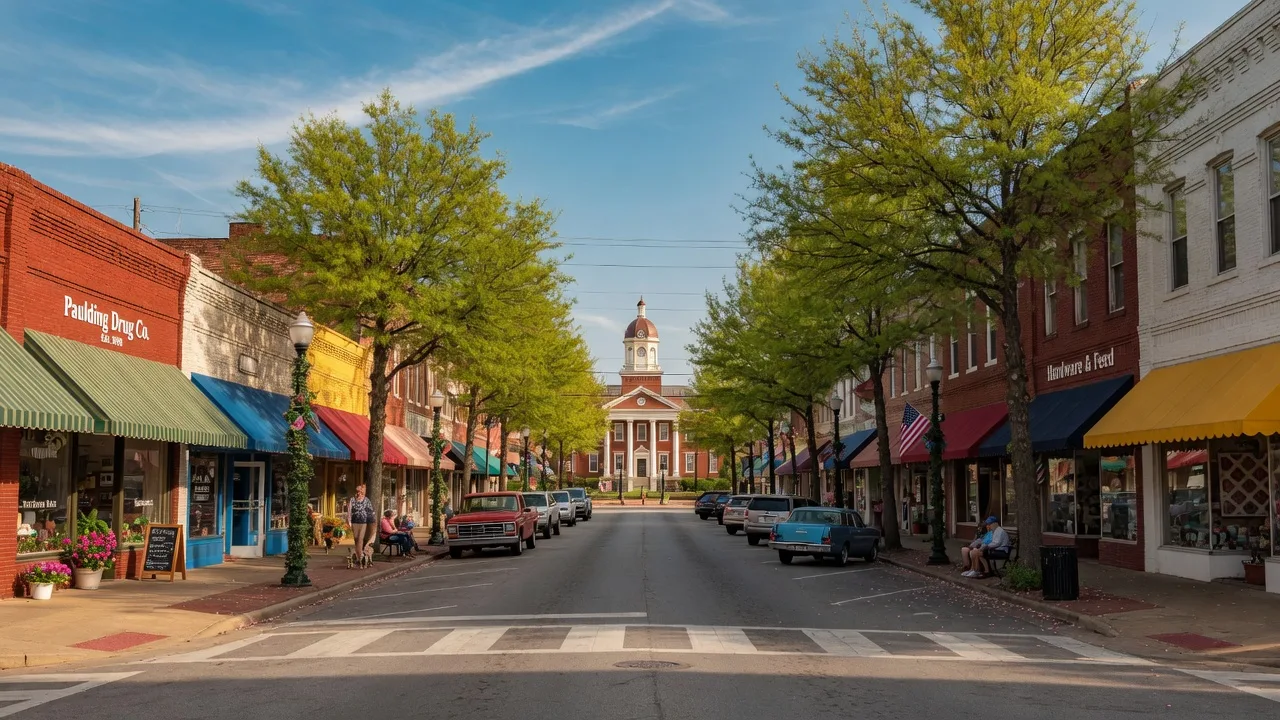
Dallas is the kind of place that surprises you when you first find it. You drive into the historic square with the Paulding County Courthouse anchoring the center of town, past local restaurants and antique shops that line the square. You notice the quiet streets, the friendly waves from people you have never met, and the way the pace of life slows down just enough to let you breathe. And then you look at the home prices and the property tax rates, and you realize that Dallas might be the best-kept secret in northwest metro Atlanta.
As Paulding County's county seat, Dallas sits about 30 miles northwest of downtown Atlanta. For much of its history it was a quiet rural community, but over the last two decades it has become one of the fastest-growing cities in one of Georgia's fastest-growing counties. The growth is not accidental. Dallas offers the most affordable housing of any community in our service area, combined with the lowest property tax rates in the metro Atlanta region. That combination, plus Paulding County's good schools and genuine small-town feel, has made Dallas a magnet for first-time buyers, growing families, and anyone who wants their dollar to go further.
This guide walks through every major expense category so you can build a realistic picture of what life in Dallas really costs in 2026. If you are comparing Dallas to other options in the area, we have a comparison piece on Acworth vs. Dallas that puts the lifestyle differences side by side, and our cost of living in Cartersville, GA guide covers another affordable Bartow County option. For a deeper look at the community, our Dallas neighborhood guide and Paulding County overview cover the details of each community.
1. Housing Costs: The Most Affordable Community in NW Metro Atlanta
Housing is where Dallas's cost advantage is its strongest. This is the single biggest reason families choose Dallas over Cobb, Cherokee, or even Bartow County alternatives. If your budget is in the $300,000 to $500,000 range, Dallas gives you more house, more lot, and more neighborhood amenities than any other community in our service area. Period.
Dallas's real estate market spans roughly $300,000 to $600,000 or more, with the median home price landing around $335,000 to $375,000. That puts it dramatically below the metro Atlanta median of roughly $450,000 and significantly below Cobb County, where the median pushes $500,000 or more. The gap is even wider when you compare Dallas to East Cobb or Buckhead, where comparable homes can cost $700,000 to $1,000,000. A family with a $375,000 budget can buy a 2,500-to-3,000-square-foot home on a generous lot in Dallas, often newly constructed, while a comparable home in Kennesaw or Acworth would cost $450,000 to $525,000.
Dallas Housing Market — Mid-2026 Data
- Median sale price: $377,990
- Price per square foot: $173
- Average days on market: 25
- Homes sold (Q2): 461
Data: FMLS · View the full market report
Paulding County as a whole posted a median sale price of $370,000, with an average price per square foot of $175 and 24 days on market. Dallas's median sits close to the county average, reflecting its role as Paulding County's most accessible and fastest-growing city.
By Area
Seven Hills is the premier master-planned community in Paulding County and one of the best amenity packages in the entire northwest metro. The community features a resort-style pool with water features, a fitness center, tennis courts, playgrounds, walking trails, and a clubhouse. Homes range from the mid-$300,000s to over $600,000, making it accessible for first-time buyers at the lower end and move-up buyers at the higher end. Seven Hills feeds into North Paulding High School, the top-rated high school in Paulding County, which is a major draw for families. The sense of community here is genuine: neighborhood events, holiday gatherings, and a strong homeowners association keep the community connected.
Senator's Ridge is one of Dallas's most established and desirable subdivisions. Mature trees, larger lots, and quiet streets define this community. Amenities include a pool, tennis courts, and a clubhouse. Homes here typically range from the $350,000s to $500,000s, and the location offers convenient access to shopping along Highway 278. Senator's Ridge appeals to buyers who want an established neighborhood with mature landscaping and a track record of value appreciation.
Historic Downtown Dallas is the heart of the city. The area surrounding the Paulding County Courthouse square offers a mix of historic homes, charming bungalows, and newer infill construction. If you want walkability to local restaurants, the farmers market, and community events, downtown is where you want to be. The historic homes here have character and charm that newer subdivisions cannot replicate. Prices range from $250,000 for a smaller bungalow needing TLC to $450,000 for a fully updated historic home.
Antioch Trace is a popular family subdivision featuring traditional homes with modern finishes. The community offers a pool and playground, with homes ranging from the $300,000s to $450,000s. It is located near Highway 278 for easy commuting and close to top-rated elementary schools in the Paulding County School District.
Thornbrooke, located in the Hiram area near Dallas, is an established community with a pool, tennis courts, and clubhouse. Homes range from the $350,000s to $500,000s and feature traditional architecture on well-maintained lots. The location near Highway 92 and I-75 access makes Thornbrooke popular with commuters.
New construction is booming across Dallas. Major national and regional builders including DR Horton, Pulte, Lennar, and Century Communities are active throughout the city. New subdivisions are opening along the Highway 278 corridor and throughout Dallas's growing edges. The amount of new inventory gives buyers significant choices and keeps prices competitive. If you want a brand-new home with modern finishes and energy-efficient construction at the most accessible price point in the metro area, Dallas is where you should be looking.
Mortgage Estimates
With interest rates in mid-2026 hovering in the mid-to-high 6 percent range for a 30-year fixed conventional loan, here is roughly what monthly principal and interest payments look like across Dallas price points (assuming 20 percent down):
- $325,000 home ($260,000 loan): approximately $1,660 to $1,750 per month
- $425,000 home ($340,000 loan): approximately $2,170 to $2,280 per month
- $550,000 home ($440,000 loan): approximately $2,810 to $2,950 per month
- $700,000 home ($560,000 loan): approximately $3,580 to $3,760 per month
These figures do not include property taxes, homeowners insurance, or HOA dues. Many of Dallas's newer subdivisions have HOA fees ranging from $300 to $900 per year, with master-planned communities like Seven Hills on the higher end. we recommend adding 25 to 35 percent to the principal and interest payment for a complete housing cost picture. Even with that buffer, Dallas's monthly housing costs are the most affordable of any community in our service area.
Rental Market
Dallas's rental market is active and significantly more affordable than Cobb or Cherokee County alternatives. A three-bedroom single-family home in a desirable neighborhood typically rents for $1,500 to $2,100 per month. Two-bedroom apartments in newer complexes range from $1,050 to $1,400. Townhome rentals fall in between, approximately $1,200 to $1,700 for two to three bedrooms. The rental market here is less competitive than closer-in suburbs, and tenants often have more negotiating room. For renters who are saving for a down payment, the lower rent in Dallas means you can build your savings faster.
How Dallas Compares to Cobb and Cherokee Counties
Here is where Dallas's value proposition really stands out. For comparable square footage, lot size, and home age, Dallas typically runs 20 to 30 percent below Cobb and Cherokee counties. A $375,000 home in Dallas might cost $475,000 in Kennesaw or $525,000 in East Cobb for a similar floor plan on a similar lot. The gap is driven by location, perceived distance from Atlanta, and Paulding County's dramatically lower property tax rates.
For buyers coming from out of state, this gap is often the deciding factor. If you are relocating from a high-cost market like California, New York, or even Northern Virginia, Dallas's housing prices feel remarkably accessible. A $500,000 budget in those markets might buy a 1,200-square-foot condo. In Dallas, it buys a 3,500-square-foot new construction home on a half-acre lot with community amenities and a three-car garage. That is the kind of math that brings families to Paulding County.
2. Property Taxes: The Lowest in Metro Atlanta
This is the category where Dallas separates itself from every other community in northwest metro Atlanta. Property taxes in Paulding County are the lowest in the metro area. Full stop. If you are coming from Cobb, Cherokee, or especially Fulton or DeKalb County, your property tax bill in Dallas will feel like a rounding error by comparison.
Paulding County's combined millage rate is approximately 21 to 23 mills for the county and school district combined, plus the City of Dallas adds approximately 4 to 5 mills for city services. The total combined rate for Dallas residents is approximately 25 to 28 mills, depending on the specific fire district and tax allocation district. By comparison, Cobb County's combined rate runs approximately 30 to 31 mills, and Cherokee County runs about 28 to 30 mills. Bartow County runs 28 to 31 mills. Paulding County is the clear winner on property taxes.
In Georgia, property taxes are assessed at 40 percent of the fair market value, then multiplied by the millage rate and divided by 1,000. Here is how that translates at three common Dallas price points (using a combined rate of approximately 26.5 mills, which is typical for Dallas city limits):
- $350,000 home: approximately $3,710 per year ($309 per month)
- $500,000 home: approximately $5,300 per year ($442 per month)
- $700,000 home: approximately $7,420 per year ($618 per month)
Now let me show you why here is why it matters. A $500,000 home in Dallas carries an annual tax bill of roughly $5,300. The same $500,000 home in Cobb County would run about $6,025. Over 10 years, that difference of $725 per year adds up to $7,250. Over 30 years, that is nearly $22,000 in savings, just from choosing Paulding County over Cobb County. And that does not even account for the fact that the home itself was likely $75,000 to $125,000 cheaper in Dallas to begin with.
Georgia offers a standard homestead exemption of $2,000 off the assessed value for state purposes, and Paulding County provides an additional county homestead exemption. The City of Dallas also offers a city homestead exemption. If you are 62 or older or disabled, additional exemptions can reduce your bill substantially. You apply through the Paulding County Tax Commissioner's office, and the deadline is April 1 of the year you are claiming.
One of the most common questions we hear from buyers considering Dallas is whether property taxes will increase dramatically as home values rise. Georgia's property tax system includes a cap on assessment increases for homesteaded properties. Your assessed value cannot increase by more than the rate of inflation (capped at 3 percent) per year once you have the homestead exemption in place. This provides meaningful protection against tax shock in a rapidly appreciating market. Given that Paulding County's millage rate is already the lowest in the metro area, the combination of low rates and the assessment cap makes Dallas one of the most tax-friendly places in Georgia to own a home.
3. Utilities: What to Expect Every Month
Utility costs in Dallas are generally in line with the rest of north Georgia and slightly below the national average. For a typical 2,000 to 3,500 square foot home, here is what you can expect:
Electricity
Most of Dallas is served by Georgia Power, which uses a tiered residential rate structure. Some areas on the outskirts of Dallas are served by Amicalola EMC, which often offers competitive rates. The average electric bill for a single-family home in Paulding County runs roughly $130 to $210 per month depending on the season and home size. Summer air conditioning is the biggest variable. In a Georgia July, running central air in a 2,500-square-foot home can push your bill toward the upper end of that range. Newer construction homes with energy-efficient windows, modern HVAC systems, and smart thermostats tend to run 10 to 15 percent lower than older homes.
Water and Sewer
Water and sewer services in Dallas are provided by the Paulding County Water Department for most residents within the county, with the City of Dallas operating its own water system for properties within city limits. Typical monthly bills for a family of four in a single-family home range from $35 to $65 depending on usage and season. Homes with in-ground irrigation systems or pools will see higher bills in the summer months, sometimes exceeding $90. Paulding County's water rates are among the most reasonable in the metro area.
Natural Gas
Gas service in Dallas is delivered by Atlanta Gas Light Company. You choose your marketer from a list of approved providers. Monthly costs range from about $30 in the summer (just water heater and stove) to $90 or more in the winter for homes with gas heat. Many of Dallas's newer homes use gas furnaces and gas water heaters, which are efficient but mean winter heating costs are worth budgeting for.
Internet and Cable
Dallas's internet infrastructure has improved significantly in recent years as the city has grown. AT&T Fiber is available in many of the newer subdivisions and parts of the downtown area. Xfinity is widely available throughout the city. Expect to pay $50 to $80 per month for reliable high-speed internet. For remote workers and families with streaming needs, Dallas's connectivity is generally reliable, though some of the more rural edges of the area may have fewer options. One thing to note: as Paulding County continues to grow, broadband investment is accelerating. If working from home is a priority, verify fiber availability at the specific address you are considering.
Total Monthly Utility Estimate
For a 2,000 to 3,500 square foot home, a realistic monthly utility budget looks like:
- Electricity: $130 to $210
- Water and sewer: $35 to $65
- Natural gas: $35 to $90
- Internet: $50 to $80
- Total: approximately $250 to $445 per month
Trash and recycling service through the city or county adds about $20 to $30 per month. Many of Dallas's newer subdivisions include this in HOA dues, which range from $300 to $900 per year depending on the amenities offered.
4. Transportation and Commute Costs
This is the category where Dallas and the closer-in suburbs diverge most meaningfully. Dallas is a car-dependent community with no direct transit access to Atlanta. If you are commuting to a job inside the Perimeter, the drive time is the primary trade-off you make for the dramatically lower home prices, lower taxes, and more space.
Commute Times
The average commute time for Dallas residents runs about 35 to 50 minutes, though that figure depends heavily on where you work. Dallas itself is growing as an employment center. WellStar Paulding Hospital, the Paulding County School District, and Paulding County government are major local employers. If you work in Dallas or elsewhere in Paulding County, your commute may be 5 to 15 minutes.
If you commute to the Cumberland-Galleria area, expect about 35 to 45 minutes via US-278 to I-75. Marietta and Kennesaw are about 30 to 40 minutes east. Downtown Atlanta is about 45 to 55 minutes during peak hours. For comparison, a commute from Kennesaw to downtown Atlanta averages about 35 to 45 minutes. From Dallas, that same commute is 45 to 55 minutes. That extra 10 to 15 minutes each way is the real cost of Dallas's lower home prices and larger properties.
For families who shift their work hours, work hybrid schedules, or work primarily from home, the difference is far less impactful. In fact, one of the most common profiles among our Dallas clients is the remote professional who needs a home office and wants maximum space for their budget. Dallas is tailor-made for that buyer. A $375,000 budget in Dallas buys a 2,800-square-foot home with a dedicated office, a guest room, and a large backyard. That same budget in Cobb County buys a 1,800-square-foot home with no dedicated office space.
Paulding County is also seeing growing road infrastructure investment. US-278 has been widened in key sections, and improvements to the Highway 92 corridor have eased some congestion. Future planned improvements include additional widening of US-278 and intersection upgrades at key choke points. For residents working in Paulding County itself, the commute infrastructure is excellent.
Gas and Vehicle Costs
Gas prices in Dallas track the Georgia average, typically $3.00 to $3.40 per gallon for regular unleaded in mid-2026. For a 50-mile round trip commute in a vehicle averaging 25 miles per gallon, you are looking at roughly $120 to $170 per month in fuel costs. That number climbs for longer commutes or less efficient vehicles. Many Dallas residents with shorter local commutes or hybrid vehicles enjoy significantly lower fuel costs.
Car Insurance
Georgia has some of the higher car insurance rates in the country. Full coverage car insurance in Dallas averages around $1,900 to $2,200 per year ($158 to $183 per month) for a typical driver with a clean record. Paulding County's lower population density compared to Cobb County can help keep rates on the lower end of that range.
Monthly Transportation Estimate
- Fuel: $120 to $170
- Car insurance (full coverage): $158 to $183
- Maintenance and repairs (averaged): $45 to $75
- Total: approximately $323 to $428 per month per vehicle
For a two-car household, that is $646 to $856 per month. This is one of the larger hidden costs of suburban living and worth factoring into your overall budget. we encourage every buyer relocating from a walkable urban area to budget carefully for transportation before making a decision. The savings on housing and taxes in Dallas will generally more than offset the increased transportation costs, but it is important to go in with your eyes open.
Want Expert Help Finding Your Perfect Home?
Team Haigh has helped 360+ families find their ideal home in NW Metro Atlanta. We can help you too.
5. Groceries and Daily Expenses
Grocery costs in Dallas are generally in line with or slightly below the national average and competitive within metro Atlanta. A family of four should budget $500 to $700 per month for groceries, depending on shopping habits and dietary preferences.
Dallas has solid grocery options for a city of its size. Publix on Nathan Dean Boulevard is the go-to for most residents, offering good quality at moderate prices. Kroger on Dallas Highway provides competitive pricing and a strong fuel points program. Walmart Supercenter on Dallas Highway covers budget-friendly essentials. Aldi on Dallas Highway offers significantly lower prices on staples for budget-conscious shoppers. Publix also has a location on Hiram Parkway for residents on the southern side of the city.
The Dallas Farmers Market operates on weekends at the historic courthouse square from spring through fall. It has grown substantially as the city's population has expanded. You will find local produce, farm-fresh eggs, artisan breads, honey, baked goods, and handcrafted items from local vendors. The market is a genuine community gathering place and a great way to connect with your neighbors before you have even fully unpacked.
For dining out, Dallas's downtown square is the focal point. Hog Heaven BBQ is a local institution serving smoked meats with all the classic sides. Papa's Pizza To Go has been feeding Dallas families for decades with New York-style pizza. La Parrilla Mexican Grill on Nathan Dean Boulevard offers reliable Mexican fare. Mae's Cafe & Bakery is a charming spot for breakfast and lunch on the square. A casual dinner for two downtown runs $30 to $50. For more extensive dining options, Kennesaw and Marietta are 30 minutes east and offer hundreds of choices.
6. Healthcare and Medical Access
Dallas is well-served by healthcare facilities, and the medical community in Paulding County is growing rapidly alongside the population. WellStar Paulding Hospital on Hiram Parkway is a full-service hospital offering emergency care, surgical services, a women's health center, cardiology, orthopedics, and imaging services. It is part of the WellStar (now Piedmont) network, which provides access to one of Georgia's largest and most respected health systems.
For advanced or specialized care, WellStar Kennestone Hospital in Marietta is about 30 to 35 minutes east and is one of the largest and most comprehensive hospitals in the region. Children's Healthcare of Atlanta has a location in Kennesaw about 30 minutes away. Urgent care clinics are scattered throughout Dallas and Hiram along the Highway 278 corridor, so you rarely need the emergency room for non-emergencies.
Paulding County has a growing network of primary care physicians, specialists, and dentists. The county's population growth has attracted new medical providers, and the options are expanding every year. For a community of its size, Dallas's healthcare infrastructure is solid and continues to improve.
Health insurance costs depend on your employer plan, but Georgia's marketplace premiums tend to be slightly above the national average. For a family of four on an employer-sponsored PPO plan, typical monthly premiums run $800 to $1,400 with the employer covering a portion. Dallas's access to both the Piedmont/WellStar network and growing local providers means you have good options regardless of your insurance carrier.
7. Entertainment, Lifestyle, and Family Activities
For a city of its size, Dallas offers a surprising amount of character and community activity. The lifestyle here is relaxed, family-focused, and deeply connected to the community.
Historic Downtown Dallas
The historic downtown square, anchored by the Paulding County Courthouse, is the heart and soul of the city. The courthouse itself is a striking example of neoclassical architecture and has been the center of Paulding County government since the 1800s. Surrounding the square you will find local restaurants, antique shops, boutique stores, and the Dallas Theater, a community venue that hosts live performances, movie nights, and special events throughout the year.
Annual events on the square include the Paulding County Agricultural Fair, which brings together families from across the region for rides, games, and local food. Holiday parades, the Dallas Farmers Market, and community concerts keep the square active year-round. The Fourth of July Celebration at the Paulding County Recreation Department draws crowds for fireworks, music, and community spirit.
The Silver Comet Trail
The Silver Comet Trail is one of Georgia's premier rail-trail conversions, and it runs along Paulding County's southern edge. The paved trail stretches more than 60 miles, connecting Smyrna to the Alabama state line. The Paulding County section of the trail is popular with cyclists, runners, walkers, and families. The trail's gentle grade and scenic surroundings make it accessible for all fitness levels. For Dallas residents, the trail is about a 10-to-15-minute drive south to access points in Hiram or Rockmart. A family membership with the Silver Comet Trail Foundation supports maintenance and improvements.
Civil War History
Dallas holds a significant place in Civil War history. During Sherman's Atlanta Campaign in May 1864, the area around Dallas was the site of several major engagements. The Battle of New Hope Church (May 25-26, 1864), the Battle of Pickett's Mill (May 27, 1864), and the Battle of Dallas (May 28, 1864) all took place in close proximity. Confederate and Union soldiers constructed nearly twelve miles of earthworks around the city, and two of these battles resulted in Confederate victories.
Pickett's Mill Battlefield Historic Site is preserved today with walking trails and interpretive exhibits. It is one of the best-preserved Civil War battlefields in the country. The Paulding County Historical Society & Museum in downtown Dallas documents the area's rich history from Cherokee times through the Civil War and into the modern era. These sites offer a meaningful connection to the area's layered past and are well worth a Saturday afternoon of exploration.
Parks and Outdoor Recreation
Paulding County offers a growing network of parks and recreation facilities. The Paulding County Recreation Department maintains sports fields, walking trails, playgrounds, and community centers throughout the county. White Oak Park in Dallas offers baseball and softball fields, a playground, and picnic areas. John Tanner State Park in nearby Carroll County offers swimming, fishing, camping, and hiking about 20 minutes south. Lake Allatoona and Red Top Mountain State Park are about 25 minutes east for boating, fishing, and hiking.
For families who love the outdoors, Paulding County has plenty of room to explore. The county's rolling hills, forests, and rural character mean you never have to go far to find a quiet walking trail or a scenic view. The Paulding County Parks and Recreation department runs youth sports leagues, fitness programs, and community events that keep families active and connected.
Shopping and Convenience
Shopping in Dallas is convenient along the Highway 278 corridor, where you will find major retailers, grocery stores, and restaurants. The Hiram Pavilion shopping center at the Highway 92 intersection provides additional retail options including big-box stores and national chains. For more extensive shopping, Arbor Place Mall in Douglasville is about 20 minutes southwest, and the Kennesaw retail corridor is about 30 minutes east.
Family Activities and Childcare
Dallas is a family-oriented community with plenty of low-cost and free activities. In addition to the parks and trails, the city's community events calendar keeps families connected year-round. Youth sports through the Paulding County Recreation Department are affordable and well-organized.
Gym memberships in Dallas range from $25 to $45 per month at commercial gyms to $50 to $80 at boutique fitness studios. The Paulding County Recreation Center offers affordable fitness memberships with access to weights, cardio, and group fitness classes.
Childcare costs in Dallas are generally lower than in Cobb or Cherokee counties. Infant care at a licensed center typically runs $650 to $1,000 per month. Toddler and preschool rates range from $550 to $850 per month. In-home daycare options tend to be more affordable, typically $400 to $650 per month. Georgia's universal pre-K program covers four-year-olds, which can significantly reduce childcare costs during that year. Before- and after-school care runs $180 to $350 per month for school-age children.
8. Overall Cost Summary
Here is a quick-reference summary of what a typical family of four might expect in Dallas in 2026. These are ranges, and your actual costs depend on your specific neighborhood, home size, and lifestyle.
| Category | Estimated Cost |
|---|---|
| Median home price | $377,990 |
| Property taxes | $3,710 to $7,420/year |
| Monthly utilities | $250 to $445 |
| Groceries | $500 to $700/month |
| Transportation | $323 to $428/month |
| Cost of living index | 90 to 98 |
Dallas's cost of living index sits roughly at or below the national average, depending on the source and methodology. That makes it the most affordable community in the metro Atlanta area by a meaningful margin. Housing and property taxes are the dominant factors pulling the index down, and non-housing costs are generally at or slightly below the national average as well.
For a family buying a $375,000 to $450,000 home in Dallas, a realistic monthly housing cost (mortgage, taxes, insurance) runs $2,400 to $2,900. Add utilities at $350, groceries at $600, transportation at $700 (two cars), and you are looking at a baseline of $4,050 to $4,550 per month before discretionary spending, healthcare, and savings. A household income of $100,000 to $130,000 puts you in a comfortable position.
Compare that to Cobb County, where a comparable home would cost $475,000 to $550,000, pushing the monthly housing cost to $3,100 to $3,600. Dallas's monthly savings of $700 to $1,000 on housing alone adds up to $8,400 to $12,000 per year. Over five years, that is $42,000 to $60,000 in your pocket, enough for a significant down payment on your next home, a college fund, or years of family vacations.
9. Why Dallas Is the Best-Kept Secret for Affordable Metro Atlanta Living
After more than a decade in this business and 360-plus homes sold across Cobb, Paulding, Cherokee, and Bartow counties, we have watched Dallas grow from a quiet county seat into one of the most compelling real estate markets in northwest Georgia. The growth has been substantial, but the character has held. The historic square is still the heart of town, the community still shows up for each other, and the value proposition has only strengthened as prices have climbed in every neighboring county.
Here is the honest truth about Dallas: it offers the best housing value and the lowest property taxes in the entire metro Atlanta area, hands down. No other community in our service area gives you this much home for your money, this much land for your family, and this much financial breathing room in your monthly budget. If you are a first-time buyer stretching to get into the market, Dallas is the most attainable entry point in the northwest metro. If you are a growing family who needs space, good schools, and a budget that leaves room for everything else, Dallas delivers. If you are planning for retirement and want to stretch your savings as far as possible, Dallas's low taxes and affordable housing make your dollars go further.
What makes Dallas truly special, though, is not just the numbers on a spreadsheet. It is the fact that this city has preserved its small-town character through a period of explosive growth. It is the historic courthouse square where the community gathers for parades and farmers markets. It is the Silver Comet Trail, minutes away for a Saturday morning bike ride. It is the Civil War battlefields where you can walk the same ground that soldiers defended 160 years ago. It is the sense that you are part of a community that is growing and improving and building something meaningful without losing what made it special in the first place.
The trade-off is the commute. There is no getting around the fact that Dallas is further from Atlanta than Marietta or Kennesaw or even Acworth. If you commute five days a week to a job in Buckhead, that extra 15 to 20 minutes each way is real, and it will wear on you. But if you work remotely, have a hybrid schedule, or work in Paulding County itself, that disadvantage disappears entirely. And for families who value space, affordability, lower taxes, and a growing community, the trade-off is increasingly one they are happy to make.
If you are weighing Dallas against other options in the area, we encourage you to explore our Dallas neighborhood guide for deeper detail on each community. Our Paulding County overview puts Dallas in the broader county context. And our comparison piece on Acworth vs. Dallas can help you decide between the Cobb County and Paulding County options. For a look at another affordable alternative, our cost of living in Cartersville, GA guide covers Bartow County's best value play.
Whether you are upsizing, downsizing, or relocating from out of state, we would love to help you find the right home in Dallas. The best way to understand this city is to see it for yourself: walk the historic square, drive through Seven Hills, visit the Paulding County Historical Society Museum, and feel the community for yourself. We are here to guide you through every step with honesty, expertise, and genuine care.
Ready to Make Dallas Your Home?
Whether you are drawn to Dallas for the affordability, the low taxes, the schools, the space, or the small-town feel, we can help you find the right neighborhood and the right home. No pressure, no obligation. Just honest, expert guidance from a local team that knows Dallas and Paulding County inside and out.