Last updated: October 6, 2026 — Data and pricing re-verified by Team Haigh Realty against the latest published FMLS figures (Q2 2026, the most recent official county and city briefs as of this update).
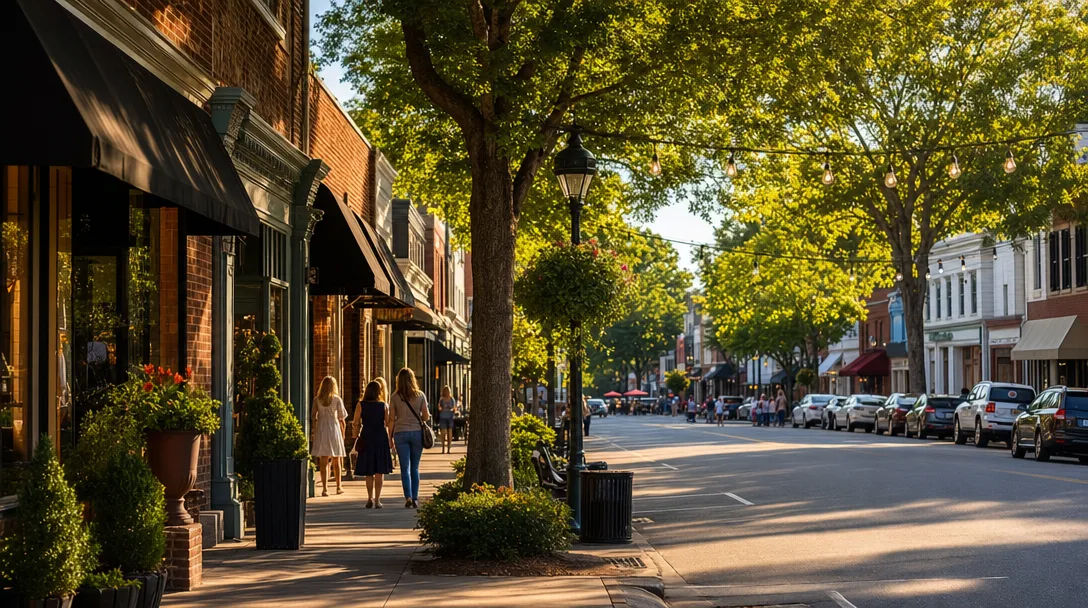
Woodstock has earned its reputation as Cherokee County's flagship city, and for good reason. The walkable downtown, top-rated schools, strong sense of community, and easy access to Atlanta have made it one of the most sought-after places to live in Northwest Metro Atlanta. But if you are thinking about making the move, the practical question comes first: what does it actually cost to live here? Explore the rental market in NW Metro Atlanta to see what rents are doing in Woodstock and beyond.
The honest answer is that Woodstock delivers strong value, especially when you factor in the lower Cherokee County property tax burden compared to Cobb County. But the cost of living varies significantly depending on your neighborhood, home size, and lifestyle. A family in a new-construction home in Serenade will have a very different monthly budget than someone in a townhome near downtown or in a lake-access property in the Towne Lake community.
This guide breaks down every major expense category so you can build a realistic picture of what life in Woodstock really costs in 2026. we have helped more than 360 families make this exact calculation across Cherokee, Cobb, Paulding, and Bartow counties, and we know that confidence comes from knowing your numbers before you make the offer.
If you are still comparing cities, you might also find our guides useful on the cost of living in Kennesaw, cost of living in Marietta, and cost of living in Acworth for a side-by-side perspective. And for neighborhood-specific details, our Woodstock neighborhood guide and Cherokee County overview go deeper on each area.
1. Housing Costs: The Biggest Piece of the Puzzle
Housing is the single largest expense for most families, and Woodstock's market spans from entry-level townhomes in the mid-$300,000s all the way to lakefront estates north of $1 million. Where you land on that spectrum depends on your preferred neighborhood, school district, and whether lake proximity matters to you.
Woodstock Housing Market — Mid-2026 Data
- Median sale price: $495,000
- Price per square foot: $215
- Average days on market: 14
- Homes sold (Q2): 423
Data: FMLS · View the full market report
Cherokee County as a whole posted a median sale price of $500,000, with an average price per square foot of $211 and 17 days on market. Woodstock's median sits close to the county figure, reflecting its position as Cherokee County's most sought-after city with a walkable downtown and top-tier schools.
By Area
Downtown Woodstock commands a premium for walkability and lifestyle. The historic properties and newer infill construction within walking distance of Main Street generally start around $450,000 and climb past $900,000 for larger single-family homes. You are paying for the ability to walk to Reformation Brewery, Pure Taqueria, The Park at City Center, the farmers market, and year-round events. This is Woodstock's most in-demand address, and properties here hold their value exceptionally well. For those who want downtown energy without the detached-home price tag, townhomes in the downtown area range from $380,000 to $550,000.
Towne Lake is Woodstock's premier master-planned community and the largest concentration of homes in the city. Spanning over 3,600 acres with more than 4,000 homes, Towne Lake offers a private lake, multiple swimming pools, tennis and pickleball courts, golf at Eagle Watch Golf Club, and miles of walking trails. Home prices range from the low $400,000s for smaller ranch homes and townhomes to well over $1 million for custom estate homes on the golf course or lakefront lots. The median single-family home in Towne Lake is probably around $550,000 to $700,000. If you want community amenities and a built-in social scene for your family, this is the place.
Serenade is a newer master-planned community that has become a favorite for growing families. With a resort-style pool, fitness center, clubhouse, and modern home designs featuring open floor plans, homes here run from the $500,000s to $700,000s. The neighborhood is conveniently located near shopping on Highway 92 with easy access to I-575. What sets Serenade apart is the combination of new construction quality (largely built in the last five to seven years) with established community amenities.
Established subdivisions like Woodstock Knoll, Bradshaw Farm, and Kingsgate offer a more traditional suburban experience with mature trees, larger lots, and homes from the $400,000s to $650,000. These neighborhoods are popular with families because of their proximity to top-rated Cherokee County schools and their established amenity packages of pools, tennis courts, and playgrounds.
New construction communities continue to spring up along the edges of Woodstock, particularly near Highway 92 and in the western parts of the city toward Canton. These developments typically start around $450,000 and go up to $800,000 depending on square footage and finishes. Cherokee County has been one of the fastest-growing counties in Georgia for years, and new construction remains a strong option for buyers who want modern floor plans and energy efficiency.
Mortgage Estimates
With interest rates in the summer of 2026 hovering in the mid-to-high 6 percent range for a 30-year fixed conventional loan, here is roughly what monthly principal and interest payments look like across price points (assuming 20 percent down):
- $400,000 home ($320,000 loan): approximately $2,050 to $2,150 per month
- $550,000 home ($440,000 loan): approximately $2,800 to $2,950 per month
- $750,000 home ($600,000 loan): approximately $3,820 to $4,000 per month
- $1,000,000 home ($800,000 loan): approximately $5,080 to $5,300 per month
These figures do not include property taxes, homeowners insurance, or HOA dues. we cover those in the next sections. A responsible budget adds 25 to 35 percent on top of the principal and interest payment for these costs.
Rental Market
For those not ready to buy, Woodstock's rental market is active and competitive. A three-bedroom single-family home in a desirable school district typically rents for $2,300 to $3,200 per month. Two-bedroom apartments in newer complexes like those along Highway 92 range from $1,600 to $2,200. Townhome rentals fall in between, around $1,900 to $2,700 for two to three bedrooms. Vacancy rates are low, so when a well-priced rental comes to market, it tends to move fast.
How Woodstock Compares
In the Northwest Metro Atlanta market, Woodstock sits in an interesting position. Woodstock versus Kennesaw is a common comparison: both offer strong schools and family-friendly communities, but Woodstock generally commands a modest premium for its walkable downtown and Cherokee County address, while Kennesaw offers more established Cobb County amenities. Marietta versus Woodstock is another frequent debate: Marietta has historic charm and a larger downtown, but Woodstock delivers a lower property tax bill and newer housing stock in many areas. Acworth versus Woodstock compares lakeside living against downtown energy. The bottom line is that Woodstock tends to be slightly more expensive than Kennesaw and Acworth but offers a different lifestyle value proposition that many families find worth the premium.
2. Property Taxes: Cherokee County's Advantage
This is one of the most important numbers in your cost-of-living calculation. Cherokee County's property tax rate is consistently lower than Cobb County's, and that difference adds up significantly over the life of your homeownership.
The Cherokee County combined millage rate for 2025 is approximately 27.5 to 28.5 mills for the county and school district depending on the specific fire district and city taxes. Woodstock city taxes add roughly 2 to 3 mills on top, bringing the combined rate for Woodstock residents to around 30 to 31 mills total, which includes Cherokee County, Cherokee County School District, and the City of Woodstock.
Property taxes in Georgia are calculated at 40 percent of the fair market value, multiplied by the millage rate and divided by 1,000. Here is what that looks like at three common price points (using a combined rate of approximately 30.5 mills for Woodstock city residents):
- $400,000 home: approximately $4,880 per year ($407 per month)
- $600,000 home: approximately $7,320 per year ($610 per month)
- $800,000 home: approximately $9,760 per year ($813 per month)
Now here is where the comparison gets interesting. Because Cobb County's millage rate is roughly 30.13 mills (county and school combined, before city taxes), the base rates are actually similar at first glance. But the key difference is the overall tax burden on higher-valued homes. Cherokee County's school tax rate (the largest piece of the millage pie) is structured differently, and in practice, many homeowners in Cherokee County pay less at equivalent home values than they would across the county line in Cobb.
Let me put hard numbers on it. A $600,000 home in Woodstock (Cherokee County) might see an annual property tax bill around $7,300 to $7,500. The same $600,000 home in Marietta (Cobb County) would run roughly $7,200 to $7,600. The difference is modest at this price point, but as home values climb, Cherokee County's lower school millage rates create a growing gap in favor of Woodstock.
Georgia offers a standard homestead exemption of $2,000 off the assessed value for state purposes, plus Cherokee County provides an additional county homestead exemption. The City of Woodstock also offers its own exemption for city taxes. If you are 62 or older or disabled, additional exemptions can significantly reduce your bill. Your closing attorney handles the initial application, and it is one of the first things on your post-closing checklist to verify.
3. Utilities: What to Expect Every Month
Utility costs in Woodstock are generally in line with the rest of Georgia, which means they are lower than the Northeast or West Coast. For a typical 2,000 to 3,500 square foot home, here is what you can expect:
Electricity
Most of Woodstock is served by Georgia Power, which uses a tiered residential rate structure. The average electric bill for a single-family home in Cherokee County runs roughly $145 to $240 per month depending on the season and home size. Summer months (June through September) push you toward the higher end as air conditioning runs hard in Georgia humidity. Some newer homes with energy-efficient construction and smart thermostats can keep summer bills on the lower end of that range. Amicalola EMC also serves parts of Cherokee County and often offers competitive rates.
Water and Sewer
Woodstock water and sewer services are provided by Cherokee County Water and Sewerage Authority (CCWSA) for most of the city, with some areas served directly by the City of Woodstock's utility department. Typical monthly bills for a family of four in a single-family home range from $45 to $75 depending on usage, irrigation, and season. The rate structure increases with consumption, so heavy summer watering for lawns and gardens will show up on your bill.
Natural Gas
Gas service in Woodstock is delivered by Atlanta Gas Light Company, and you choose your own marketer from a list of approved providers. Monthly costs range from about $40 in the summer (just water heater and stove) to $120 or more in the winter for homes with gas heat. Many newer homes in Serenade and other modern subdivisions use gas furnaces, which are efficient but mean winter bills matter.
Internet and Cable
Woodstock has solid internet infrastructure. AT&T Fiber is available in many parts of the city, and Xfinity is widely available. Some areas also have access to Spectrum. You can expect to pay $55 to $85 per month for reliable high-speed internet, more if you bundle cable television. For remote workers and families with streaming needs, Woodstock's connectivity is generally reliable and fast, one of the advantages of being an in-demand suburb with modern infrastructure investment.
Total Monthly Utility Estimate
For a 2,000 to 3,500 square foot home, a realistic monthly utility budget looks like:
- Electricity: $145 to $240
- Water and sewer: $45 to $75
- Natural gas: $50 to $120
- Internet: $55 to $85
- Total: approximately $295 to $520 per month
Trash and recycling service adds another $20 to $40 per month depending on whether your neighborhood uses county service or a private hauler. Many of Woodstock's planned subdivisions include this in HOA dues, which range from $200 to $800 per year depending on the amenities offered.
4. Transportation and Commute Costs
Woodstock is a car-dependent city, and understanding the transportation costs is essential to an accurate budget. Unlike Marietta or Kennesaw, which sit on the I-75 corridor, Woodstock is served by I-575, which creates a different traffic pattern worth understanding before you commit.
Commute Times and the I-575 Corridor
The average commute time for Woodstock residents is about 28 to 32 minutes, slightly above the national average. I-575 is the main artery connecting Woodstock to the rest of metro Atlanta, and it has a distinct traffic pattern that differs from I-75. The southbound morning rush starts building around 7:00 AM and peaks between 7:30 and 8:30 AM. The northbound evening rush runs from 4:30 to 6:30 PM. The chokepoint is where I-575 merges into I-75 at the Barrett Parkway interchange, which creates a predictable bottleneck.
If you work in the Cumberland-Galleria area, your commute is roughly 25 to 30 minutes in normal traffic. Downtown Atlanta is 35 to 45 minutes. For those working in North Fulton County (Alpharetta, Johns Creek), the commute via GA-92 across the county line runs about 25 to 35 minutes. One of the benefits of Woodstock is that many major employers have set up along the I-575 corridor itself, including large medical facilities, distribution centers, and corporate offices, meaning you may not need to commute far at all.
Remote and hybrid workers, in particular, find Woodstock ideal. You get suburban space, a walkable downtown for after-work socializing, and top-quality of life without needing to fight traffic every day. The downtown coffee shops and Reformation Brewery's taproom are popular remote-working spots.
Gas and Vehicle Costs
Gas prices in Georgia tend to track slightly below the national average. As of mid-2026, regular unleaded runs roughly $3.00 to $3.40 per gallon. For a standard commute of 30 to 35 miles round trip in a vehicle averaging 25 miles per gallon, you are looking at roughly $85 to $120 per month in fuel costs. That number climbs for longer commutes or less efficient vehicles. Many Woodstock residents with shorter local commutes or hybrid vehicles enjoy significantly lower fuel costs.
Car Insurance
Georgia has some of the higher car insurance rates in the country, and Cherokee County rates are shaped by the same metro Atlanta factors. Full coverage car insurance averages around $2,400 to $2,700 per year ($200 to $225 per month) for a typical driver with a clean record. Cherokee County's rates tend to be slightly lower than Cobb County's due to lower population density and traffic accident frequency. Minimum liability coverage is cheaper, but most homeowners I work with carry full coverage, especially with a mortgage or a newer vehicle.
Monthly Transportation Estimate
- Fuel: $85 to $120
- Car insurance (full coverage): $200 to $225
- Maintenance and repairs (averaged): $50 to $80
- Total: approximately $335 to $425 per month per vehicle
For a two-car household, that is $670 to $850 per month. This is one of the larger hidden costs of suburban living and worth factoring into your overall budget, especially if you are relocating from a walkable city with public transit.
Want Expert Help Finding Your Perfect Home?
Team Haigh has helped 360+ families find their ideal home in NW Metro Atlanta. We can help you too.
5. Groceries and Daily Expenses
Grocery costs in Woodstock are in line with the national average, and Cherokee County has strong grocery options at every price point. The average Georgia household spends between $350 and $500 per month on groceries. For a family of four, budget $500 to $700 per month, more if you shop at specialty markets or buy organic.
Publix has multiple locations throughout Woodstock and is the dominant chain. Kroger on Highway 92 is a well-stocked location popular with families. Costco is just south on Barrett Parkway in Kennesaw, roughly 10 minutes from most parts of Woodstock. Walmart Supercenter on Highway 92 and Target in the Woodstock Town Center serve everyday needs. For specialty and natural foods, Whole Foods Market in nearby East Cobb is 15 to 20 minutes south, and Trader Joe's is also accessible.
The Woodstock Farmers Market at The Park at City Center runs Saturdays from spring through fall and is one of the best in Northwest Metro Atlanta. You will find local produce, farm-fresh eggs, artisan breads, honey, baked goods, and handcrafted items. Prices are competitive with grocery stores, and the quality of in-season produce is noticeably better.
For dining out, Woodstock punches well above its weight. A casual lunch for two downtown runs $25 to $40. Dinner at Pure Taqueria or Truck & Tap runs $50 to $80 for two with drinks. A brewery night at Reformation Brewery is $15 to $25 per person. The Daily Draft and Ipp's Pastaria & Bar offer mid-range dining. For special occasions, dining at downtown Woodstock's higher-end options runs $80 to $120 for two. Compared to dining in Marietta or Atlanta, Woodstock offers good value.
6. Healthcare and Medical Facilities
Access to quality healthcare is a major factor in any cost-of-living calculation, and Woodstock is well-served. Northside Hospital Cherokee is the primary medical facility in the area, located just off I-575 at exit 11. This full-service hospital offers emergency care, surgical services, a women's health center, and a wide range of specialties. Northside Hospital is one of the most trusted healthcare systems in Georgia, and having a full-service hospital within 5 to 10 minutes of most Woodstock neighborhoods is a significant advantage.
Beyond Northside Hospital Cherokee, WellStar Kennestone Hospital in Marietta is about 15 to 20 minutes south, and Piedmont Mountainside Hospital in Jasper is about 20 minutes north. Urgent care centers are scattered throughout Woodstock, so you rarely need the emergency room for non-emergencies. The area also has a strong network of specialists, pediatricians, and family practitioners in Cherokee County.
Health insurance costs depend on your employer plan, but Georgia's marketplace premiums tend to be slightly above the national average. For a family of four on an employer-sponsored PPO plan, typical monthly premiums run $800 to $1,400 with the employer covering a portion. One thing we hear frequently from relocating families is that Cherokee County has good access to specialists and the Northside system is known for shorter wait times than some other Atlanta-area hospital systems.
7. Entertainment, Childcare, and Lifestyle Costs
Woodstock's quality of life is one of its biggest selling points, and the cost of entertainment and lifestyle activities here is reasonable compared to many metro Atlanta alternatives.
Dining and Entertainment
A night out at Reformation Brewery for a flight and snacks runs $15 to $25 per person. Dinner at Pure Taqueria or Truck & Tap runs $50 to $80 for two with drinks. The Elm Street Cultural Arts Village offers live performances, concerts, and art exhibitions throughout the year with ticket prices typically ranging from $15 to $40. The Woodstock Arts theater produces plays and musicals with family-friendly pricing. Many of downtown's best events, including concerts at The Park at City Center and the Woodstock Farmers Market, are free to attend.
Outdoor Recreation
One of Woodstock's hidden financial advantages is the abundance of high-quality free and low-cost outdoor recreation. Blankets Creek Trail System is one of the premier mountain biking destinations in the Southeast with six miles of singletrack, and access is free. Olde Rope Mill Park offers hiking, mountain biking, and fishing along the Little River. The Noonday Creek Trail is a paved multi-use trail connecting Woodstock to Kennesaw, perfect for walking, running, and cycling.
Lake Allatoona is just 10 to 15 minutes from most of Woodstock, offering boating, fishing, swimming, and lakeside picnicking at Red Top Mountain State Park. A Georgia State Parks annual pass is $50 for a vehicle, which covers entry to all state parks. The Outlet Shoppes at Atlanta on I-575 is a major shopping destination with brand-name outlet stores.
Annual Events
Woodstock has a packed events calendar. The Woodstock Freedom Festival on July 4th is the city's biggest annual event with fireworks, live music, and family activities. Riverfest in the fall celebrates the Little River with arts, crafts, food vendors, and live entertainment. The Woodstock Arts & Crafts Festival draws vendors from across the region. Most of these events are free or low cost, which adds to the city's appeal for families on a budget. Gym memberships range from $35 to $50 per month at commercial gyms to $70 to $100 at boutique fitness studios and the Woodstock YMCA.
Childcare
Childcare is one of the most significant budget items for families with young children. Infant care at a licensed center in Woodstock typically runs $1,000 to $1,400 per month. Toddler and preschool rates are somewhat lower, from $800 to $1,200 per month. In-home daycare options tend to be more affordable, ranging from $600 to $900 per month. Cherokee County's public pre-K program (Georgia's universal pre-K for four-year-olds) can significantly reduce childcare costs during that year. Before- and after-school care for school-age children runs $200 to $400 per month.
8. Overall Cost Summary
Here is a quick-reference summary of what a typical family of four might expect in Woodstock in 2026. These figures are ranges, and your actual costs will depend on your neighborhood, home size, lifestyle, and spending habits.
| Category | Estimated Cost |
|---|---|
| Median home price | $495,000 |
| Property taxes | $4,900 to $9,800/year |
| Monthly utilities | $295 to $520 |
| Groceries | $500 to $700/month |
| Transportation | $335 to $425/month |
| Cost of living index | 105 to 112 |
Woodstock's cost of living index sits roughly 5 to 12 percent above the national average, depending on the source and methodology. That is largely driven by housing costs, which have risen steadily as demand for Cherokee County's schools, downtown lifestyle, and quality of life has grown. Non-housing costs (groceries, utilities, healthcare) are generally close to the national average, which means housing does most of the heavy lifting in that index.
Compared to the Georgia state average (which is about 8 percent below the national average), Woodstock is more expensive. But compared to other highly desirable suburban markets across the country, Woodstock still offers genuine value, especially when you factor in Cherokee County's lower overall tax burden compared to neighboring Cobb County.
9. The Value Proposition: Why Woodstock Wins for Many Families
Here is the honest truth we share with every buyer: Woodstock is not the cheapest place to live in Northwest Metro Atlanta. Outer exurbs like Dallas in Paulding County or Cartersville in Bartow County will stretch your dollar further on square footage and land. But Woodstock offers something those communities do not: a genuinely walkable, vibrant downtown with character and community, combined with top-rated Cherokee County schools, easy Atlanta access via I-575, and a lower property tax burden than comparable Cobb County cities.
The value calculus depends on what matters most to your family. If walkability, downtown energy, and a strong community identity are priorities, Woodstock delivers at a price that compares favorably to similar cities across the country. The trade-off in square footage or land versus an outer exurb is a real one, but for many families, the lifestyle benefits and the lower tax burden more than justify the premium.
For a family buying a $550,000 to $650,000 home in Woodstock, a realistic monthly housing cost (mortgage, taxes, insurance) runs $3,500 to $4,200. Add utilities at $380, groceries at $600, transportation at $700 (two cars), and you are looking at a baseline of $5,180 to $5,880 per month before discretionary spending, healthcare, childcare, and savings. A household income of $140,000 to $170,000 puts you in a comfortable position to buy in that range.
For buyers targeting the $400,000 to $500,000 range in established subdivisions or downtown townhomes, the math is more accessible. A $450,000 home with 20 percent down carries a monthly cost (including taxes and insurance) of roughly $3,000 to $3,300. That changes the affordability picture significantly for first-time buyers, young families, or those looking to downsize without sacrificing lifestyle.
What we tell every family I work with is this: the best measure of affordability is not a generic index. It is whether the neighborhood you choose fits your budget, your lifestyle, and your long-term goals. Woodstock is not the cheapest city in our area. But for what you get in schools, community, downtown character, and location, it delivers value that most of my clients find well worth the investment. And when you compare Woodstock's property tax burden side by side with equivalent Cobb County cities, the Cherokee County advantage becomes a real, recurring saving that adds up year after year.
If you are still weighing your options, we encourage you to explore our comparison guides for Kennesaw versus Woodstock, Marietta versus Woodstock, and Acworth versus Woodstock for a deeper side-by-side view. And when you are ready to start looking at specific neighborhoods, our Woodstock neighborhood guide walks you through each area in detail.
Every family's situation is different, and that is exactly why we take the time to understand yours. The right neighborhood is the one where your budget, your lifestyle, and your priorities align.
Ready to Explore Woodstock?
Whether you are upsizing to a larger home in Serenade, downsizing to a low-maintenance townhome downtown, relocating from out of state, or just starting to explore Cherokee County, we can help you find the right neighborhood for your budget and lifestyle. No pressure, no obligation. Just honest, expert guidance from a local team that knows Woodstock inside and out.