Last updated: October 2026 — ROI data based on FMLS comps, National Association of Realtors Remodeling Impact Report, and Team Haigh's 360+ transactions across NW Metro Atlanta
Every seller we meet asks us the same question: "What should I do to my home before I sell it?" And the answer is never as simple as "remodel the kitchen" or "replace the floors." The real answer depends on your specific home, your specific market, and your specific budget. Some upgrades return more than they cost. Others barely make a dent in your sale price.
We have helped more than 360 families sell their homes across Cobb, Paulding, Cherokee, and Bartow counties. We have seen what works and what does not. This guide is the honest, data-backed answer to that question based on what is actually moving the needle in the NW Metro Atlanta market in 2026.
Not every improvement is worth your time or money. Some upgrades return 100 percent or more of their cost. Others barely return 30 percent. The difference between a smart investment and a wasted one comes down to knowing your market, your price range, and what buyers in your specific neighborhood actually value. Let us break it all down.
1. The Truth About Home Improvements: Not All Upgrades Are Created Equal
Here is the hard truth that home improvement shows do not tell you: most home renovations do not return 100 percent of their cost when you sell. The National Association of Realtors publishes a Remodeling Impact Report every year, and the data consistently shows that only a handful of projects deliver a full return on investment.
The reason is simple. Buyers are not paying you for the work you did. They are paying for the home as it sits right now, and they are comparing it to every other home on the market in the same price range. A $50,000 kitchen renovation in a $350,000 neighborhood does not mean your home is worth $400,000. It might mean your home is worth $365,000 instead of $350,000, which is a 30 percent return on that renovation.
In NW Metro Atlanta, where the typical price range runs from $300,000 to $2,000,000, the math changes by neighborhood and price point. A home in East Cobb near the Walton school cluster has different buyer expectations than a home in Dallas or Cartersville. The upgrades that make sense in one market may be overkill in another.
Our philosophy at Team Haigh is simple: spend money where it moves the needle, and skip everything else. Here is how we break down the ROI picture for our sellers, based on real data from our 360-plus transactions and the latest industry research.
2. High ROI Improvements: Do These
These are the upgrades that consistently deliver the best return on investment in the NW Metro Atlanta market. They are the ones we recommend to nearly every seller, regardless of price point or neighborhood.
Kitchen Updates (Minor Remodel): 75-100% ROI
The kitchen is the most important room in the house when it comes to sale price. But here is where we see sellers make the biggest mistake: they think they need a full gut renovation. You do not. In fact, a full gut renovation often returns less than 60 percent of its cost because you are putting a high-end kitchen into a home that was not built for it. What we recommend instead is a minor kitchen remodel. Here is what that looks like in practice:
- Paint existing cabinets instead of replacing them. A quality cabinet paint job costs $800 to $1,500 and transforms the entire look of the kitchen. Stick with white, soft gray, or a warm cream.
- Replace cabinet hardware and faucets with modern brushed nickel or matte black finishes. This is one of the cheapest upgrades you can make and it has an outsized impact. Budget $200 to $500.
- Update countertops if yours are dated or damaged. Laminate countertops in the $1,500 to $3,000 range can look great with modern edge profiles. If your budget allows, quartz or granite in the $3,000 to $5,000 range adds serious appeal.
- Replace the backsplash with a clean, modern tile. Subway tile is timeless and affordable. Budget $500 to $1,200.
- Update light fixtures over the sink and dining area. New fixtures cost $150 to $500 each and change the entire feel of the space.
What NOT to do: Do not gut the kitchen. Do not move walls or plumbing. Do not buy top-of-the-line appliances for a mid-range home. And do not install custom cabinetry unless you are selling in a price point where that is expected. A minor kitchen remodel typically costs $5,000 to $15,000 and returns 75 to 100 percent of that investment at sale. A full gut renovation costs $30,000 to $60,000 and typically returns less than 60 percent.
Bathroom Refresh: 70-85% ROI
Bathrooms are the second most important rooms for resale value, and the same principle applies: refresh, do not gut. A full bathroom remodel can cost $15,000 to $25,000 and rarely returns more than 60 percent. A bathroom refresh, on the other hand, costs $3,000 to $7,000 and can return 70 to 85 percent of that investment.
Here is what we recommend for a bathroom refresh:
- Replace the vanity if it is dated. A new vanity with a solid surface top costs $400 to $1,000 and changes the entire look of the room.
- Update fixtures including the faucet, showerhead, towel bars, and toilet paper holder. Matching finishes make a bathroom look intentional and well-maintained. Budget $200 to $500.
- Replace the mirror with a modern framed mirror or a medicine cabinet with integrated lighting. Budget $200 to $600.
- Regrout and recaulk the shower and tub. This is a $150 to $300 job that makes a bathroom look clean and well-cared-for.
- Fresh paint in a light, neutral color. Bathrooms benefit from soft whites, warm grays, or light blues. Budget $100 to $300.
- Update lighting around the vanity. Proper lighting in a bathroom is a huge selling point. Budget $200 to $500.
Curb Appeal: 100%+ ROI
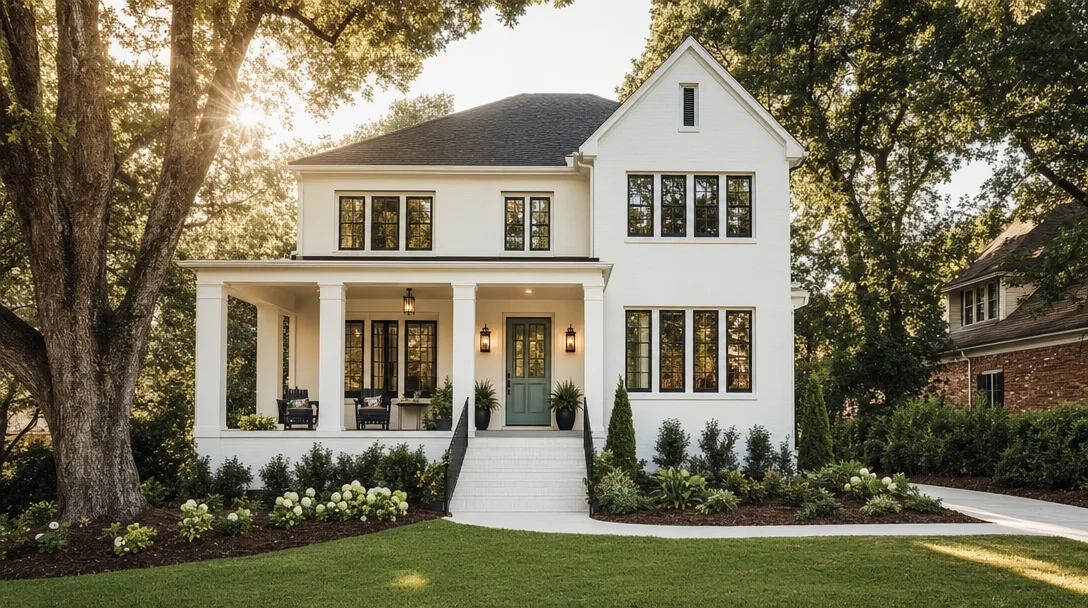
This is the single highest-ROI improvement you can make, and it costs the least. Curb appeal is the first thing a buyer sees, and it sets the tone for the entire showing. If the exterior looks neglected, buyers assume the interior is neglected too. If it looks well-maintained, they walk in with a positive mindset.
Here is what we tell every seller to do for curb appeal:
- Fresh paint on the front door. A bold but tasteful color like navy, black, or a warm red can add thousands of dollars in perceived value. Cost: $20 for a can of paint and an afternoon.
- New mulch in all flower beds. This is cheap and transforms the look of a property. Cost: $100 to $300 depending on the size of your beds.
- Trimmed landscaping. Cut back overgrown bushes, trim trees away from the house, and edge the lawn. Cost: $200 to $500 if you hire a landscaper.
- Power wash the driveway, walkway, and siding. This removes years of grime in a few hours. Cost: $150 to $400 if you hire it out.
- Update exterior light fixtures. New front porch lights and garage lights cost $100 to $300 each and make a huge difference in the evening curb appeal.
- Add potted plants by the front door. A simple pair of urns with seasonal plants costs $75 to $200 and instantly makes the entrance feel welcoming.
Total curb appeal investment: $500 to $2,000. Expected return: 100 percent or more. In our experience, homes with strong curb appeal sell for 3 to 5 percent more than comparable homes with neglected exteriors. On a $450,000 home, that is $13,500 to $22,500 of value from a $2,000 investment.
Interior Paint: 100%+ ROI
Fresh paint is the most cost-effective way to transform the interior of a home. Buyers see scuffed walls and think "this home has not been maintained." They see fresh, neutral paint and think "this home is move-in ready." The psychology is that simple.
The key is choosing the right colors. We recommend sticking with warm whites, soft beiges, light grays, or greige (a gray-beige blend). These colors appeal to the broadest range of buyers and make rooms feel larger and brighter. Avoid bold accent walls, dark colors, and anything that reflects a specific taste. You want buyers to see a blank canvas they can imagine their own furniture in.
Cost for a whole-house interior paint job: $2,000 to $5,000 depending on square footage and ceiling height. Expected return: 100 percent or more. Homes with fresh neutral paint sell faster and for more money. We have seen it play out hundreds of times.
Professional Cleaning and Staging: ROI Varies, But Staged Homes Sell Faster and for More
Staging is one of those investments that is hard to measure in strict ROI terms because it does not show up as a line item on the settlement statement. But the data is clear: professional staging is one of the highest-ROI improvements you can make, and staged homes sell faster and for more money. The National Association of Realtors reports that 82 percent of buyer's agents say staging makes it easier for buyers to visualize the property as their future home.
At Team Haigh, we are Certified Staging Specialists. We help every seller prepare their home for the market, whether that means rearranging existing furniture, bringing in rental pieces, or simply decluttering and depersonalizing. The goal is the same: help buyers see themselves living in the space.
Professional cleaning is non-negotiable. A deep clean before listing costs $300 to $600 and is the best money you will spend. It ensures the home shows well from the first showing to the last. We include professional photography and walkthrough videos with every listing, and we always recommend that the home be professionally cleaned before those photos are taken.
Lighting Updates: 50-75% ROI
Lighting is one of the most overlooked elements of a home's presentation. Outdated brass or gold fixtures instantly date a home, and dim, warm bulbs can make rooms feel dark and small. Replacing outdated fixtures with modern brushed nickel, matte black, or chrome finishes is a relatively inexpensive upgrade with a strong return.
Focus on the high-impact areas: the entryway chandelier, kitchen fixtures, bathroom vanity lights, and dining room. Swap out switch plates and outlet covers while you are at it. A new switch plate costs $2 and makes a room look finished. Budget $500 to $1,500 for a whole-house lighting update, and expect a 50 to 75 percent return on that investment.
One more tip: use brighter bulbs. Many homes are under-lit. Replacing 60-watt equivalent bulbs with 100-watt equivalent LEDs (in appropriate fixtures) makes rooms feel larger and more welcoming. It is a $50 investment that changes the entire feel of a home.
3. Medium ROI Improvements: Maybe Do These
These improvements can be worth doing, but the answer depends on your specific situation. We evaluate these on a case-by-case basis for every seller.
Flooring Replacement: 60-80% ROI
Flooring is one of the most visible features of a home, and worn or dated flooring can be a dealbreaker for buyers. But replacing flooring is expensive, and the return depends on what you are replacing and what you are installing.
Here is our rule of thumb: if your existing flooring is in good condition but just dated, consider refinishing hardwood floors instead of replacing them. Refinishing costs $3 to $5 per square foot and returns 80 percent or more. If your floors are carpet and the carpet is stained or worn, replace it with a neutral, mid-grade carpet at $3 to $5 per square foot installed. If you are replacing old vinyl or tile with luxury vinyl plank (LVP) or engineered hardwood, expect to spend $5 to $8 per square foot and recoup 60 to 75 percent of that cost.
The one case where we strongly recommend replacing flooring: if you have carpet in bathrooms or kitchens. That is a red flag for buyers. Replace it with LVP or tile. Otherwise, mid-grade carpet in bedrooms and LVP in common areas is a safe, appealing choice for the NW Metro Atlanta market.
Deck/Patio Improvements: 60-75% ROI
Outdoor living space matters in Georgia. We have the weather for it, and buyers in 2026 consistently rank outdoor space as one of their top priorities. A deck or patio extends the livable square footage of a home without the cost of an addition.
If your existing deck is in good structural condition but looks tired, a power wash and a fresh stain or seal costs $200 to $500 and can transform the space. If you need to build a new deck, expect to spend $5,000 to $15,000 depending on size and materials, with a return of 60 to 75 percent.
If you have a patio, consider adding a pergola or an outdoor ceiling fan to make the space feel more like an outdoor room. These are relatively inexpensive upgrades that add perceived value. A screened porch is the gold standard for outdoor living in Georgia, and adding one can return 70 to 80 percent of its cost. But a screened porch addition is a major project, so only do it if you plan to enjoy it before listing.
Energy Efficiency Upgrades: 50-70% ROI
Energy efficiency has become a bigger selling point in 2026 as utility costs have risen. Buyers are asking about HVAC age, window efficiency, and insulation. While these upgrades do not have the visual impact of a kitchen refresh, they can be important negotiating points.
If your HVAC system is more than 15 years old, consider replacing it. A new HVAC system costs $5,000 to $10,000 and returns 50 to 70 percent at sale. More importantly, it eliminates a common inspection objection. Buyers and their agents look at the age of the HVAC, and a system past its expected life is a red flag.
Adding attic insulation and sealing air leaks are low-cost improvements that improve energy efficiency and comfort. Blown-in attic insulation costs $1,000 to $2,500 and can pay for itself in utility savings before you even sell. Window replacement is more expensive ($500 to $1,500 per window) and typically returns 50 to 60 percent, so we only recommend it if the existing windows are truly failing.
4. Low ROI Improvements: Skip These for Selling
These are the improvements we almost never recommend to sellers. They cost more than they return, and in some cases they can actually hurt your sale.
Swimming Pool Addition: 30-50% ROI
This is the one that surprises the most sellers. People assume that a swimming pool adds significant value to a home. The reality is that in the NW Metro Atlanta market, pools return 30 to 50 percent of their cost at best. A $50,000 in-ground pool might add $15,000 to $25,000 to your home's value.
The reason is that not every buyer wants a pool. Families with young children see a safety hazard. Empty nesters see maintenance costs. And the pool season in Georgia, while long, is not year-round. An existing pool is a neutral feature. Adding a pool as a pre-sale investment is almost never a good financial decision.
If you already have a pool, make sure it is clean, well-maintained, and the equipment is in good working order. A pool that looks neglected will hurt your sale more than no pool at all.
Major Additions: Often Don't Recoup Cost in This Price Range
Adding square footage with a room addition, a second story, or a finished basement is expensive, and the return in the $300,000 to $600,000 price range is typically 50 to 65 percent. The problem is that buyers in this price range are looking for value, and they will compare your home to other homes in the same price point that already have the square footage you added.
The exception is in the luxury market, where buyers expect custom features and larger square footage. If you are selling in the $1 million-plus range in East Cobb or Lake Allatoona, a well-designed addition can return more of its cost. But in the typical NW Metro Atlanta price range, it is better to sell the home as-is and let the next owner decide how to expand.
Luxury Upgrades in a Mid-Range Neighborhood
This is one of the most common mistakes we see. A seller puts $30,000 in high-end quartz countertops, custom cabinetry, and professional-grade appliances into a kitchen in a neighborhood where the median home price is $400,000. The problem is that the most expensive home in the neighborhood sets the ceiling, and that ceiling is determined by the neighborhood, not the upgrades.
Buyers will not pay $450,000 for a home in a $400,000 neighborhood just because the kitchen is spectacular. The comps do not support it. The appraisal will not support it. You will end up over-improving the home and recouping a fraction of what you spent. Our advice: match your upgrades to your neighborhood. If you are in a mid-range neighborhood, do mid-range upgrades.
Over-Personalization: Custom Features That Narrow Your Buyer Pool
This is the one that hurts the most because sellers often put real love and money into these features. A custom wine cellar, a home theater with dark paint and special lighting, a bold painted mural in a child's room, a backyard with extensive hardscaping that reflects a specific hobby. These features may be meaningful to you, but they narrow your buyer pool.
The general rule: anything that appeals to a small subset of buyers is a risk. The best strategy for selling is to appeal to the broadest possible audience. Neutral colors, standard layouts, and flexible spaces win every time. If you have a home theater, consider staging it as a flexible media room or a bonus space. If you have a wine cellar, leave it but do not expect buyers to pay extra for it.
5. What Buyers in NW Metro Atlanta Actually Want in 2026
We have been in the trenches of the NW Metro Atlanta market for 360-plus transactions, and we track buyer preferences closely. Here is what the data from our showings, buyer feedback, and closed sales tells us about what buyers in this market are actually looking for in 2026.
- Updated kitchens (not necessarily renovated): Buyers want a kitchen that looks clean, modern, and functional. Painted cabinets, new hardware, updated countertops, and modern fixtures are enough. You do not need a full renovation.
- Open floor plans: The demand for open, connected living spaces continues. If your home has a wall between the kitchen and family room, consider whether it can be removed. If not, focus on making the flow feel as natural as possible through furniture placement and staging.
- Good school zones: This is the single biggest driver of home values in NW Metro Atlanta. Homes in the Walton, Lassiter, Pope, Harrison, Hillgrove, Kennesaw Mountain, Woodstock, and Cherokee High clusters command a premium. Buyers will pay more for a smaller home in a better school zone.
- Move-in ready condition: With interest rates in the mid-to-high 6 percent range, buyers do not have extra cash for major renovations after closing. They want a home they can move into this weekend. The homes that sell fastest are the ones that look like someone just finished cleaning them.
- Outdoor living space: Decks, patios, screened porches, and fenced yards are high on the priority list. Georgia's climate allows for outdoor living most of the year, and buyers have come to expect it.
- Dedicated home office space: Remote and hybrid work is here to stay. A room that can serve as a home office, even a small one, is a major selling point. If you have a spare bedroom or a flex space, stage it as an office.
- Energy efficiency: Updated HVAC, double-pane windows, and smart thermostats signal that the home has been well-maintained and will cost less to operate. These features are increasingly important to buyers in 2026.
For a deeper look at what the market is doing right now, read our 2026 NW Metro Atlanta housing market report and check our market statistics page for the latest numbers.
6. The Cost of Doing Nothing: How Much Money Sellers Lose by Not Preparing Their Home
This is the section that gets our sellers' attention. Because the cost of doing nothing is real, and it is bigger than most people think. Let us walk through the math using real FMLS data from our market.
In Q2 2026, homes in Cobb County that sold within the first 14 days of listing averaged 98 percent of their original list price. Homes that sat on the market for 30 to 60 days sold for an average of 93 percent of their original list price. That is a 5 percent difference. On a $450,000 home, that is $22,500.
What causes a home to sit? The most common reasons are overpricing, poor presentation, and deferred maintenance. Homes that are not properly prepared for the market do not attract the same level of interest. They get fewer showings, fewer offers, and lower offers when they do come in.
We have seen this play out dozens of times. Two comparable homes in the same neighborhood go on the market at the same time. One is priced right, staged, and professionally photographed. It goes under contract in 10 days at 98 percent of list price. The other is priced slightly higher, not staged, with dated photos. It sits for 45 days, drops the price twice, and eventually sells for 93 percent of the original list price.
The difference is not just the $22,500 in sale price. It is also the carrying costs. Every month that a home sits on the market, the seller is paying the mortgage, utilities, insurance, and HOA dues. On a $450,000 home with a $300,000 mortgage at 6.5 percent, the monthly carrying cost is roughly $2,500. Three extra months on the market costs $7,500.
And then there is the psychological cost. A home that sits on the market becomes stigmatized. Buyers wonder what is wrong with it. The listing agent starts getting calls from other agents asking if the seller is motivated. It becomes a negotiation disadvantage.
The math is clear: spending $5,000 to $15,000 on the right pre-sale improvements can prevent a $22,500 price reduction and a $7,500 carrying cost penalty. That is a 150 to 450 percent return on your investment. Doing nothing is the most expensive choice you can make.
For a complete walkthrough of the selling process from start to finish, see our complete guide to selling options and our full Georgia selling guide.
7. Team Haigh's Pre-Sale Consultation: What We Do and How We Help
This is where we earn our keep. When you sit down with Campbell and Beth Haigh for a pre-sale consultation, we do not just tell you what your home is worth. We walk through your home room by room and tell you exactly what to do, and what NOT to do, before listing.
Our pre-sale consultation includes a full walkthrough of your property, inside and out. We look at the condition of the kitchen, bathrooms, flooring, paint, lighting, windows, HVAC, roof, and landscaping. We identify every item that will come up in a home inspection so you can address it proactively. And we give you a prioritized list of improvements ranked by return on investment.
We also provide a net sheet that shows you exactly what you can expect to walk away with after closing costs, based on the real numbers in today's market. No guesswork, no inflated estimates. Calculate your net proceeds from the sale to see what you will actually walk away with. We want you to know the math before you make any decisions.
For sellers who want the full-service experience, our traditional listing includes professional staging consultation, professional photography and videography, AI-enhanced listing copy, syndication across 50-plus platforms, targeted digital advertising, and full negotiation support. We also offer a AI-powered marketing strategy that gives your listing an edge in search results and social media.
If you are not ready to commit to a traditional listing, we also offer a free no-obligation consultation where we walk through your home and give you our honest assessment. We do not pressure you to sign a listing agreement. We want you to have the information you need to make the best decision for your family.
And if you are weighing your options between selling strategies, our complete seller's guide covers every approach from traditional listing to cash offer to home trade-in, so you can choose the path that fits your situation.
Ready to Find Out What Your Home Is Worth?
Campbell and Beth Haigh have helped 360-plus families sell their homes across NW Metro Atlanta. We would love to walk through your home, tell you exactly what to do (and what NOT to do), and give you a realistic picture of what your home will sell for in today's market. No pressure, no obligation.