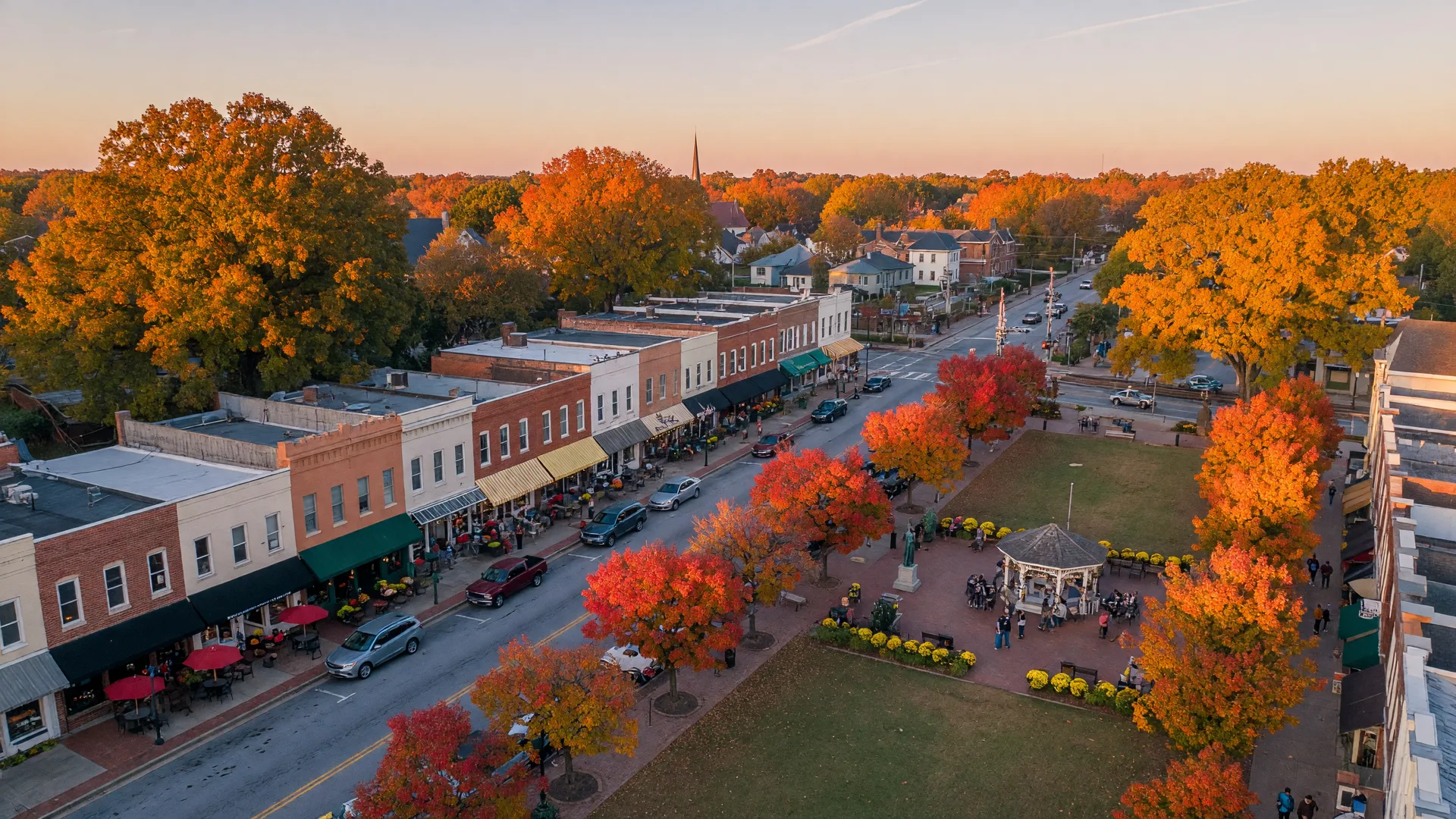
Northwest Metro Atlanta has quietly become one of the fastest-growing regions in Georgia, and for good reason. Families from across the country are discovering what locals have known for years: this part of the state offers a rare combination of affordability, strong schools, genuine community, and proximity to one of the South's great cities. If you are considering a move to Cobb, Cherokee, Paulding, or Bartow County, this guide is for you. We will walk through each county, talk about schools, neighborhoods, costs, and the practical details that make a relocation work, and give you the honest, grounded perspective you need to make a confident decision.
Why NW Metro Atlanta Is Growing So Fast
The Atlanta region has been a magnet for relocation for decades, but the northwest corridor has seen especially strong growth since 2020. What is driving it? A few things that keep coming up with the families we work with.
Location matters. NW Metro Atlanta sits at the intersection of I-75 and I-575, giving residents access to downtown Atlanta in roughly 30 to 50 minutes depending on where you live, with the added benefit of being closer to the North Georgia mountains, Lake Allatoona, and miles of public parks and trails. You get city access when you need it and breathing room when you don't.
Affordability is another big factor. Compared to Atlanta proper, the northern suburbs, or many out-of-state metros like Denver, Seattle, or New York, home prices in NW Metro Atlanta still offer meaningful value. The median price across the region sits around $385,000 as of mid-2026, though that number varies significantly by county and neighborhood. For that price, you are typically looking at a three-to-four-bedroom home on a generous lot with good schools nearby.
And then there is the quality of life. This part of Georgia still feels like a collection of towns, not a sprawl. Each city has its own downtown, its own traditions, its own sense of identity. People know their neighbors. Community events matter. It is the kind of place where you can build roots.
The Four Counties: Detailed Profiles
Our service area spans four counties, and while they share a region, each one has a distinct personality. Understanding the difference is the first step to finding the right fit.
Cobb County: The Established Choice
Cobb County is the most developed and best-known of the four. Marietta, Kennesaw, and Acworth are its signature cities, each with its own flavor. Marietta offers a historic downtown square, a thriving arts scene, and some of the region's most desirable neighborhoods. Kennesaw, home to Kennesaw State University and the Kennesaw Mountain National Battlefield Park, blends college-town energy with suburban comfort. Acworth, sitting on the shores of Lake Acworth, has a genuine small-town lakeside feel that is hard to find this close to a major city.
The housing market in Cobb County is the most established in the region, with a median sale price around $405,000 to $430,000 as of Q2 2026. Homes sit on the market for about 40 to 42 days on average. The market is shifting toward balance, with inventory rising and about 5.1 months of supply available. For buyers, that means more choices and less pressure than a year ago.
Commute-wise, Cobb County offers the shortest drive to downtown Atlanta of the four counties, typically 25 to 40 minutes depending on your starting point. The Cumberland-Galleria area and Truist Park are major employment centers within the county itself, which means many residents do not need to commute all the way into the city.
What makes Cobb special? It is the most complete suburban package in NW Metro Atlanta. Excellent schools, mature neighborhoods with established trees, a wide range of housing options from historic homes to new construction, and the most dining and entertainment options in the region.
Cherokee County: The Growth Leader
Cherokee County has been one of Georgia's fastest-growing counties over the past decade, and the growth shows no signs of slowing. Woodstock and Canton are the main hubs. Woodstock has transformed from a sleepy railroad town into one of the most desirable suburbs in the metro area, with a walkable downtown, craft breweries, and a calendar full of community events. Canton, the county seat, has grown rapidly while retaining its small-town feel, with new neighborhoods sprouting up alongside established communities along the Etowah River.
The median home price in Cherokee County is approximately $485,000 to $494,000, making it the most expensive of the four counties on average. That premium reflects the area's desirability and the quality of its school system. Homes average 36 to 42 days on market. Notably, about 23% of homes still sell above asking price in Cherokee County, while about 31% of listings have seen price reductions, reflecting a market that is becoming more nuanced. Well-priced homes in the most popular neighborhoods can still sell in as little as 15 days.
The outdoor recreation scene here is exceptional. The Greenprints Trail system, Boling Park, and the Etowah River offer hiking, biking, kayaking, and fishing. The community vibe is active and family-oriented, with strong youth sports, farmers markets, and a genuine small-town spirit.
Paulding County: The Value Proposition
Paulding County, anchored by Dallas and Hiram, is where affordability meets space. If your priority is getting the most house and land for your dollar while still being within commuting distance of Atlanta, Paulding deserves a close look.
The median home price sits around $360,000, making it one of the most affordable options in the entire metro Atlanta area. Days on market average 33 to 56 days, with about 690 active listings as of mid-2026. About 40% of listings have seen price reductions, which means patient buyers can find meaningful value.
New construction is abundant, with several large master-planned communities offering three-to-five-bedroom homes from the $300s to the $500s. Lots are generally larger here, and you get more square footage for your money than in Cobb or Cherokee. Paulding is particularly popular with young families and first-time buyers who want new construction and good schools without stretching their budget.
The trade-off is commute time. Getting to downtown Atlanta from Dallas takes about 45 to 55 minutes in typical traffic. The county is less built up than Cobb or Cherokee, which some residents see as a benefit and others see as a limitation depending on what they are looking for.
Bartow County: The Emerging Market
Bartow County, with Cartersville as its hub, represents the frontier of NW Metro Atlanta growth. It is further from Atlanta than the other three counties, but it offers something they cannot: proximity to the North Georgia mountains, lake living on Cartersville's portion of Lake Allatoona, and the most affordable housing in the region.
Median home prices run $328,000 to $342,000. Days on market range from 30 to 53 days. The market is sending mixed signals, with some sources showing prices down year over year and others showing them up, but the consistent takeaway is that Bartow offers value. For buyers priced out of Cobb or Cherokee, or for those who want mountain views and lake access without a mountain price tag, Bartow County is worth serious consideration.
Cartersville has a surprisingly vibrant downtown with an emerging arts scene, the Booth Western Art Museum, the Savoy Automobile Museum, and Tellus Science Museum. The Etowah Indian Mounds offer a glimpse into the region's ancient history. For outdoor enthusiasts, Red Top Mountain State Park and Allatoona Lake provide year-round recreation. The commute to Atlanta runs 45 to 60 minutes, but many residents work locally or remotely and find that trade-off worthwhile.
School Zones That Matter
For most relocating families, schools are the number one factor driving their decision. NW Metro Atlanta has some of Georgia's strongest public school systems, and the differences between districts and even between attendance zones within a district can have a real impact on both your child's education and your home's long-term value.
In Cobb County, Walton High School consistently ranks among the top high schools in Georgia, along with Pope High School and Lassiter High School. These schools feed from some of Cobb's most desirable neighborhoods, and homes in their attendance zones command a premium. The feeder pattern is worth understanding: Dickerson Middle School and Dodgen Middle School regularly rank at the top of the state's middle schools, and elementary schools like Mount Bethel, Timber Ridge, and Sope Creek set a strong foundation from day one.
Cherokee County's school system is one of the fastest-improving in the state. Creekview High School, Etowah High School, and Woodstock High School are all well-regarded. The county recently opened a new high school in Canton to accommodate the area's growth. Hickory Flat Elementary, Sixes Elementary, and Bascomb Elementary consistently earn high marks.
Paulding County schools have invested heavily in recent years. North Paulding High School is the top-ranked high school in the county, and Burnt Hickory Elementary is consistently rated among the best elementary schools in the region. The district has focused on STEM programming and career pathways.
In Bartow County, Cartersville High School, part of the separate Cartersville City School System, is the standout. Adairsville High School and Woodland High School serve the county system well. Pine Log Elementary and Cloverleaf Elementary are top choices at the elementary level.
How do school zones affect home values? The data from FMLS is clear: homes in the top-rated attendance zones in Cobb and Cherokee counties sell for 10 to 20 percent more than comparable homes in lower-rated zones within the same city. They also tend to appreciate faster and hold their value better in slower markets. If you are relocating with school-age children, the attendance zone should be a central part of your home search criteria, not an afterthought.
For researching schools, we recommend starting with the Georgia Department of Education's school report cards, the Governor's Office of Student Achievement website, and GreatSchools. But the best research is personal: drive through the neighborhoods around the school at pickup time, talk to parents, and visit the school if you can. We help our relocation clients with all of this.
Want Expert Help Finding Your Perfect Home?
Team Haigh has helped 360+ families find their ideal home in NW Metro Atlanta. We can help you too.
The Move: Practical Considerations
Moving to a new state involves a lot more than finding the right house. Here are the practical details that matter for families relocating to NW Metro Atlanta.
Commute Times
From Marietta or Kennesaw, plan on 25 to 40 minutes to downtown Atlanta. From Woodstock or Canton, 30 to 50 minutes. From Dallas or Cartersville, 45 to 60 minutes. These are typical drive times in moderate traffic. Major employment corridors include the I-75/285 interchange, the Cumberland Galleria area, Truist Park, and the North Fulton tech corridor via GA-400. Remote and hybrid workers have been driving much of the growth in Cherokee and Bartow counties, where the longer commute is a trade-off they make only a few days a week.
Cost of Living
The cost of living in NW Metro Atlanta is roughly 10 to 15 percent lower than in Atlanta proper, and significantly lower than in major coastal metros. You will pay less for housing, utilities, and everyday expenses. Georgia's overall tax burden is moderate, and there are a few state-specific benefits worth knowing about.
Georgia offers a homestead exemption that can reduce your property tax bill significantly if you own and occupy your home. The exemption varies by county, but it typically exempts a portion of your home's assessed value from school taxes. You apply for it after closing, and it is a straightforward process your closing attorney can walk you through.
One common question from out-of-state buyers: Georgia does not tax retirement income, including Social Security, pensions, and distributions from retirement accounts. This makes NW Metro Atlanta especially attractive for retirees relocating from states with income taxes.
Property Taxes and HOA Norms
Property tax rates in NW Metro Atlanta are generally reasonable compared to the national average. The millage rate varies by county and city, with Cobb County on the higher end and Paulding and Bartow on the lower end. Annual taxes on a $400,000 home typically run between $3,500 and $5,000 depending on location and exemptions.
HOAs are common in newer subdivisions and planned communities, with fees ranging from $200 to $800 per year depending on amenities. Older, established neighborhoods are less likely to have HOAs. If you have never dealt with an HOA, it is worth understanding the rules and fees before you buy, because they vary significantly from one community to the next.
Neighborhoods to Explore by Price Range
One of the best things about NW Metro Atlanta is the range of housing options. Here is a breakdown by price range to help you focus your search.
$300,000 to $400,000
This is the sweet spot for first-time buyers and young families. In Dallas and Hiram in Paulding County, you will find new construction townhomes and single-family homes in the $320,000 to $390,000 range. In Cartersville, this price range gets you a well-maintained three-to-four-bedroom home in an established neighborhood. In Canton, look at communities off Highway 140 where you can still find value. In Acworth and Kennesaw, this range typically gets you a smaller starter home or a townhome in a good school district.
$400,000 to $550,000
This is where the market is most active. In Marietta, this range opens up homes in the Walton and Pope high school districts, though inventory is competitive. In Woodstock, you will find well-built homes in family-friendly subdivisions near the downtown area. In Kennesaw, look at neighborhoods near Kennesaw Mountain and those zoned for top elementary schools. In Acworth, this range gets you within walking distance of Lake Acworth in some of the older neighborhoods.
$550,000 and Above
At this level, you are looking at premium properties. In Cobb County, East Cobb neighborhoods like East Cobb, Walton High School area, and the country club communities offer custom homes on large lots. In Cherokee County, lakefront properties on Lake Allatoona and homes in the Towne Lake area command the highest prices. New construction in the upper end of the market is available in several master-planned communities across both counties.
Lake Living: Allatoona and Acworth
Lake Allatoona, spanning Cherokee and Bartow counties, is one of the most popular lake destinations in Georgia. Homes with lake access range from the $400s for fixer-uppers to well over $1 million for primary residences with private docks. Lake Acworth, smaller and more intimate, offers lakefront living in a community setting within Cobb County. If lake living is on your wish list, both are worth exploring.
What to Expect in the Buying Process
Georgia's real estate process has some important differences from other states. If you are relocating from out of state, here is what to expect.
Georgia uses a due diligence period rather than an inspection contingency. After your offer is accepted, you typically have 7 to 10 days to complete all inspections, negotiate repairs, and decide whether to move forward. This period is negotiable, and your agent can help you structure it based on your specific situation. The benefit is that once the due diligence period ends, you have a firm contract with very few ways for either party to back out.
A typical timeline from offer to close is 30 to 45 days. The faster closings happen when the buyer is pre-approved and the seller is motivated. The longer timeline applies when inspections reveal issues or when financing requires more time. We generally advise our clients to plan for 45 days to allow room for a smooth process.
How we help relocating families: We start before you ever set foot in Georgia. We do virtual walkthroughs of neighborhoods via video calls, send you detailed information on school zones and commute patterns, and help you narrow down your search to the areas that fit your lifestyle and budget. When you are ready to visit, we schedule a focused tour so you see the right homes in the right neighborhoods. And from offer through closing, we coordinate everything so you can focus on the logistics of your move. We have helped families relocate from California, New York, Texas, Florida, and every state in between.
The Kinds of Moves We Help With
Every family's story is different, but a few patterns come up again and again.
There are the families relocating from out of state, often for a job transfer or to be closer to extended family in the Southeast. They typically land in Cobb or Cherokee County, drawn by the schools and the sense of community. They need someone who can guide them through a purchase from 2,000 miles away, and we have built systems to do exactly that.
There are the move-up buyers who have outgrown their first home. They are looking for more space, better schools, or a neighborhood that fits their current stage of life. We help them sell their existing home and find the next one, often coordinating both transactions to close on the same day.
And there are the downsizers: empty nesters ready to trade the big house for something that fits their lives now. They are our favorite clients in many ways, because we get to help them simplify and find a home that brings them joy rather than maintenance.
What all of these families have in common is that they are making a significant life decision, and they want to make it well. Our job is to give them the information, guidance, and peace of mind to do that.
Ready to Explore NW Metro Atlanta?
We would love to help you find the right home in the right neighborhood. Whether you are relocating from across the country or across town, we bring experience, genuine care, and a century of family real estate knowledge to every client relationship. Tell us about your family, your timeline, and what matters most, and we will create a custom relocation plan just for you.