Last updated: July 2026 — Market data from First Multiple Listing Service (FMLS) and Team Haigh's 360+ transactions across NW Metro Atlanta
If you are thinking about selling your home in Georgia, you have probably heard the conventional wisdom: spring is the best time to list. And that advice is not wrong. But it is not the whole story either. After 360-plus transactions across Cobb, Paulding, Cherokee, and Bartow counties, we have seen the market behave differently in different months, and the right timing for your home depends on where you live, what you are selling, and what your goals are.
This guide is the most complete look at seasonality in the Georgia housing market you will find. We break it down month by month, city by city, and give you the honest data on when to list, when to wait, and how to make any season work for you.
Before we dive into the calendar, we want to say something important about timing. The "best" time to sell is ultimately the time that aligns with your life. If you need to move for a job, for family, or for any reason, the market will work for you in any season if you price correctly and prepare your home well. This guide is about optimizing, not about paralysis. Do not let the search for the perfect month keep you from making the move that is right for your family.
1. The Short Answer: Spring Is the Best Time, But Every Season Has Opportunities
Let us start with the headline. The best time to sell a house in Georgia is March through May. That is when buyer demand peaks, inventory is highest, and homes typically sell for the most money. The weather is perfect for showings, gardens are blooming, and families want to be settled before the next school year starts.
But here is what the data actually shows when you zoom in. Spring is not the only good time to sell. Fall, particularly September and October, is what we call the "secret season" -- less competition, serious buyers, and your home can stand out in ways it simply cannot during the spring crush. Even winter has advantages for sellers who understand how to play it.
Across our seven communities, market dynamics differ significantly. A home in Marietta near the Square behaves differently from a home in Cartersville or Dallas. Seasonal patterns shift based on commute patterns, school zones, and local employment centers. We cover all of that in the sections below.
For the broadest view of what the Georgia market looks like in 2026, read our complete guide to selling a home in Georgia and our 2026 NW Metro Atlanta housing market report.
2. Spring (March-May): Peak Selling Season
Spring is the undisputed king of real estate seasons in Georgia, and for good reason. Here is what makes it the strongest time to sell.
Highest Buyer Demand
The spring market brings the largest pool of active buyers of any season. Families with school-age children want to move during summer break, which means they start their home search in March and April. The goal is to find a home, close by June or July, and be settled before the new school year starts in August. This creates a concentrated wave of demand that drives competition and prices higher.
Beyond families, spring also brings relocating professionals who are starting new jobs, empty nesters who have been waiting for warmer weather to list, and move-up buyers who are ready to make their next move after the holiday season. The buyer pool in spring is deeper and more varied than any other time of year.
Best Weather for Showings
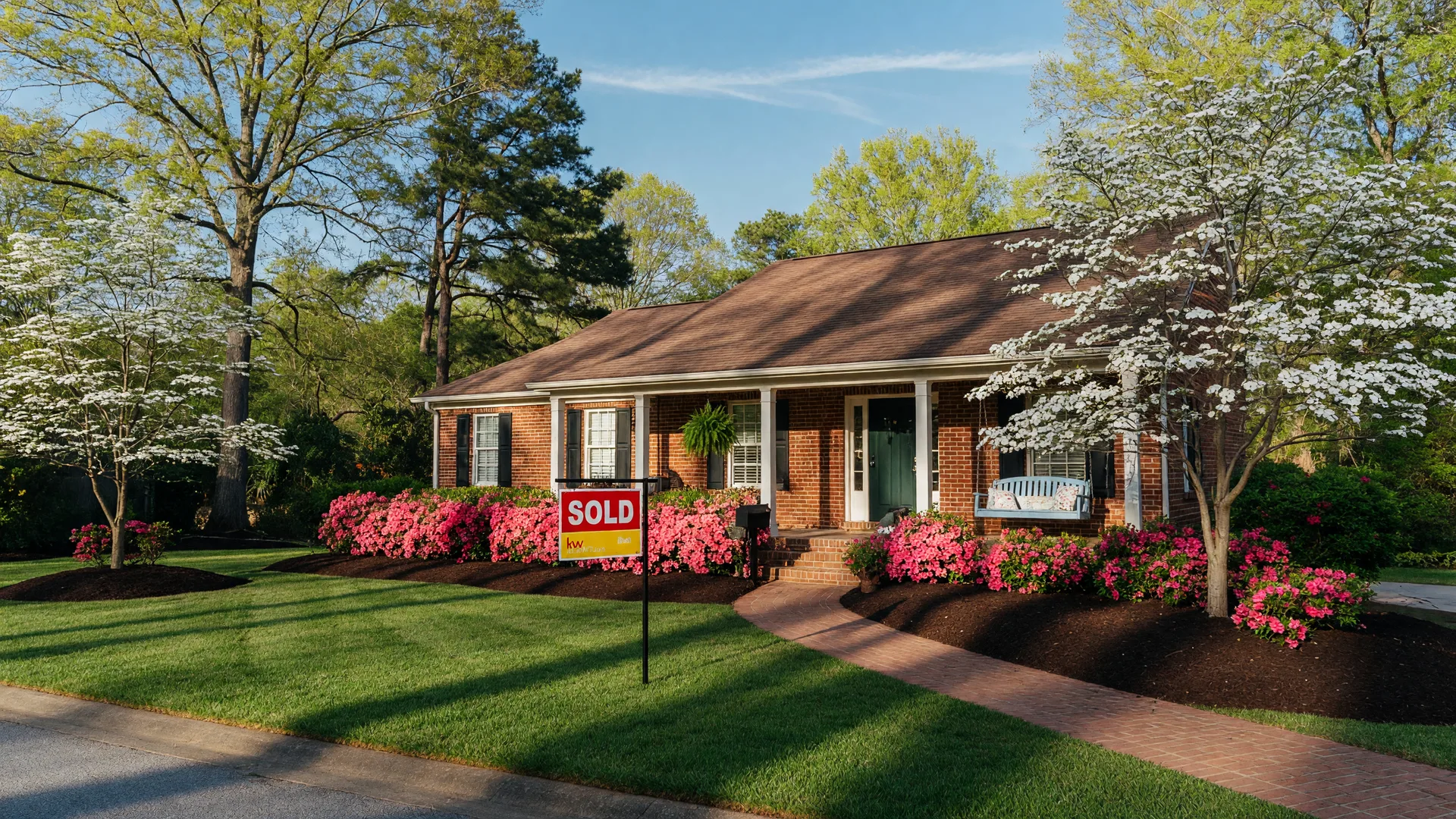
Georgia spring weather is hard to beat. March through May brings mild temperatures, blooming dogwoods and azaleas, and plenty of sunshine. Homes show at their absolute best. Gardens are at their peak, windows can be opened to let in fresh air, and buyers are in a good mood when they step out of their cars into comfortable weather instead of Georgia's summer heat or winter chill.
Spring curb appeal is naturally strong. With minimal effort, your landscaping looks lush and inviting. Fresh mulch, potted plants by the front door, and a clean walkway make a stronger impression in spring than in any other season. We are Certified Staging Specialists, and we can tell you that a home that shows well in spring often sells for a premium over the same home listed in a less favorable month.
What the FMLS Data Shows
Across NW Metro Atlanta, spring consistently delivers the shortest days on market and the highest sale-to-list price ratios. In Q2 of 2025 and Q1 of 2026, homes in our coverage area that listed in March through May sold in a median of 12 to 15 days, compared to 22 to 28 days in other seasons. Sale prices averaged 97 to 99 percent of list price in spring, versus 93 to 95 percent in slower months.
The caveat is that spring also has the most competition. More sellers list in spring than in any other season, which means buyers have more choices. A home that is overpriced or poorly presented can get lost in the crowd. Spring rewards sellers who prepare their homes well, price them right, and market them aggressively.
3. Summer (June-August): Still Strong but Slowing
Summer in Georgia real estate is a tale of two markets. June carries momentum from spring, July hits a midsummer lull, and August picks up again as families realize they need to get serious about their move.
June: The Spring Spillover
June is still a strong month for sellers. Families who started looking in spring are still actively searching, and many are under pressure to find a home before summer ends. The weather is warm but not yet oppressive, and school is out, which actually makes showing scheduling easier for families with children.
In June, we typically see a continuation of spring dynamics. Days on market are still relatively short, and well-priced homes attract solid interest. The key difference is that the pool of buyers starts to thin out compared to April and May, so pricing becomes more important.
July: The Holiday Slowdown
July is the slowest month of the summer selling season. The Fourth of July holiday interrupts showings, families are on vacation, and buyers are less motivated. Open houses see lower traffic, and agents often take time off themselves.
That said, July is not dead. The buyers who are looking in July tend to be serious. They have a real need to move, and they are not browsing casually. For a well-priced, well-presented home, July can still produce a solid offer. It just takes longer to find the right buyer.
August: The Back-to-School Shift
August is a transition month. The first half still sees activity from families who need to move before the school year. The second half slows down as everyone focuses on getting kids ready for school. By the end of August, the market has clearly shifted into fall mode.
One advantage of August: less competition. Many sellers hold off on listing until after Labor Day, so the homes that are on the market in August face fewer comparable listings. If your home is priced right and shows well, it can stand out.
4. Fall (September-November): The Secret Selling Season
Fall is the most underrated season in Georgia real estate. Most sellers assume the market dies after Labor Day, and that assumption creates an opportunity for the sellers who understand the fall market.
Serious Buyers, Less Competition
Here is the key difference between spring and fall buyers. Spring buyers include a lot of "maybe" buyers -- people who are thinking about moving but are not committed. Fall buyers are almost all serious. They have a real need to move, and they are on a timeline. They are motivated, pre-approved, and ready to make decisions.
At the same time, the number of new listings drops significantly after Labor Day. Most sellers who were going to list in spring already did. The ones who waited until fall are often people who have a legitimate reason -- a job relocation, a life change, or they simply were not ready earlier. The result is a market with fewer homes for sale and a motivated buyer pool. That is a favorable equation for sellers.
September and October: The Sweet Spot
September is surprisingly strong in the Georgia market. The weather is still beautiful, with mild temperatures and the start of fall foliage. Families are settled into the school routine, and buyers who did not find a home in spring are back in the market. Corporate relocations tend to happen in the fall as well, adding another layer of demand.
October is the peak month for fall selling. The foliage is at its most beautiful, creating stunning curb appeal that photographs well and impresses buyers in person. October also benefits from the "last chance" psychology. Buyers know that if they do not find a home soon, they will have to wait until spring, which may not work for their timeline.
November: The Pre-Holiday Slowdown
November is the most unpredictable month of the fall season. The first half of November can still be active, especially in years when the weather holds. But once Thanksgiving approaches, the market slows noticeably. Buyers are focused on the holidays, and showings drop off.
For sellers, November is a month to be realistic. If you list in November, expect a longer time on market. But the buyers who are looking are serious, and a home that is priced correctly can still sell. The other strategy is to list in November and market aggressively to the buyers who are looking, knowing that you may carry the listing into January if it does not sell before the holidays.
5. Winter (December-February): Slowest Season, Smartest Strategy
Winter is the slowest season in Georgia real estate, but it is also the season with the least competition and the most motivated buyers. For the right seller, winter can be a very smart time to list.
December: The Holiday Pause
December is the slowest month of the year. Showings are hard to schedule because of holiday parties, family obligations, and travel. Buyers are not actively looking. Unless you have an urgent reason to sell -- a job relocation, a divorce, or a financial need -- we generally advise waiting until January.
That said, December has one advantage: almost no new listings come on the market. A home that is listed in December gets outsized attention from the few buyers who are looking. If your home is priced right and shows well, it can be the best option in a very thin market. And serious buyers in December tend to be very serious indeed.
January: New Year Momentum
January is one of the most strategic months to list. Here is why. The new year brings a surge of buyer activity driven by New Year's resolutions, new job starts, and life changes that people have been waiting through the holidays to act on. Buyers who were on the fence in November and December come back in January with renewed motivation.
At the same time, most sellers are not ready to list in January. They are still decompressing from the holidays, or they think it is too early. This creates a gap: lots of buyers, not many listings. For a seller who is ready to go in January, the market can be very favorable. We have seen homes go under contract in January for well above asking price simply because there was so little competition.
The caveat is that January weather in Georgia can be unpredictable. An ice storm or a cold snap can reduce showing activity. But on balance, January is a strong strategic choice for sellers who are prepared.
February: Early Spring Shoppers
February is the bridge between winter and spring. Buyer activity picks up noticeably as the weather starts to improve. February buyers are typically early spring shoppers who want to get a head start before the March rush. They are motivated, and they are often pre-approved and ready to move quickly.
Listing in February positions you to capture this early spring demand before the flood of March listings hits the market. If the weather cooperates, February can be a surprisingly active month. And because many sellers are still waiting for spring, the competition is lighter than it will be in March.
6. Month-by-Month Quick Reference
Here is a quick reference for what to expect in each month of the year.
January
Verdict: Strategic listing month. New Year's resolutions drive serious buyer activity. Low competition. Ideal for sellers who are prepared and want to capture motivated buyers before the spring rush. Homes that list in January often get immediate attention because inventory is thin.
February
Verdict: Early spring shoppers begin. Buyer activity picks up noticeably. Less competition than March. Good month for sellers who want to get ahead of the spring flood. Weather-dependent, but generally favorable.
March
Verdict: Spring rush begins. Peak season starts. High buyer demand, great weather, strong curb appeal. Most listings come on the market this month. Pricing and presentation are critical because competition is high.
April
Verdict: Peak activity month. Highest buyer demand of the year. Families are actively searching to move before school starts. Best chance of multiple offers. The sweet spot for sellers who are ready.
May
Verdict: Still peak, families finalizing. Strong demand continues. Families who started looking in March and April are making final decisions. Good month to list, but homes must be priced competitively to capture remaining spring buyers.
June
Verdict: Summer momentum. Spring demand spills into June. School is out, making showings easier for families. Still a solid month for sellers. Days on market start to stretch slightly compared to spring.
July
Verdict: Slight slowdown. Fourth of July holiday interrupts showings. Families on vacation. Lower buyer activity. Serious buyers only. Good month for a well-priced, well-presented home. Light competition from other sellers.
August
Verdict: Back-to-school shift. First half still active from families needing to move before school. Second half slows. Less competition than spring. Good for sellers who want to catch the last wave of summer buyers.
September
Verdict: Secret season begins. Less competition, motivated buyers. Corporate relocations and life changes drive demand. Beautiful fall weather. One of the most underrated months to list. Strong recommendation for prepared sellers.
October
Verdict: Fall sweet spot. Peak of the fall market. Beautiful foliage creates stunning curb appeal. Serious buyers. Less competition than spring. "Last chance" psychology motivates buyers. Excellent month to list.
November
Verdict: Slowing, pre-holiday. First half of November can be active. Post-Thanksgiving, the market slows significantly. Low competition but low demand too. Only list in November if you have a specific reason or are willing to carry into January.
December
Verdict: Holiday pause. Slowest month of the year. Very few buyers, very few new listings. Only list if you have an urgent reason to sell. Otherwise, prepare and wait for January. Serious December buyers are extremely motivated.
For a complete picture of how these seasonal patterns translate into actual market data, visit our market statistics page for the latest numbers by city and season.
7. Best Time by City: How Seasonality Affects Each Community Differently
One of the most important things we tell our clients is that NW Metro Atlanta is not one market. It is seven distinct markets, each with its own seasonal rhythm. Here is how timing varies by city.
Marietta and Kennesaw: Fastest Markets, Sell Well Year-Round
Marietta and Kennesaw are the most liquid markets in our coverage area. Both cities see strong demand year-round, driven by Cobb County schools, proximity to Atlanta, and deep inventory of homes across price points. In mid-2026, both cities had a median days on market of just 12 days. That is fast in any season.
In these markets, the seasonal differences are real but less dramatic. A well-priced home in an East Cobb school zone will sell quickly in January, July, or October. The spring market still delivers the highest prices, but the gap between spring and other seasons is smaller in Marietta and Kennesaw than in other communities. Sellers in these cities have more flexibility on timing.
Woodstock and Acworth: Spring and Fall Are Strongest
Woodstock and Acworth show more pronounced seasonality. Spring is the clear peak, driven by families who want to settle into Cherokee County schools or the lake lifestyle before summer. Fall is the second strongest season. Summer slows down as families take vacations and the heat affects showing activity. Winter is the weakest season in these markets.
For sellers in Woodstock, listing in March or April gives you access to the largest buyer pool. Acworth sellers benefit from the same spring timing, with the added factor of lakefront properties that show best in spring and fall when the weather is mild.
Dallas and Cartersville: Spring Is Critical, Other Seasons Slower
Dallas and Cartersville show the most seasonal variation. Spring is the critical window for sellers in these markets. The buyer pool is smaller than in Cobb or Cherokee counties, and it peaks sharply in spring. Homes that do not sell in spring often sit through summer and struggle to find buyers in fall and winter.
The reason is that buyers in Dallas and Cartersville are typically first-time buyers and young families who are more sensitive to price and timing. They are less likely to be browsing in the off-season. For sellers in these markets, pricing aggressively in spring is the best strategy. Waiting until fall can work, but the pool of buyers is thinner.
For a deeper look at each community, read our cost of living guide for Marietta and our interactive market statistics page for city-by-city data.
8. What to Do Right Now: Regardless of Season
Here is the most important thing we want you to take away from this guide. No matter what time of year it is, there are things you can do right now to prepare your home for sale. The sellers who succeed are the ones who are ready when the market is right, not the ones who scramble to prepare after they decide to list.
Start with a Pre-Listing Inspection
A pre-listing inspection gives you the gift of time. It identifies issues that will come up when a buyer's inspector walks through, and it lets you address them on your own schedule with contractors you choose. Sellers who skip the pre-listing inspection often end up negotiating repairs under pressure, which costs them money and peace of mind. A pre-listing inspection typically costs $400 to $600 and is the best investment you can make in a smooth sale.
Focus on the High-ROI Improvements
Not every improvement is worth your time or money. Focus on the ones that actually move the needle: fresh paint in neutral colors, improved curb appeal (mulch, trimmed landscaping, a painted front door), updated light fixtures and hardware, and a deep professional clean. Timing your listing with staging preparation ensures your home is show-ready from day one. These are the improvements that cost relatively little and make a disproportionate difference in how buyers perceive your home.
For a complete breakdown of what works and what does not, read our detailed guide on increasing your home's value before selling. It covers every improvement from kitchen updates to curb appeal with real ROI data from our market.
Get Your Financial House in Order
Before you list, make sure you understand your financial picture. Gather your mortgage documents, understand your payoff amount, and get a sense of what you will walk away with after closing costs. If you are planning to buy your next home at the same time, talk to a lender about your options for bridge financing, a home equity line, or a contingent sale. Knowing your numbers before you list gives you confidence and clarity throughout the process.
Consider Your Selling Options
Not every seller needs a traditional listing. If you need to sell quickly, are facing a difficult situation, or simply want the certainty of a guaranteed sale, explore your alternatives. Our selling options comparison page walks through every approach from traditional listing to cash offer to home trade-in so you can choose the path that fits your situation.
For sellers going through divorce, probate, foreclosure, or other difficult transitions, we have a dedicated resource page with tailored guidance for each scenario. One of our core strengths as a team is guiding families through life's hardest transitions with empathy and expertise. We have been there for hundreds of families in exactly these situations, and we know what works.
Work with an Agent Who Knows Your Market
The single most important factor in a successful home sale is the agent you choose. The right agent will know when to list your specific home in your specific neighborhood for maximum exposure and price. They will price it correctly from day one, prepare it for the market with a strategy that matches your goals, and negotiate the best possible outcome.
At Team Haigh, we have been doing this for more than 360 transactions across every season and every community in NW Metro Atlanta. We know the seasonal patterns in each city. We know which school zones attract the strongest buyers. We know how to position your home to sell quickly and for the best possible price, whether it is March or December.
Want Expert Help Finding Your Perfect Home?
Team Haigh has helped 360+ families find their ideal home in NW Metro Atlanta. We can help you too.
9. Team Haigh's Listing Expertise: 360+ Transactions of Seasonal Market Knowledge
We have saved the most important section for last. Because here is the truth: knowing when to sell is important, but knowing how to sell is what actually gets results. And that is where Team Haigh's expertise makes the difference.
Campbell Haigh has been in the real estate business his whole life. His grandfather started as a broker in the 1920s, and that legacy runs through three generations on his side of the family and two on his mother's side. More than a hundred years of real estate experience, all told. Campbell got his license in 2013, and before that, he learned the property side the hands-on way: flipping homes and owning rentals of his own.
Beth Haigh has been licensed for even longer than Campbell, with a background in commercial property management and commercial roofing sales. She has known real estate from the ground up, literally, from how a building is managed to how it is built. Together, they form the foundation of Team Haigh Realty.
With 360-plus homes sold, $106 million-plus in sales, and nearly 300 five-star reviews, we have helped more families buy and sell in NW Metro Atlanta than almost any other team in the region. Nearly 60 percent of our business comes from clients who return to us and refer the people they love. That is the clearest proof that when you put clients' interests first, they come home to you.
We know exactly when to list your specific home for maximum exposure and price. We know that a home in East Cobb needs a different timing strategy than a home in Cartersville. We know that the pricing strategy that works in March is different from the one that works in October. And we know that every season has opportunities if you have the right agent guiding you.
As AI-Certified Listing Agents, Certified Negotiators, and Luxury, Seniors, and Staging Specialists, we bring next-generation tools and old-school integrity to every listing. We market your home across 50-plus platforms with professional photography, walkthrough video, and AI-enhanced listing copy. We target the right buyers with digital advertising campaigns. And we negotiate every detail with your best interests at heart.
Whether you are selling in spring, fall, winter, or summer, we are here to guide you through one of the most important decisions you will ever make with wisdom, empathy, and integrity.
Ready to Find Out When You Should List Your Home?
Every home is different, and every seller's situation is unique. Let us sit down and talk through your goals, your timeline, and what the market is doing in your specific neighborhood. We will give you honest, personalized advice on when to list and how to get the best possible outcome. No pressure, no obligation.
Explore More Selling Resources