Last updated: August 8, 2026. Data sourced from FMLS Q2 2026.
One of the first decisions a home buyer in Cobb County faces is also one of the biggest: East Cobb or West Cobb? The dividing line is US-41 (Cobb Parkway), but what separates these two halves of the county goes far deeper than a road. They offer different housing stock, different school districts, different commutes, and different lifestyles.
After helping more than 360 families find their place in Cobb County, we have guided plenty of buyers through this very decision. There is no universally right answer: the right side depends on what you value most in a home, a school district, and a daily routine. This guide lays out the real differences, backed by FMLS data and honest observations from years of working in both communities.
For deeper dives into each area, visit our dedicated East Cobb neighborhood guide and West Cobb neighborhood guide. And if schools are a major factor in your decision, our Marietta schools guide covers the school district landscape across the entire county.
The Dividing Line: Where East Cobb Ends and West Cobb Begins
The informal boundary between East and West Cobb is US-41 (Cobb Parkway), which runs roughly north-south through the center of the county. Everything east of US-41 is considered East Cobb. Everything west of it is West Cobb. This is not an official county designation, but it is one that real estate agents, residents, and even school districts use consistently.
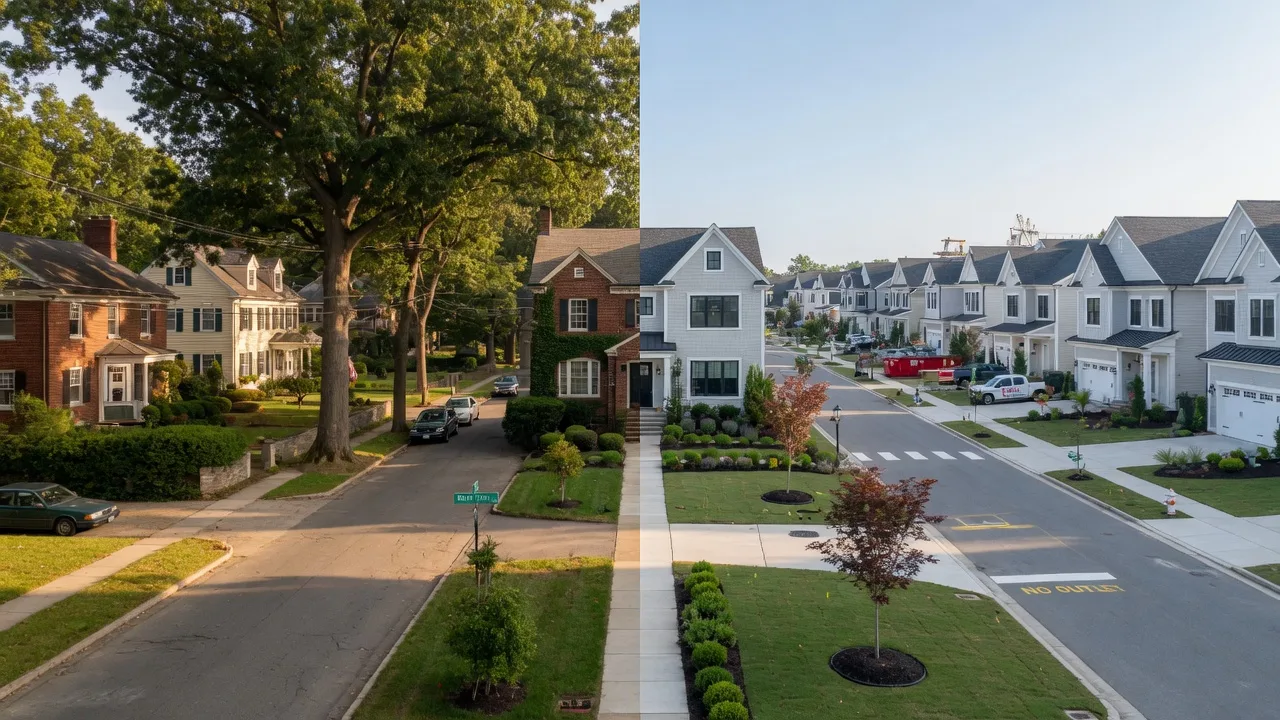
To the east, you are closer to Atlanta, inside I-285, with shorter commutes and more established neighborhoods. To the west, you trade proximity to the city for newer homes, larger lots, and a slower suburban pace. The difference in feel between the two sides is noticeable within a five-minute drive across the dividing line.
Home Prices: East Cobb vs. West Cobb by the Numbers
The most obvious difference between East and West Cobb is price. East Cobb commands a significant premium, driven primarily by its school district reputation and its proximity to Atlanta. Check current housing inventory levels to understand availability on both sides. Here is the data from FMLS Q2 2026:
| Metric | East Cobb | West Cobb |
|---|---|---|
| Median Sale Price | $672,000 | $550,000 |
| Price per Sq Ft | $245 | $202 |
| Median Days on Market | 8 | 14 |
| Homes Sold Q2 2026 | 486 | 433 |
Data: FMLS Q2 2026. East Cobb defined as areas east of US-41; West Cobb defined as areas west of US-41. See our Market Statistics page for the complete dataset.
The $122,000 gap in median price is substantial, and it reflects real differences in housing stock, land values, and school district premiums. Homes in East Cobb sell faster (8 days vs. 14) and at a higher price per square foot ($245 vs. $202). The East Cobb premium is a premium for location, schools, and established neighborhoods with mature trees and larger lots.
What Your Money Buys
At $550,000 in West Cobb, you can find a newer 3,000-square-foot home in a planned community with modern finishes, an open floor plan, and a two-car garage. At the same price in East Cobb, you are looking at a 1970s or 1980s ranch or split-level on a good lot that may need updates. The trade-off is that the East Cobb home sits in a top-rated school district and will likely appreciate faster over time.
At $700,000, the picture shifts. In East Cobb, this buys you a well-maintained 3,000- to 3,500-square-foot home in a premier school cluster, often on a half-acre or larger lot with mature trees. In West Cobb, $700,000 puts you firmly in luxury territory: a 4,000-square-foot-plus new construction home on a premium lot, possibly with a finished basement.
School Districts: The Biggest Differentiator
If there is one factor that drives the East Cobb price premium more than any other, it is the schools. The school district reputation in East Cobb is the primary reason families are willing to pay more for less house. Here is how the two sides break down:
East Cobb High School Clusters
- Walton High School: Consistently ranked among the top high schools in Georgia. Walton feeds from East Cobb Middle, Dodgen Middle, and several top elementary schools. Homes in the Walton district command the highest premiums in the county.
- Lassiter High School: Another top-ranked Cobb County school with strong academic programs and athletics. The Lassiter cluster covers a broad swath of East Cobb with a mix of established subdivisions.
- Pope High School: A newer facility with strong STEM programs and college prep. The Pope cluster covers areas near the Chattahoochee River and the Roswell border.
- Wheeler High School: Known for its strong magnet programs and International Baccalaureate offerings. Wheeler serves the southern portion of East Cobb near I-285 and Cumberland.
West Cobb High School Clusters
- Harrison High School: The crown jewel of West Cobb schools. Harrison consistently ranks among the top high schools in the county and state. Homes in the Harrison cluster are the most expensive in West Cobb and sell quickly.
- Kennesaw Mountain High School: A relatively newer school with strong academic programs and modern facilities. The Kennesaw Mountain cluster covers much of the central West Cobb area near the mountain.
- Hillgrove High School: Located in the southern portion of West Cobb, Hillgrove serves the communities along Dallas Highway. It is highly rated and draws from newer subdivisions.
The honest truth: while East Cobb's top-tier schools (Walton, Lassiter, Pope) have a slightly stronger national reputation than their West Cobb counterparts, Harrison and Kennesaw Mountain are excellent schools by any measure. Families who choose West Cobb for the schools are not compromising on quality. They are simply choosing a different value equation: more house for the money with still very strong schools.
Neighborhoods: East Cobb
East Cobb's neighborhoods are defined by their age. Most were developed between the 1960s and 1990s, with mature trees, established landscaping, and a sense of permanence that you do not find in newer subdivisions. Here are the standout areas:
- Indian Hills: One of East Cobb's most desirable neighborhoods, centered around the Indian Hills Country Club. Large custom homes on generous lots, heavily wooded, with a strong sense of community. Homes typically range from $600,000 to over $2 million.
- Columns Drive area: A highly sought-after pocket near the Chattahoochee River, zoned for Walton High School. Beautiful older homes on large lots with deep backyards. One of the most expensive neighborhoods in East Cobb.
- Terrell Mill area: More affordable than some other East Cobb enclaves, Terrell Mill offers solid homes in the $400,000 to $600,000 range with access to the Wheeler High School magnet programs. The area has become popular with families looking for an entry point into East Cobb.
Neighborhoods: West Cobb
West Cobb's neighborhoods are, on average, newer and more uniform. Planned communities with homeowner associations, community pools, and playgrounds are the norm. Here are the highlights:
- Lost Mountain area: The heart of West Cobb, centered around Lost Mountain Park and the Lost Mountain Middle School area. A mix of established and newer subdivisions with good access to shopping at The Avenue West Cobb. Homes range from $400,000 to $700,000.
- Seven Hills: A large master-planned community in southern West Cobb. Multiple amenity centers, pools, tennis courts, and a strong community feel. Homes range from the $400,000s to the $700,000s depending on size and updates.
- Kennesaw Mountain area: The neighborhoods clustered around Kennesaw Mountain National Battlefield Park offer easy access to hiking trails and green space. This area overlaps with both Kennesaw city limits and unincorporated West Cobb. Homes range from the $450,000s to $800,000s.
For a complete breakdown of the best areas in both halves of the county, see our best neighborhoods in Marietta guide and best neighborhoods in Kennesaw guide, which cover both East and West Cobb communities.
Lifestyle: Established vs. Expanding
The lifestyle difference between East and West Cobb is real and worth thinking about beyond the numbers. Here is what residents on each side actually experience day to day.
East Cobb Lifestyle
East Cobb feels like an older, more established suburb. The trees are taller, the roads are narrower and more winding. There is a sense that the area has been fully built out for decades, which means no construction noise and no surprises. The downside is that many homes need updates, and finding a truly move-in ready home can be competitive.
Dining and shopping in East Cobb are excellent. The Avenue East Cobb, Merchant's Walk, and the Roswell Road corridor offer dozens of restaurants, boutiques, and services. You are also closer to the Chattahoochee River, which means easy access to river parks, walking trails, and the Chattahoochee Nature Center.
West Cobb Lifestyle
West Cobb feels more like classic suburban expansion. The neighborhoods are newer, the streets are wider, and the homes are more uniform in style. The subdivisions often have amenities like pools, playgrounds, and sidewalks, making them especially popular with families with young children.
The Avenue West Cobb is the commercial heart of West Cobb, with shopping, dining, and entertainment concentrated around the Lost Mountain Road and Barrett Parkway intersection. West Cobb also has excellent park access, with Lost Mountain Park, Olley Creek Park, and the West Cobb Senior Center all serving the community. You are also closer to Kennesaw Mountain National Battlefield Park, with its 3,000 acres of hiking trails and historic sites.
Commute to Atlanta: A Real Difference
The commute difference between East and West Cobb is one of the most practical considerations. Here is the reality:
Commute Comparison
- East Cobb to Midtown Atlanta: 20 to 30 minutes (non-peak), 30 to 45 minutes (peak via GA-400 or I-75)
- East Cobb to Cumberland/Galleria: 10 to 15 minutes
- West Cobb to Midtown Atlanta: 30 to 45 minutes (non-peak), 45 to 60 minutes (peak via I-75 South)
- West Cobb to Cumberland/Galleria: 15 to 25 minutes
- West Cobb to Marietta Square: 10 to 15 minutes
Times are estimates based on typical traffic patterns. Your actual commute will vary based on your specific origin and destination.
The 10- to 15-minute longer commute from West Cobb may not sound like much, but over a year of five-day commutes, it adds up to roughly 80 to 120 extra hours in the car. For buyers who work in the Cumberland Galleria area, the difference is minimal. For those who need to get to Midtown or Buckhead regularly, East Cobb's advantage is significant.
Who Should Choose East Cobb?
East Cobb is the right choice if:
- Your top priority is the highest-rated school clusters in Cobb County
- You want the shortest possible commute to Atlanta, Buckhead, or Midtown
- You appreciate mature trees, established neighborhoods, and older homes with character
- You are willing to pay a premium for location and are comfortable with homes that may need updates
- Long-term appreciation is a key factor in your home-buying decision
Who Should Choose West Cobb?
West Cobb is the right choice if:
- You want the most square footage and newest construction for your budget
- Excellent schools are important, but you do not need the absolute top-ranked cluster
- You prefer a planned community with amenities (pools, playgrounds, HOA)
- Your commute is primarily to West Cobb itself, Kennesaw, or the Marietta area
- You want a lower purchase price per square foot and a more relaxed pace of life
Not Sure Which Side Fits You Best?
We have helped hundreds of families make this exact decision. Let us listen to what matters most to you and help you narrow down the right neighborhoods, schools, and home styles. No pressure, no obligation. Just honest, expert guidance from a team that knows every street in Cobb County.