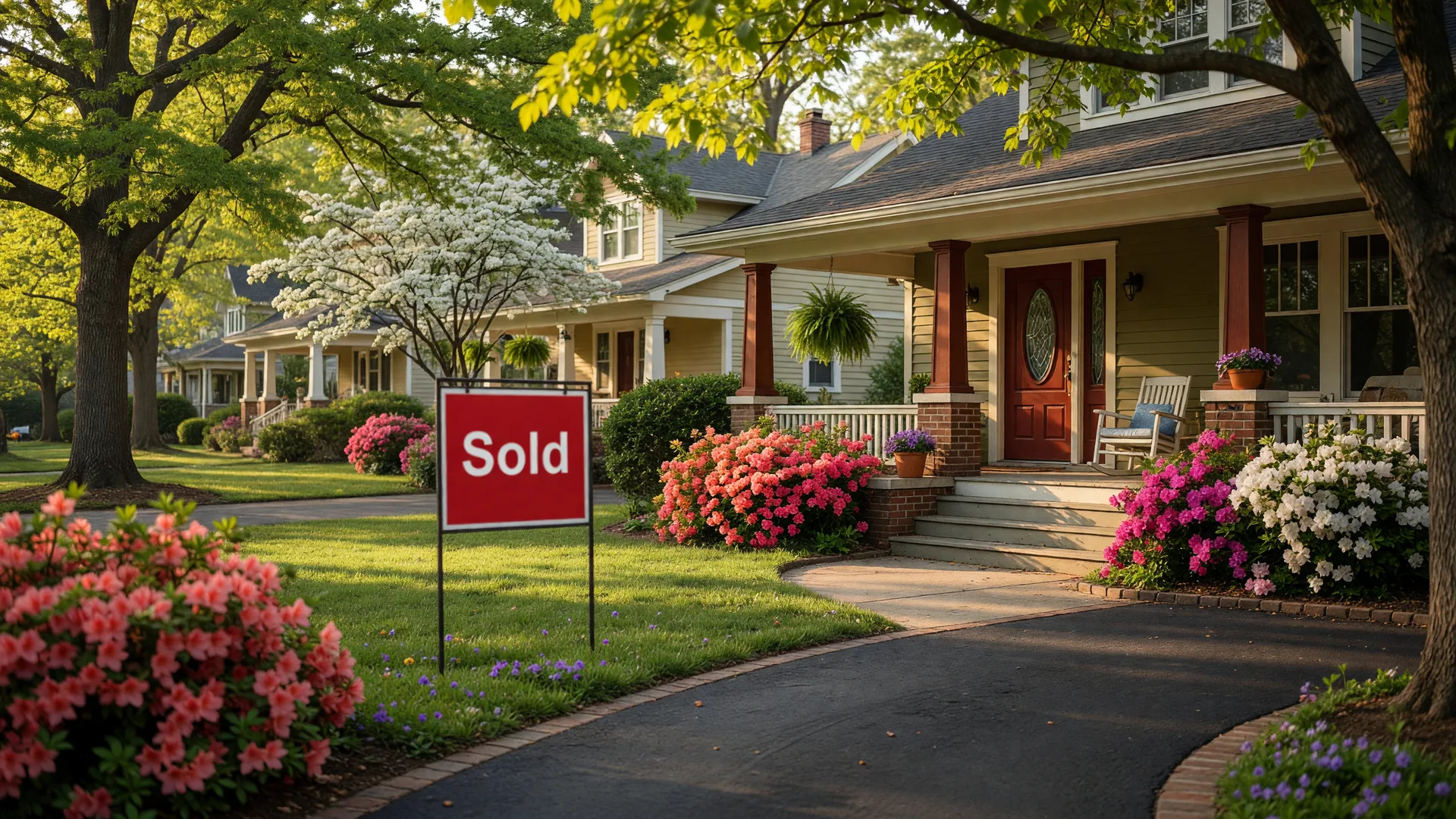
You have decided to buy your first home. Congratulations. This is one of the most exciting financial and personal milestones you will ever reach, and the NW Metro Atlanta market is a wonderful place to make it happen. From the tree-lined historic streets of Marietta to the lakefront charm of Acworth, from the family-friendly subdivisions of Kennesaw to the growing downtown energy of Woodstock, there is a first home waiting for you in one of these communities.
But getting from "I want to buy a home" to "I have the keys in my hand" takes more than scrolling through listings. It takes a clear plan, realistic expectations about your budget, a solid understanding of how the market works, and a partner who knows the territory. That is what this guide is for.
We have helped more than 360 families buy and sell homes across Cobb, Paulding, Cherokee, and Bartow counties, and first-time buyers are some of our favorite clients to work with. There is nothing quite like watching someone walk into a home that is truly theirs for the first time. Over the years, we have developed a process that takes the anxiety out of the equation and replaces it with clarity and confidence. This guide walks you through every step, from pre-approval to closing day.
For a deeper dive into the step-by-step process of making an offer, negotiating contingencies, and navigating the Georgia contract forms, be sure to check out our complete Buyer's Guide.
1. Getting Pre-Approved: Your First and Most Important Step
If you take only one piece of advice from this entire guide, let it be this: get pre-approved for a mortgage before you look at a single home. Not pre-qualified. Pre-approved. There is a meaningful difference, and in a competitive market like NW Metro Atlanta, pre-approval is what separates serious buyers from tire kickers in the eyes of listing agents and sellers.
Why Pre-Approval Matters
A pre-approval means a lender has reviewed your income, assets, credit score, and debt obligations and has committed in writing to lend you a specific amount. It tells sellers that you can actually follow through on your offer. Without it, even a competitive bid can be passed over in favor of a buyer who has already done the work. In multiple-offer situations, which we see regularly in desirable price ranges under $500,000, a pre-approval letter is non-negotiable if you want to be taken seriously.
Pre-approval also gives you something equally important: clarity. You will know exactly what you can afford before you fall in love with a home that stretches too far. It takes the guesswork out of your search and keeps you focused on homes that are realistically within reach.
What Lenders Look At
When you apply for a mortgage, lenders evaluate several key factors to determine your eligibility and loan amount. Here is what they look at:
- Credit Score: In Georgia, conventional loans typically require a minimum score of 620, though you will get better rates at 700 or above. FHA loans can go as low as 580, and VA loans have no official minimum but most lenders prefer 620 or higher. Your score directly impacts your interest rate, which affects your monthly payment over the life of the loan.
- Debt-to-Income Ratio (DTI): This is the percentage of your gross monthly income that goes toward debt payments, including your projected mortgage. Most lenders prefer a DTI of 43 percent or lower, though some loan programs allow up to 50 percent with strong compensating factors. If your DTI is on the higher side, paying down credit card balances or a car loan before you apply can make a meaningful difference.
- Down Payment Funds: Lenders want to see where your down payment and closing costs are coming from. Savings accounts, investment accounts, and gift funds from immediate family are all acceptable sources. You will need to provide bank statements or documentation showing the source of your funds.
- Employment History: Two years of steady employment in the same field is the gold standard for lenders. If you recently changed jobs but stayed in the same industry, that is generally fine. Gaps in employment may require a letter of explanation.
How Much House Can You Afford?
The old rule of thumb is that your monthly housing payment (principal, interest, taxes, and insurance, or PITI) should not exceed 28 percent of your gross monthly income. In practice, that number flexes depending on your overall financial picture. A buyer with no other debt and a strong down payment can comfortably go higher than 28 percent. A buyer with significant student loans or car payments should be more conservative.
Here is a quick starting point: with a 5 percent down payment, a $500 monthly debt load, and good credit, a household income of around $80,000 typically supports a home in the $300,000 to $350,000 range. At $100,000 in income, that range moves to $375,000 to $450,000. These are rough estimates your lender will refine based on your specific numbers, current interest rates, and property taxes in the county where you buy.
We maintain relationships with trusted local lenders who know the Cobb, Cherokee, Paulding, and Bartow county markets. A local lender understands the nuances of our appraisal environment, tax rates, and closing timelines. When you are ready to take the first step, we can connect you with lenders our past clients have used and trusted.
2. Understanding the NW Metro Atlanta Market
NW Metro Atlanta is not one market. It is seven distinct communities spanning four counties, each with its own price points, housing stock, and lifestyle. Understanding how these markets differ is the key to finding the right place for your first home. Let us walk through each community so you can see where your budget and lifestyle intersect.
Based on the most recent First Multiple Listing Service (FMLS) data for Q2 2026, here is how the core markets stack up. These are real numbers, not estimates, and they give you a concrete picture of what your budget can deliver across the NW Metro Atlanta area.
| City | Median Price | $/sqft | DOM | Homes Sold |
|---|---|---|---|---|
| Marietta | $550,000 | $216 | 12 | 919 |
| Kennesaw | $449,450 | $186 | 12 | 264 |
| Woodstock | $495,000 | $215 | 14 | 423 |
| Acworth | $425,000 | $185 | 14 | 367 |
Data: FMLS Q2 2026. Days on Market (DOM) reflects median days from list to pending. For the full dataset visit our Market Statistics page.
A DOM of 12 days is very competitive by any standard. It means that the median home in Marietta and Kennesaw is going under contract in under two weeks. For buyers, that translates to limited time for decision-making and a higher likelihood of multiple-offer situations. Woodstock and Acworth, at 14 DOM, are similarly competitive homes in desirable school zones routinely attract multiple offers in the first week.
Here is what your budget actually buys in each city, using the median price per square foot from Q2 2026 FMLS data. These are rough guides based on market averages, exact homes will vary based on condition, location, and lot size.
| Budget | Marietta (~$216/sqft) | Kennesaw (~$186/sqft) | Woodstock (~$215/sqft) | Acworth (~$185/sqft) |
|---|---|---|---|---|
| $400,000 | ~1,850 sqft townhome or smaller starter home | ~2,150 sqft single-family, good options | ~1,860 sqft townhome or smaller SF home | ~2,160 sqft single-family, strong options |
| $500,000 | ~2,315 sqft, solid single-family options | ~2,690 sqft, very strong options | ~2,325 sqft, good single-family options | ~2,700 sqft, excellent options |
| $600,000 | ~2,780 sqft, wide range available | ~3,225 sqft, premium options | ~2,790 sqft, strong selection | ~3,240 sqft, premium options |
| $800,000 | ~3,700 sqft, East Cobb or luxury options | ~4,300 sqft, top-tier options | ~3,720 sqft, downtown-adjacent or lake access | ~4,320 sqft, lakefront or estate options |
Data: FMLS Q2 2026. Square footage estimates are approximate based on median $/sqft. Actual availability varies by neighborhood and home condition. See our full market statistics for the complete dataset.
The key takeaway: at $400,000, you will find the most square footage for your money in Kennesaw and Acworth, where the lower cost per square foot stretches your budget further. At $600,000 and above, Marietta and Woodstock open up a wide range of options, including premium school zones and downtown-adjacent locations. And at $800,000, you are looking at luxury and estate-level properties across all four markets.
Marietta
The historic heart of Cobb County. With a median price of $550,000 and $216 per square foot (FMLS Q2 2026), Marietta is the most expensive of the four core markets. At $400,000 you are looking at townhomes or smaller starter homes in West Cobb, around 1,850 square feet. At $500,000 to $600,000, solid single-family options open up across the city. East Cobb commands a significant premium, with well-maintained homes often starting at $600,000 and climbing quickly. Marietta offers the best mix of historic charm, suburban amenities, and access to I-75. It is ideal for first-time buyers who want walkable dining and entertainment options paired with strong schools. Learn more on our Marietta neighborhood guide.
Acworth
Lake Allatoona's front porch. With a median price of $425,000 and $185 per square foot (FMLS Q2 2026), Acworth delivers the most square footage for your dollar among the four core Cobb-adjacent markets. At $400,000, you can find a single-family home around 2,160 square feet, which is significantly more space than you would get at the same price in Marietta or Woodstock. The downtown area has undergone a revitalization, with a growing restaurant scene and a charming lakefront park. School zones split between Cobb and Cherokee counties depending on where you are, so address-level research is essential. Acworth is ideal for buyers who want lake access, a small-town feel, and good value for their dollar. See our Acworth neighborhood guide for details.
Kennesaw
A family-focused suburb anchored by Kennesaw State University and Kennesaw Mountain National Battlefield Park. With a median price of $449,450 and $186 per square foot (FMLS Q2 2026), Kennesaw strikes a strong balance between affordability and quality. At $400,000, you can find a single-family home around 2,150 square feet, plenty of room for a growing family. At $500,000, you are looking at approximately 2,690 square feet in strong school zones. The city is well-developed with excellent shopping, dining, and recreation options, and the school system is consistently strong. Kennesaw is ideal for buyers who want an established Cobb County community with excellent schools, outdoor access, and a central location near both I-75 and I-575. Explore our Kennesaw neighborhood guide.
Woodstock
Cherokee County's crown jewel. With a median price of $495,000 and $215 per square foot (FMLS Q2 2026), Woodstock is nearly as expensive as Marietta on a per-square-foot basis. At $400,000, you are looking at townhomes or smaller single-family homes of around 1,860 square feet. At $600,000, the market opens up to approximately 2,790 square feet in desirable school zones and downtown-adjacent neighborhoods. Woodstock's downtown has become one of the most vibrant in the region, with restaurants, music venues, breweries, and a weekly farmers market. It is ideal for first-time buyers who prioritize walkability and downtown energy without sacrificing suburban space. Check our Woodstock neighborhood guide.
Canton
One of the fastest-growing cities in Cherokee County. Canton offers the most square footage for your dollar among the Cherokee County communities, with first-time buyer homes typically ranging from $325,000 to $425,000. Downtown Canton has also seen investment, with a growing dining and retail scene along the Etowah River. Canton is ideal for buyers who want newer construction, more space, and a more relaxed pace of life while staying within reasonable commuting distance to Atlanta. Read our Canton neighborhood guide.
Cartersville
The cultural and economic hub of Bartow County. Cartersville offers the lowest entry price point of the seven communities, with first-time buyer homes typically available from $270,000 to $375,000. The city has a revitalized downtown, plus the Booth Western Art Museum and Tellus Science Museum, both world-class attractions. Cartersville is ideal for first-time buyers who want maximum affordability, a thriving downtown culture, and a longer but manageable commute to Atlanta. Visit our Cartersville neighborhood guide.
Dallas
The Paulding County seat and one of the most affordable options for first-time buyers within commuting distance of Atlanta. Homes in Dallas typically start around $280,000 to $375,000 for first-time buyers, and you get substantial square footage for your money. Paulding County schools are improving and offer solid options, especially in the North Paulding High School cluster. Dallas is ideal for buyers who want new construction, acreage, or a more rural feel while staying within reach of metro Atlanta employment centers. See our Dallas neighborhood guide.
Want a more detailed look at what it costs to live in each of these communities? Our Marietta cost of living guide and Acworth cost of living guide break down the numbers in depth. And if you are considering a move from farther away, our Moving to Marietta Relocation Guide covers everything about settling into the area. For the full FMLS dataset covering all communities, visit our Market Statistics page.
3. The Home Buying Process in Georgia
Real estate transactions in Georgia follow a specific rhythm, and first-time buyers who understand the timeline and the key milestones feel more in control throughout the process. Here is how it works from offer to closing.
Making an Offer
When you find the right home, your agent will help you craft a competitive offer. In Georgia, offers are made on standardized Georgia Association of Realtors (GAR) forms. Your offer includes the purchase price, the amount of earnest money (typically 1 to 3 percent of the purchase price, held in escrow), your proposed closing timeline, and any contingencies you want to include. Your agent will also research comparable sales to help you determine a price that is fair and competitive.
Due Diligence Period
This is one of the most important concepts for Georgia buyers to understand. The due diligence period is a set number of days (typically 7 to 14 days in our market) during which you have the right to investigate the property thoroughly and back out for any reason. During this period, you will schedule your home inspection, order any specialized inspections (roof, HVAC, pest, foundation), review the seller's disclosure, check for permits, and evaluate the neighborhood. In Georgia, you can negotiate repairs or a price reduction based on what the inspection reveals. If you decide to walk away during the due diligence period, you forfeit your due diligence fee (a separate, non-refundable amount negotiated in the contract) but you get your earnest money back.
Home Inspection
Never skip the home inspection. A qualified inspector will examine the roof, foundation, HVAC system, plumbing, electrical, windows, doors, and more. Expect to pay $400 to $600 for a standard inspection, and plan to attend the inspection yourself. Walking through the home with the inspector is one of the best ways to learn about your potential new home and its maintenance needs. We always recommend additional specialized inspections for older homes: a sewer scope inspection to check the main drain line, a termite inspection (required by most lenders in Georgia anyway), and a radon test if the home has a basement.
Appraisal
Your lender will order an independent appraisal to verify that the home is worth the purchase price. If the appraisal comes in at or above the contract price, you are in good shape. If it comes in low, you have options: you can negotiate the price down with the seller, bring additional cash to make up the difference, or walk away. In a rising market, low appraisals are uncommon but not unheard of. Your agent will help you navigate this if it comes up.
Title Work and Closing
A title company or attorney will perform a title search to make sure there are no liens, easements, or ownership disputes on the property. You will purchase lender's title insurance and have the option to buy an owner's policy, which we always recommend. The entire process from accepted offer to closing typically takes 30 to 45 days in Georgia, though cash transactions can close faster and some loan types may require up to 60 days. Closing is the final step: you sign the paperwork, pay your down payment and closing costs, and receive the keys. In Georgia, closings are typically conducted by a title company or closing attorney and take about an hour.
For a complete step-by-step breakdown of every stage of the buying process, including detailed advice on negotiating contingencies and understanding Georgia's contract forms, visit our full Buyer's Guide.
4. Down Payment and Closing Costs
One of the biggest questions first-time buyers have is: how much cash do I actually need to have saved? The answer depends on the type of loan you use and the price of the home you buy. Here is what to expect.
Down Payment Options
The old idea that you need 20 percent down is outdated for most first-time buyers. Here are the real-world options available today:
- 3 percent down (Conventional 97): Fannie Mae and Freddie Mac both offer programs requiring as little as 3 percent down for qualified first-time buyers. This is the most common option for buyers with good credit (680 or above). On a $350,000 home, that is a $10,500 down payment.
- 3.5 percent down (FHA): Backed by the Federal Housing Administration, FHA loans require 3.5 percent down and are more forgiving of lower credit scores (580 minimum). The trade-off is that FHA loans require mortgage insurance for the life of the loan unless you put at least 10 percent down.
- 5 percent down: Another common conventional loan option. At 5 percent on a $350,000 home, your down payment is $17,500.
- 0 percent down (VA and USDA): If you are a qualifying veteran or active-duty military member, VA loans offer zero down payment with competitive rates. USDA loans also offer zero down for eligible rural and suburban properties, and many areas of Paulding, Bartow, and Cherokee counties qualify.
- 10 or 20 percent down: Larger down payments mean lower monthly payments and no private mortgage insurance (PMI) at 20 percent. If you have the savings, this saves you money over the life of the loan.
Georgia First-Time Home Buyer Programs
The Georgia Department of Community Affairs (DCA) offers several programs specifically designed for first-time home buyers in Georgia. The Georgia Dream Homeownership Program provides down payment assistance in the form of a second mortgage with favorable terms, available to qualified buyers statewide. The program has income limits that vary by county, and you must complete a home buyer education course. We have helped several first-time buyers access these funds, and the savings can be substantial. Your lender will know whether you qualify and can walk you through the application.
Some local municipalities and counties also offer down payment assistance programs. Cobb County, for example, has administered federal HOME program funds for eligible buyers in targeted areas. These programs tend to have limited funding and specific eligibility requirements, but they are worth exploring with your lender.
Closing Costs
Beyond your down payment, you will need cash for closing costs. These typically run 3 to 5 percent of the purchase price and include the lender's origination fee, appraisal fee, credit report fee, title insurance, attorney fees, recording fees, prepaid property taxes, and prepaid homeowners insurance. On a $350,000 home, that is roughly $10,500 to $17,500 in closing costs. You can sometimes negotiate for the seller to pay a portion of your closing costs, especially in a slower market or if the home has been listed for a while. Your agent will advise you on what is realistic in the current market.
What to Budget Beyond the Down Payment
First-time buyers often forget to budget for the expenses that come immediately after closing. Here is what to plan for:
- Home inspection and specialized inspections: $500 to $1,000
- Moving costs: $500 to $3,000 depending on distance and volume
- Immediate repairs and improvements: Set aside at least 1 to 2 percent of the purchase price for the first year
- New appliances, furniture, window treatments: These add up fast
- Homeowners insurance (first year paid at closing): $1,000 to $2,000
- Property taxes (prepaid at closing): Varies by county
- Emergency fund: You should still have 3 to 6 months of expenses saved after closing
Want Expert Help Finding Your Perfect Home?
Team Haigh has helped 360+ families find their ideal home in NW Metro Atlanta. We can help you too.
5. Choosing the Right Neighborhood
In real estate, the three most important words are location, location, location. But for first-time buyers, picking the right neighborhood is about more than resale value. It is about how you will actually live your life for the next five to ten years. Here is how we help our clients evaluate neighborhoods.
School Zones
Even if you do not have children, the school district your home is zoned for has a major impact on resale value. Homes in strong school districts appreciate faster and hold their value better during market downturns. In Cobb County, school zone boundaries can change at the street level, so verifying the exact address against the district's boundary map is essential. Cherokee County, Paulding County, and Bartow County have similarly granular boundaries. We always run this check before showing homes to our buyers.
Commute Times
We recommend you drive your potential commute during rush hour, not on a Saturday afternoon. I-75 can be unpredictable, and a 20-minute trip at 2:00 PM can easily turn into 45 minutes at 8:00 AM. Consider your tolerance for traffic, whether you have flexibility in your work hours, and whether proximity to MARTA or a park-and-ride matters to you. Marietta and Kennesaw offer the shortest commutes to midtown and Buckhead. Canton, Cartersville, and Dallas offer more space and lower prices but longer drive times.
Future Development
A neighborhood that is growing is a good sign for your home's value, but it also means construction noise, more traffic, and changes to the character of the area. Check what large developments are planned in the areas you are considering. The City of Woodstock's downtown expansion, the growth corridor along I-575 in Cherokee County, and the continued residential development in West Cobb and Paulding County are all worth understanding before you buy.
Community Feel
Some things you can only assess by spending time in a neighborhood. Visit at different times of day and on weekends. Walk the streets. Talk to neighbors if you can. Is it quiet or active? Are people out walking dogs and pushing strollers? Does the area feel safe and well-maintained? Trust your instincts. If a neighborhood does not feel right, it probably is not right for you.
Our neighborhood guides cover each community in depth, including detailed information on school zones, commute data, development trends, and the character of each area. We update these guides regularly to reflect the latest market conditions.
6. Common First-Time Buyer Mistakes
After 360-plus transactions, we have seen first-time buyers make the same mistakes over and over. Here are the most common ones and how to avoid them.
Not Getting Pre-Approved First
This is the single most common mistake. Buyers fall in love with a home, make an offer, and then discover they cannot get financing for that amount. Sometimes they discover they cannot get financing at all. The disappointment is crushing, and it is entirely avoidable. Get pre-approved before you start looking. It takes a few days and saves months of heartache.
Skipping the Inspection
In a competitive market, some buyers waive the inspection to make their offer more attractive. This is almost never a good idea for a first-time buyer. A home inspection is your best protection against buying a property with hidden defects that could cost tens of thousands of dollars. If you are worried about competitiveness, we can discuss alternatives like a pre-inspection or a pass-fail inspection that limits negotiation to safety and structural issues only.
Emotional Bidding
It is easy to fall in love with a home and let your emotions drive your offer. We have seen buyers overpay by $20,000, $30,000, or more because they got caught up in a bidding war or fell in love with the staging. Remember: there will always be another home. Stick to your budget, listen to your agent's advice on fair market value, and be willing to walk away if the numbers do not make sense.
Not Budgeting for Repairs and Maintenance
First-time buyers often stretch their budget to afford the home itself and then have nothing left for the repairs and maintenance that every home needs. A water heater replacement, a new HVAC system, or a roof repair can cost $5,000 to $15,000. Plan to have at least 1 to 2 percent of your home's value set aside each year for maintenance and repairs. If you are buying at the very top of your budget, you are setting yourself up for financial stress.
Ignoring School Zones
Even if you do not plan to have children, buying in a weak school district can hurt your resale value when it is time to move up. Families with children will be your most motivated buyers, and if they are not looking in your district, your pool of potential buyers shrinks. Always know what school zone a home is in and what the reputation of that school is.
Choosing Based on Square Footage Alone
A 2,500-square-foot home with an awkward floor plan can feel smaller than a 1,800-square-foot home with an open, well-designed layout. Pay attention to how the space actually flows. Does the kitchen connect to the living area? Are the bedrooms sensibly arranged? Is there adequate storage? Square footage is one data point, not the whole story.
Working with the Wrong Agent
Not all agents are created equal. A good first-time buyer agent is patient, communicative, and deeply knowledgeable about the specific market where you are buying. They should be willing to explain every step, answer your questions at any hour, and put your interests ahead of their commission. Interview a few agents before you commit. Ask about their experience with first-time buyers, their familiarity with the neighborhoods you are considering, and how they handle multiple-offer situations.
7. Why Team Haigh for Your First Home
We saved this section for last because by now you have a real understanding of what goes into buying a first home. You also have a sense of how much there is to know. We want you to know who we are and why we believe we are the right team to guide you through this process.
Campbell and Beth Haigh have helped hundreds of first-time buyers navigate the NW Metro Atlanta market. Between us, we bring more than two decades of real estate experience, 360-plus transactions, and over $105 million in career sales. But the number we are proudest of is this: nearly 60 percent of our business comes from clients who return to us and refer the people they love. That is the real measure of trust.
Our approach is built on empathy first. We understand that buying your first home is not just a financial transaction. It is an emotional milestone. You are making one of the biggest decisions of your life, and you deserve a partner who takes that seriously. We listen before we advise. We educate before we act. We guide you through every step so you never feel lost or pressured.
What makes us different is the depth of our local knowledge. Real estate is in Campbell's blood. His grandfather started as a broker around 1920, and the business has run through three generations on his side and two on his mother's side, more than a hundred years of family real estate experience. Combined with Beth's background in commercial property management and roofing sales, we understand property from the ground up: how it is built, how it is managed, and how it holds value over time.
We also bring modern tools to the table. As AI-Certified Listing Agents, Certified Negotiators, and Luxury, Seniors, and Staging Specialists, we combine next-generation marketing technology with old-school integrity. Your home search gets the benefit of data-driven insights and personalized attention.
We are licensed in Georgia (Sales Agent License #351846), and we serve all seven communities covered in this guide: Marietta, Acworth, Kennesaw, Woodstock, Canton, Cartersville, and Dallas. Whether you are upsizing, downsizing, or buying for the very first time, we have the experience, the local knowledge, and the heart to guide you home.
If you are ready to start your journey, we would love to sit down with you. No pressure, no obligation. Just a conversation about where you are, where you want to be, and how we can help you get there.
Ready to Buy Your First Home?
Let us help you navigate the NW Metro Atlanta market with confidence. Schedule a free, no-obligation consultation to talk through your goals, your budget, and the neighborhoods that might be right for you. We will answer every question and help you build a clear plan for your home buying journey.