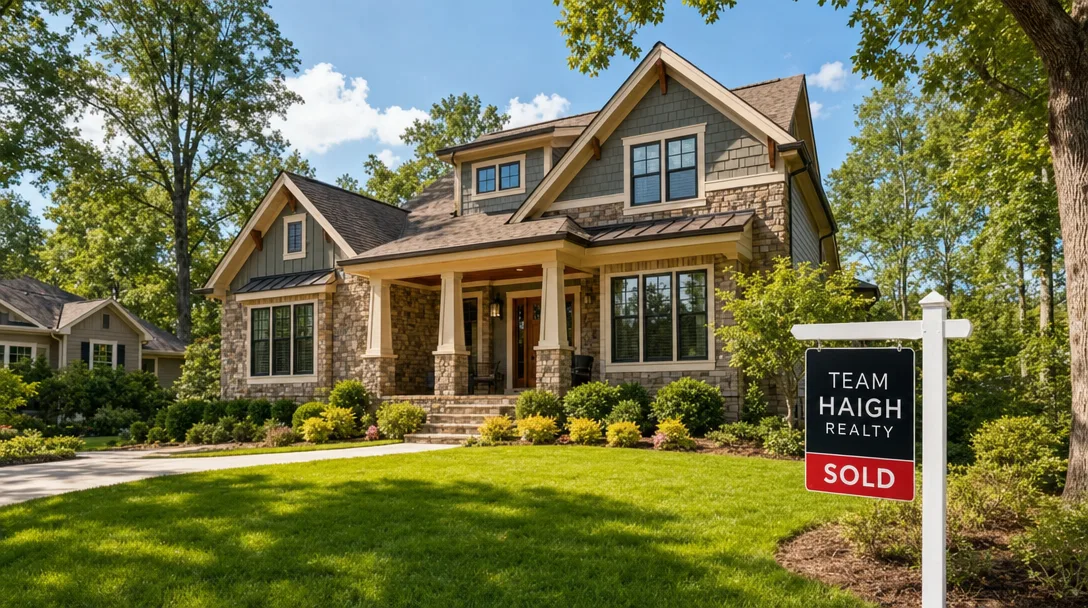
"How much house can I afford?" It is the first question every buyer asks, and it is the most important one to get right. The honest answer is not just what a lender tells you. It is what fits your life, your goals, and your comfort level. Over 360-plus transactions, we have seen buyers stretch too far and regret it, and we have seen buyers play it too safe and miss out on homes they could have comfortably afforded. This guide is designed to help you find the sweet spot, specifically for the NW Metro Atlanta market.
Before we dive into the numbers, here is the most important thing we tell every buyer: what you are pre-approved for and what you should spend are often two different numbers. A lender may approve you for a $500,000 mortgage, but that does not mean a $500,000 home is the right choice for your financial future. We will walk through how to figure out what actually works for you.
For a complete step-by-step guide to the buying process, start with our First-Time Home Buyer's Guide. And for deeper dives into specific cities, our Marietta buying guide and Kennesaw buying guide cover the local market in detail.
1. The Honest Answer: What You Can Afford vs. What You Should Spend
Let us start with a hard truth that most lenders will not tell you. Your pre-approval letter represents the maximum amount a lender is willing to lend you, assuming your credit, income, and debt check out. It does not represent what you can comfortably afford while still saving for retirement, building an emergency fund, taking vacations, and living your life.
Here is the rule of thumb we use with our own clients. Your total monthly housing payment, including principal, interest, property taxes, homeowners insurance, and HOA fees (if applicable), should not exceed 28 percent of your gross monthly income. And your total monthly debt payments, including your housing payment, car loans, student loans, and credit card minimums, should not exceed 36 percent of your gross monthly income.
These are conservative numbers, and they are designed to leave you room to live. A buyer who stretches to 43 percent or 50 percent debt-to-income (DTI), which some lenders allow, may find themselves house-rich and cash-poor, unable to save for maintenance, repairs, or life's unexpected expenses. We have seen this happen more times than we can count. Do not let it happen to you.
To put that in real terms for NW Metro Atlanta, here is what the 28 percent rule looks like at different income levels, assuming a 6.5 percent interest rate, a 5 percent down payment, and typical property taxes and insurance for our area:
| Annual Income | Monthly Payment (28%) | Home Price Range | Cities in Range |
|---|---|---|---|
| $60,000 | $1,400 | $200K-$250K | Cartersville, Dallas |
| $80,000 | $1,867 | $280K-$350K | Canton, Cartersville, Dallas |
| $100,000 | $2,333 | $350K-$450K | Acworth, Kennesaw, Canton |
| $120,000 | $2,800 | $425K-$550K | Kennesaw, Woodstock, Acworth |
| $150,000 | $3,500 | $550K-$700K | Marietta, Woodstock, East Cobb |
| $200,000+ | $4,667+ | $700K+ | Marietta, East Cobb, premium areas |
Estimates based on 6.5% interest rate, 5% down payment, 30-year fixed conventional loan, and typical NW Metro Atlanta property tax and insurance rates. Your actual numbers will vary based on credit score, prevailing interest rates, exact tax rates, and HOA fees. Always consult a licensed lender for a personalized pre-approval.
2. The Math: How Lenders Calculate What You Can Borrow
Understanding how lenders calculate your borrowing power helps you prepare before you apply. Here is the math behind the numbers.
Debt-to-Income Ratio (DTI)
Your DTI is the single most important number in your mortgage application. It is calculated by dividing your total monthly debt payments by your gross monthly income. Lenders look at two DTI ratios. The front-end ratio is your housing payment alone divided by your income. The back-end ratio includes all your debt payments. Most conventional loans require a back-end DTI of 50 percent or lower, though the ideal is 43 percent or less. FHA loans are more flexible, allowing up to 57 percent in some cases, but you will pay higher mortgage insurance premiums.
Here is a real example. Let us say you earn $8,333 per month gross ($100,000 annually). You have a $400 car payment and $300 in student loan payments. Your total non-housing debt is $700 per month. At a 36 percent back-end DTI, your total debt payments cannot exceed $3,000 per month. That means your housing payment can be up to $2,300 per month. At a 6.5 percent interest rate with 5 percent down, that $2,300 monthly payment supports a home price of roughly $350,000 to $375,000.
Monthly Payment Breakdown: PITI + HOA
Your monthly housing payment is not just the mortgage. It is made up of five components, often called PITI plus HOA. Here is what each one means and what you can expect in NW Metro Atlanta.
- Principal: The amount you borrowed, paid back over 30 years. This is the portion of your payment that builds equity.
- Interest: The cost of borrowing money. At current rates, interest makes up a significant portion of your early payments. On a $400,000 loan at 6.5 percent, you will pay roughly $2,167 in interest in the first month alone.
- Property Taxes: In NW Metro Atlanta, property tax rates vary by county. Expect to pay roughly $3,500 to $5,000 annually on a $400,000 home, or $290 to $417 per month.
- Insurance: Homeowners insurance in Georgia averages $1,200 to $2,000 annually for a standard policy, depending on your home's age, size, and location. That is $100 to $167 per month.
- HOA Fees: Many neighborhoods in NW Metro Atlanta have homeowners associations. Fees range from $50 per month in some subdivisions to $400 per month in amenity-rich communities with pools, gyms, and gated entry.
When you add it all up, a $400,000 home in NW Metro Atlanta at today's rates and taxes typically costs between $2,900 and $3,300 per month including PITI, before any HOA fees. That is the real number you need to budget for.
3. What $350,000 Gets You in NW Metro Atlanta
At the $350,000 price point, you are looking at the entry-level single-family home market. This is the sweet spot for first-time buyers and investors, and it is a competitive segment of our market. Here is what you can expect across the cities where this budget works best.
Dallas, GA (Paulding County)
In Dallas, $350,000 goes a long way. You can find a 1,800-to-2,200-square-foot single-family home, typically 3 to 4 bedrooms and 2 to 2.5 bathrooms, built in the 2000s or newer. These homes sit on quarter-acre to half-acre lots and are concentrated in family-friendly subdivisions. The schools are part of the Paulding County School District, which has been investing heavily in new facilities. The commute to downtown Atlanta is roughly 45 to 60 minutes. Dallas is ideal for buyers who want newer construction, more square footage, and a quieter, more rural feel without sacrificing proximity to the metro area.
Cartersville, GA (Bartow County)
Cartersville offers the best value in the entire NW Metro Atlanta region at this price point. For $350,000, you can find a 1,900-to-2,400-square-foot home, often with a basement, on a larger lot. The city has a thriving downtown with museums, restaurants, and a growing arts scene. Cartersville City Schools are highly rated, and the Bartow County school system offers solid options. The commute to Atlanta is 45 to 60 minutes on I-75. Cartersville is ideal for buyers who want maximum space and affordability combined with a walkable downtown and a strong sense of community.
Canton, GA (Cherokee County)
Canton is one of the fastest-growing cities in Cherokee County, and $350,000 puts you in the entry-level single-family market. Expect to find 1,600-to-1,900-square-foot homes, typically 3 bedrooms and 2 bathrooms, built in the 1990s through 2010s. Some newer construction townhomes are also available at this price point. The Cherokee County School District is well-regarded, and downtown Canton's revitalization continues to add dining and entertainment options. The commute to Atlanta is 40 to 55 minutes. Canton is ideal for buyers who want Cherokee County's quality of life at a more affordable entry point.
For a detailed look at what it costs to live in each of these communities, see our cost of living guides, which cover housing, taxes, utilities, and more across all seven cities.
4. What $450,000 Gets You in NW Metro Atlanta
At $450,000, you move into the heart of the NW Metro Atlanta market. This is the most active price range, and it opens up a much wider selection of homes in the region's most desirable cities.
Acworth, GA (Cobb County)
Acworth is one of the best values in Cobb County. For $450,000, you can find a 2,200-to-2,600-square-foot single-family home, typically 4 bedrooms and 2.5 bathrooms, built in the 1990s through 2010s. Many homes are in established neighborhoods with mature trees, community pools, and sidewalks. The school zones split between Cobb County and Cherokee County depending on your exact address, so we always verify school assignments before showing homes. Acworth's downtown has undergone a major revitalization, with lakefront parks, restaurants, and a growing social scene. The commute to Atlanta is 35 to 50 minutes. Acworth is ideal for buyers who want the Cobb County school system, lake access, and strong value for their dollar.
Kennesaw, GA (Cobb County)
At $450,000 in Kennesaw, you are looking at approximately 2,400 to 2,700 square feet, based on the current median of $186 per square foot. You can find well-maintained homes from the 1990s and 2000s in established neighborhoods near Kennesaw Mountain, with good access to shopping, dining, and I-75. Kennesaw is known for its strong Cobb County schools, family-friendly atmosphere, and proximity to Kennesaw State University. The commute to Atlanta is 30 to 40 minutes. Kennesaw is ideal for buyers who want a central Cobb County location with excellent schools and a strong sense of community.
Woodstock, GA (Cherokee County)
Woodstock at $450,000 is a competitive segment. You will find approximately 2,100 to 2,400 square feet, typically 3 to 4 bedrooms and 2 to 2.5 bathrooms. The inventory includes a mix of established homes in subdivisions and some newer construction in developing areas. Woodstock's downtown is one of the most vibrant in the region, with restaurants, music venues, and a weekly farmers market. The Cherokee County schools are highly rated, and the commute to Atlanta is 35 to 50 minutes. Woodstock is ideal for buyers who prioritize walkability, downtown energy, and a well-regarded school system.
For a deeper look at what it is like to buy in each of these cities, check out our Kennesaw buying guide and Marietta buying guide for the full picture.
5. What $550,000+ Gets You in NW Metro Atlanta
At $550,000 and above, you move into the premium segment of the NW Metro Atlanta market. This is where you find larger homes, premium lots, and the most desirable school zones. Here is what your money buys at this level.
Marietta, GA (Cobb County)
With a median price of $550,000, Marietta is the anchor of the premium market. At this price point, you can find a 2,500-to-2,800-square-foot home in desirable areas like the historic Marietta Square district, the Walton High School zone in East Cobb, or the Lassiter High School zone. East Cobb commands a significant premium, with homes in the $600,000 to $800,000 range being common. Marietta offers the best mix of historic charm, suburban amenities, and top-rated schools. The commute to Atlanta is 30 to 45 minutes. Marietta is ideal for buyers who want walkable dining, historic character, and some of the best schools in Georgia.
Canton, GA (Cherokee County)
At $550,000 in Canton, you are at the top of the market. This buys you a 2,800-to-3,500-square-foot home, often on an acre or more, in newer subdivisions or on larger lots. You can find homes with upgraded finishes, gourmet kitchens, and finished basements. Cherokee County schools in the Creekview High School and Cherokee High School zones are well-regarded. Canton is ideal for buyers who want maximum space, newer construction, and a more relaxed pace of life while staying within a reasonable commute of Atlanta.
East Cobb (Unincorporated Cobb County)
East Cobb is the premium submarket of NW Metro Atlanta. At $550,000 to $700,000, you are looking at 2,500-to-3,500-square-foot homes in the Walton, Lassiter, and Pope High School clusters. These homes are typically older, built in the 1970s through 1990s, but they are well-maintained and sit on larger lots with mature trees. East Cobb is known for its top-rated schools, low crime rates, and strong community feel. The commute to Atlanta is 30 to 40 minutes. East Cobb is ideal for buyers who prioritize schools above all else and are willing to pay a premium for the best Cobb County has to offer.
For the latest market data across all price points, including days on market and inventory trends, visit our Market Statistics page. And for a broader view of the market, our 2026 NW Metro Atlanta Housing Market Report covers everything you need to know.
Want Expert Help Finding Your Perfect Home?
Team Haigh has helped 360+ families find their ideal home in NW Metro Atlanta. We can help you too.
6. Hidden Costs: What Your Monthly Payment Does Not Include
The biggest mistake buyers make is focusing only on the mortgage payment and forgetting the costs that come with actually owning a home. Here is what you need to budget for beyond PITI.
Property Taxes by County
Your property tax bill depends on which county you buy in. Here is a rough comparison of annual property taxes on a $400,000 home, assuming the standard homestead exemption after you apply for it. Cobb County, roughly $3,800 to $5,000 annually. Cherokee County, roughly $3,200 to $4,200 annually. Paulding County, roughly $3,000 to $4,000 annually. Bartow County, roughly $2,800 to $3,800 annually. These are estimates, and the exact amount depends on the millage rate in your specific tax district, including school taxes, county taxes, and any city taxes. We always run a tax estimate for our buyers before they make an offer.
Homeowners Insurance
Georgia homeowners insurance rates are influenced by the risk of severe weather, including thunderstorms, hail, and tornadoes. You can expect to pay $1,200 to $2,000 annually for a standard policy on a $400,000 home. Older homes, homes with older roofs, and homes in areas with higher crime rates may cost more. Shopping around for insurance can save you hundreds of dollars per year. We recommend getting quotes from at least three insurers before you close.
HOA Fees
Many neighborhoods in NW Metro Atlanta have homeowners associations. HOA fees range from $50 per month in basic subdivisions (covering common area maintenance and trash) to $400 per month in amenity-rich communities (covering pools, clubhouses, gyms, gated entry, and landscaping). Always factor HOA fees into your monthly budget. Some buyers are surprised by the annual increases that HOAs often implement, so ask for the HOA's financial statements and recent meeting minutes before you make an offer.
Maintenance and Repairs
This is the hidden cost that catches most first-time buyers off guard. The rule of thumb is to budget 1 to 2 percent of your home's value annually for maintenance and repairs. On a $400,000 home, that is $4,000 to $8,000 per year. Some years you will spend less. Some years you will need a new HVAC system ($5,000 to $8,000), a new roof ($8,000 to $15,000), or a water heater replacement ($1,200 to $2,000). We always tell our buyers: if you are stretching to the very top of your budget, you are setting yourself up for financial stress when the inevitable repairs come. Leave yourself room.
Utilities
Georgia's hot summers mean air conditioning runs for six months or more. Expect monthly electric bills of $150 to $250 in the summer for a typical 2,000-square-foot home. Winter bills are lower, typically $100 to $150. Water and sewer add another $50 to $100 per month. Internet and cable run $80 to $150 per month. Gas bills (for heating, water, and cooking) run $30 to $100 per month depending on the season. All told, utilities for a typical NW Metro Atlanta home run $300 to $600 per month.
For a detailed breakdown of what it actually costs to live in each city, including utility averages, grocery costs, and transportation expenses, see our cost of living guides for each NW Metro Atlanta community.
7. How to Maximize Your Budget
Once you know your budget, there are strategies to make it go further. Here is how to stretch your dollar in NW Metro Atlanta.
Down Payment Strategies
The old idea that you need 20 percent down is outdated. Here are the real-world options. A 3 percent down conventional loan (Fannie Mae 97 or Freddie Mac HomeOne) is available for qualified first-time buyers. On a $400,000 home, that is a $12,000 down payment. FHA loans require 3.5 percent down, or $14,000 on a $400,000 home. VA and USDA loans offer zero down payment for eligible buyers. The Georgia Dream program offers down payment assistance through the Georgia Department of Community Affairs. We have helped several first-time buyers access these funds. The key is to find a lender who knows these programs and can guide you through the application process.
Buying Points
Mortgage points, also called discount points, allow you to buy down your interest rate by paying an upfront fee. One point costs 1 percent of the loan amount and typically reduces your rate by 0.25 percent. On a $400,000 loan, that is a $4,000 upfront cost to reduce your rate from 6.5 percent to 6.25 percent. Whether buying points makes sense depends on how long you plan to stay in the home. If you plan to stay for 7 to 10 years or more, buying points usually saves you money. If you plan to move in 5 years or less, you are better off keeping the cash and accepting the higher rate.
Rate Lock
When you find a home and have a signed contract, your lender can lock in your interest rate for a set period, typically 30 to 60 days. This protects you from rate increases during the closing process. We recommend locking your rate as soon as you have a contract, unless you believe rates are about to drop. Your lender can advise you on the best timing based on current market conditions.
Negotiating Closing Costs
In Georgia, you can negotiate for the seller to pay a portion of your closing costs. This is typically done by offering a slightly higher purchase price in exchange for a seller credit. For example, you might offer $410,000 on a $400,000 home with a $10,000 seller credit toward your closing costs. This works best in a balanced or buyer-friendly market. In a competitive market with multiple offers, asking for closing cost credits can make your offer less attractive. We will advise you on what is realistic based on the current market conditions in your specific city and price range.
8. Team Haigh Can Help You Find the Right Home at the Right Price
Understanding what you can afford is the first step. The next step is finding the right home in the right city at the right price. That is where we come in.
Campbell and Beth Haigh have helped 360-plus families buy and sell homes across NW Metro Atlanta. We know the market, the neighborhoods, the schools, and the hidden details that make one street different from the next. We work with a network of trusted local lenders who can give you an accurate pre-approval and guide you through the loan process. We know which neighborhoods offer the best value at each price point. And we negotiate on your behalf to get you the best possible terms.
Nearly 60 percent of our business comes from clients who return to us and refer the people they love. That is the number we are proudest of. It means we are doing something right: putting our clients' interests first, every single time.
Whether you are a first-time buyer trying to figure out where to start, a growing family looking for more space, or someone relocating from out of state and unsure which city fits your budget, we can help. We will sit down with you, learn about your goals, and help you find the home that fits your life and your budget.
We are licensed in Georgia (Sales Agent License #351846), and we serve all seven communities covered in this guide. For more information on buying in specific cities, visit our Marietta buying guide, Kennesaw buying guide, and Woodstock buying guide. And for the latest market data, visit our Market Statistics page.
Ready to Find Your NW Metro Atlanta Home?
Let us help you find the right home at the right price in the right city. Schedule a free, no-obligation consultation to talk through your budget, your goals, and the neighborhoods that might be right for you. We will answer every question and help you build a clear plan.