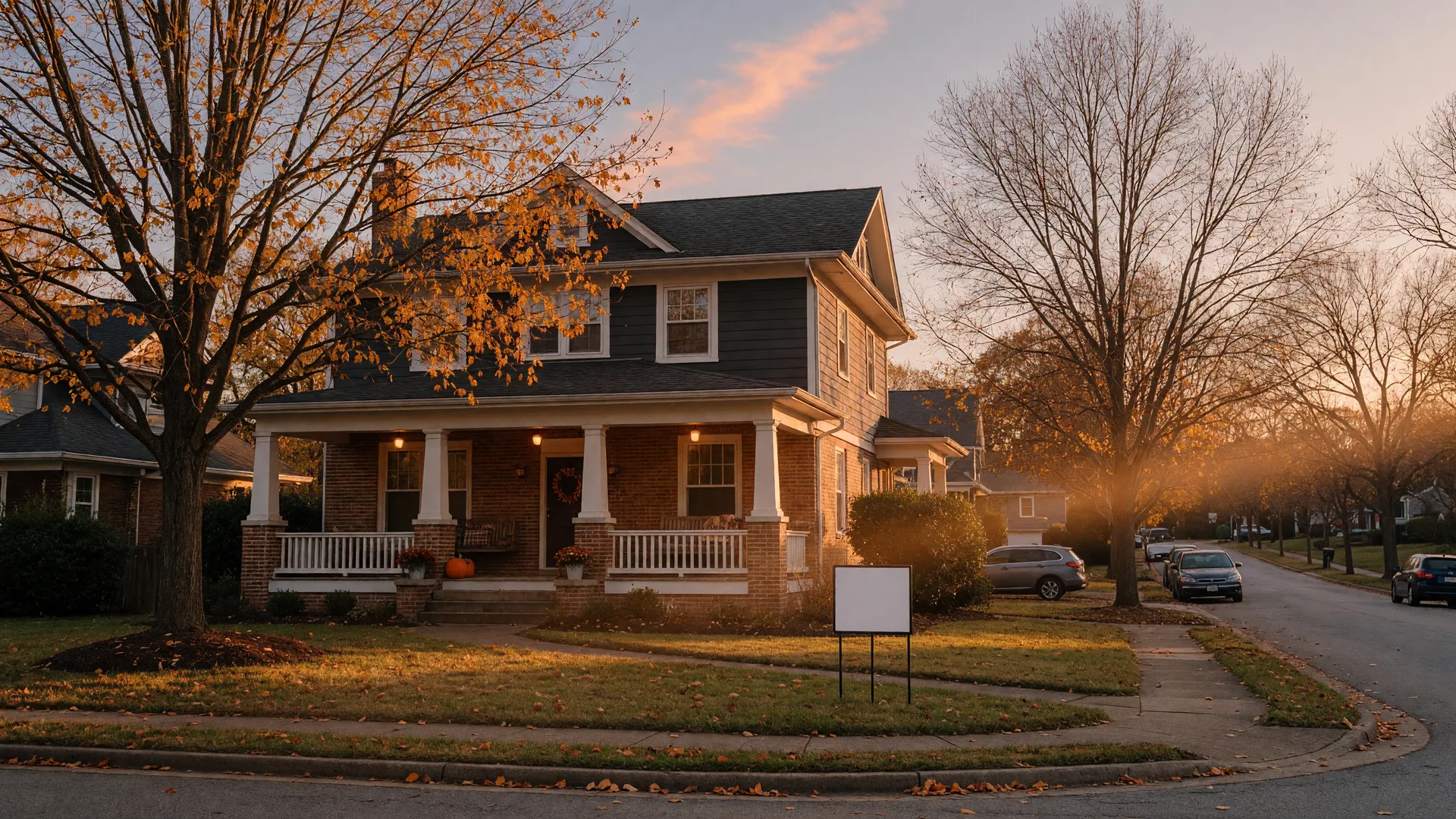
Every year around this time, the same question shows up in our conversations with homeowners: is it too late to sell now that the holidays are coming? We hear it in Marietta and Kennesaw, in Woodstock and Canton, in Cartersville and Dallas and Acworth. It is a fair question, and the answer is more interesting than a simple yes or no.
The short version: November and December are the slowest months of the year for home sales, and we will not pretend otherwise. But slow is not the same as bad. The sellers who list during the holidays face a fraction of the competition they would face in spring, and the buyers who are out shopping in late November are usually on a real timeline, not browsing. With mortgage rates near 7.3%, metro Atlanta inventory at its highest in more than a decade, and about 29 percent of listings cutting price, the holiday window has a specific set of rules. Here is what the data says and what it means for your house.
Is November or December a Bad Time to Sell a House in NW Metro Atlanta?
What Does the Historical Data Actually Show?
Start with the honest version. ATTOM Data Solutions analyzed a decade of sales and found that only about 10 percent of annual home sales close between Thanksgiving and New Year's, and November sellers averaged a somewhat lower premium over estimated value than the annual norm. The National Association of Realtors' economists describe October through December as the weakest stretch of the year, with December historically the slowest month for existing-home sales nationally.
The purchase market is nationally projected to finish 2026 as the slowest year since 2011, with Capital Economics forecasting about 4.7 million existing-home sales for the full year and Goldman Sachs projecting about 4.2 million (annualized) in the second half, describing demand as tepid. None of that is news to anyone who has shown a house in December. The news is what happens around the slowdown: fewer sellers, and more serious buyers.
What the Holiday Numbers Say About Competition and Buyer Seriousness
Do Homes Sell Slower in November and December?
Roughly 30 to 40 percent fewer homes come on the market in November and December than in spring. That is the other side of the holiday slowdown, and for sellers it is the whole point. When almost everyone around you decides to wait until after the Super Bowl or the spring market, the homes that are actually listed stand out. There is less inventory competing for each showing, which means more buyer attention per listing than the raw sales numbers suggest.
The serious-buyer signal is real, too. Coldwell Banker's national reporting has found a notably higher listings-to-sales ratio in November and December than the annual average, which is consistent with what we see locally: the families looking at homes between Thanksgiving and Christmas are usually relocating for a job, closing an estate, or moving with a school calendar in mind. They are not cruising. They have a deadline.
The honest trade-off: spring listings get more total buyer traffic, and Realtor.com's analysis named April 12 through 18, 2026 the best week nationally to list a home, with about 16.7 percent more views than an average week, homes selling about nine days faster, and sellers netting roughly $26,000 more than they would at the start of the year. Holiday listings get less traffic but dramatically less competition, and every buyer who walks in has a reason to be there. Which trade-off fits you depends on your timeline, not on the calendar alone.
What Does the NW Metro Atlanta Market Look Like for Sellers Right Now?
What Are the Latest Verified Numbers?
The national picture matters less than your county's numbers, so here is the freshest verified snapshot for NW Metro Atlanta, confirmed October 29, 2026. Freddie Mac's most recent published average for a 30-year fixed mortgage is 7.32 percent for the week ending October 22, 2026, with the 15-year fixed at 6.68 percent. Georgia MLS reported a September 2026 metro Atlanta median sale price of $387,500, essentially flat year over year, with 5,107 closed sales, down 11.1 percent year over year, and 23,006 active listings across its 12-county coverage, the highest level in more than a decade.
The Atlanta Business Chronicle reported on October 15, 2026 that FMLS data showed about 21,053 homes for sale in greater Atlanta in September, the region's highest inventory in 13 years, and Realtor.com data for September 2026 found about 29 percent of metro Atlanta listings carried a price reduction versus 20.8 percent nationally. Into the fourth quarter, national data had homes averaging about 59 days on market and selling at about 96.5 percent of asking price. Translation: buyers have choices, and sellers who price against last spring's market will end up with a price cut anyway, usually after wasting the first weeks on market.
County by County, What Should Sellers Expect This November?
Cobb County (Marietta, Kennesaw, Acworth): the three-month read ending September 2026 put the county median near $422,000, up about 0.5 percent year over year, with a median of about 47 days on market. Cobb's inventory is higher than a year ago, and the strongest traffic is still around Marietta's walkable core and the top East Cobb school zones.
Cherokee County (Woodstock, Canton): the Davis & Davis September 2026 report put the county median at $470,000, down about 5.1 percent year over year on roughly flat price per square foot, with Woodstock near $457,500 and Canton's 30115 ZIP near $583,500. Cherokee homes still sell at a steadier pace than the rest of the region, but they sell on realistic pricing.
Bartow County (Cartersville): the county median ran near $358,700 through October 20, 2026, up about 2.7 percent year over year, but inventory is up roughly 27 percent year over year and as much as 45 percent of active listings carried price cuts in some October reports. This is the most buyer-friendly corner of the region, and the most price-sensitive.
Paulding County (Dallas): the official FMLS August 2026 report put the county median at $365,000, down 1.4 percent year over year, with about 4.6 months of supply, and live October reads showed Dallas ZIPs from about $360,000 to $410,000 with 44 to 49 days to contract. Steady, balanced, and negotiable.
| The latest numbers at a glance | Figure | As of |
|---|---|---|
| Freddie Mac national 30-year fixed average | 7.32% (15-year at 6.68%) | Week ending October 22, 2026 |
| Metro Atlanta median sale price (Georgia MLS) | $387,500, essentially flat year over year | September 2026 |
| Metro Atlanta closed sales | 5,107, down 11.1% year over year | September 2026 |
| Greater Atlanta homes for sale (FMLS) | About 21,053, highest in 13 years | September 2026 |
| Share of metro listings with price cuts | About 29%, vs 20.8% nationally | September 2026 |
| National average days on market / sale-to-list | About 59 DOM, about 96.5% of asking | Into Q4 2026 |
| Cobb County median (Redfin, 3-month) | About $422,000, up 0.5% year over year | Ending September 2026 |
| Cherokee County median (Davis & Davis) | $470,000, down about 5.1% year over year | September 2026 |
| Bartow County median (Momentum Realty) | About $358,700, up 2.7% year over year | October 20, 2026 |
| Paulding County median (FMLS official brief) | $365,000, down 1.4% year over year | August 2026 |
Sources: Freddie Mac Primary Mortgage Market Survey (week ending October 22, 2026); Georgia MLS Atlanta MSA September 2026 recap; Atlanta Business Chronicle (October 15, 2026); Realtor.com September 2026 data; Atlanta Agent Magazine GAMLS coverage (October 14, 2026); Redfin county data (three months ending September 2026); Davis & Davis Realtors Cherokee County update; Momentum Realty county reports (October 2026); FMLS Paulding County August 2026 report; ATTOM Data Solutions holiday-sales analysis; NAR Economists' Outlook; Coldwell Banker holiday-selling research; Realtor.com 2026 best-week-to-list analysis; Capital Economics and Goldman Sachs 2026 housing forecasts. All figures verified October 29, 2026.
What Is the Actual Holiday Selling Calendar for 2026?
Can I Still List My Home and Close Before Year End?
Thanksgiving 2026 falls on November 26, and Georgia closings typically run 30 to 45 days. That makes the practical math straightforward: a home listed in the first two weeks of November, priced and presented well, can attract an offer around Thanksgiving and close before Christmas. A home listed after Thanksgiving can still close in the first weeks of January, which is fine if you are not racing a calendar. The one thing to avoid is assuming the holidays will not slow down your transaction, because lenders, appraisers, title attorneys, and moving companies all thin out in the last two weeks of December.
Our detailed state guide on the best time to sell a house in Georgia runs the month-by-month picture, and our earlier post on the October pre-holiday window covered the fall push. This November piece is specifically about the decision after Halloween: whether to list into the holidays or take the house down and wait for spring.
Who Should Sell During the Holidays, and Who Should Wait?
What Type of Seller Does the Holiday Market Fit Best?
We are not here to talk every seller into listing in December. Honest guidance means telling you when the timing is right for you, and it is right more often than most sellers assume.
Good candidates for a holiday listing
Relocating families or executives on a job-related deadline, who need to close by a specific date and will not get that from a spring listing. Empty nesters or downsizers who have already made the decision and want to move on with the new chapter before another year passes. Sellers whose home competes well on price and presentation, and whose price band has the thinnest inventory, which we can measure from current comps.
Candidates who should wait for spring
Sellers who want to maximize total buyer traffic, can comfortably wait four to six months, and do not have a hard deadline. Sellers who cannot commit to keeping the house show-ready through the holidays, which is a real limitation, not a judgment. And sellers priced at the top of their range in Bartow or Paulding, where the buyer pool is already thin and the spring will bring more of them.
Selling During the Holidays: A Practical Checklist for NW Metro Atlanta
Price for November, Not for March
With about 29 percent of metro listings carrying price cuts and inventory at a 13-year high, the market will correct an overpriced home anyway, usually after it sits through its best weeks. An honest, comp-backed list price attracts the serious buyers who are actually out there. Our free home valuation uses real FMLS comps, not a guess.
Shoot Photos Before the Decorations Go Up
Even if you plan to show your home decorated for the season, photograph it clean first, with winter-appropriate curb appeal, then offer the option of a tasteful holiday retouch. Buyers need to picture their own life in the house, and a wall of Santas can get in the way. Professional photos and video matter more in a low-traffic market, not less. Our staging guidance covers the prep.
Keep Showings Flexible
Holiday buyers are on tight schedules, often visiting from out of state on a specific weekend. A seller who can host a showing on Thanksgiving weekend or a weekday evening dramatically widens the buyer pool. Let your agent set that expectation, and make the house easy to show with your realtor's lockbox and showing app.
Offer a Buyer Incentive, Not Just a Price Cut
At a 7.32 percent rate, a temporary rate buydown or a closing cost contribution often moves buyers more than a lower price, and it usually costs you less. It also signals to wary buyers that you are serious about transacting, which matters in a market full of price cuts.
Plan the Closing Calendar Backward
Work backwards from your ideal closing date. Offers by mid-November can close before Christmas; offers in December typically close in January. If you are buying your next home at the same time, ask us about buy-before-you-sell so the holiday calendar does not leave you between houses.
The Bottom Line
Selling during the holidays in NW Metro Atlanta is not the same game as spring, and that is okay. Sales slow, December is the slowest month nationally, and 2026 is on pace to be the slowest sales year since 2011. But roughly a third fewer homes come to market in November and December, and the buyers who remain are usually moving on a real deadline, which is exactly the kind of buyer a well-priced, well-presented home wants.
The current market is buyer-leaning, with rates at 7.32 percent, a metro median flat at $387,500, and inventory at its highest in more than a decade. For a seller, that means one thing above all: price it honestly from day one, present it like the holidays are buyer season, and plan the closing calendar backward. Do that, and November can be a quiet, effective time to sell. Wait with the crowd, and spring simply brings more competition along with the traffic.
Whether you list now, take the house down until spring, or are simply trying to understand what your home is worth in this market, we would love to run your numbers with you. Real comps, an honest timeline, and no pressure either way. That is how we have always worked, and it does not change with the season.
The full county-by-county picture, refreshed with each new verified reading, lives on our NW Metro Atlanta market stats page. To see what your home would bring in this market, start with our free home valuation, or call us at (770) 575-7339 to talk through your plans. No obligation. No pitch.
Have a great day.